
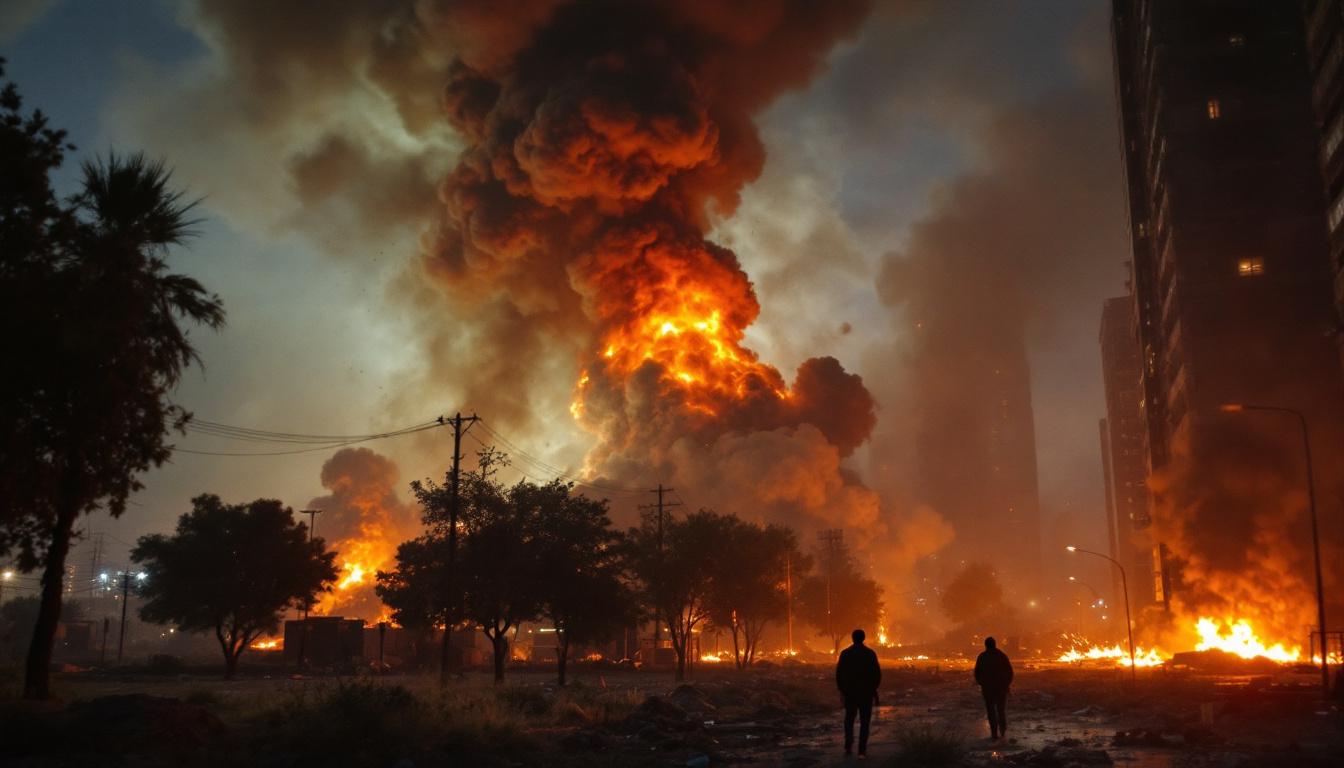
Vice President J.D. Vance is reportedly grappling with private concerns that the United States' military involvement in Iran could evolve into a substantial political and military setback, a development that is prompting new questions regarding his potential 2028 presidential aspirations. Reports by The Daily Mail indicate that Vance privately fears the conflict could become a catastrophe as the U.S. experiences increasing casualties, domestic gasoline prices climb, and the administration faces challenges in demonstrating control over the war's trajectory.
This reported apprehension aligns with a public image Vance has cultivated for several years. He has consistently positioned himself as more cautious regarding foreign military engagements than many of his Republican counterparts. This long-standing stance now places him in a precarious position as the conflict unfolds. According to The Daily Mail's report, President Donald Trump had previously acknowledged publicly that Vice President Vance held a "less enthusiastic" view than other members of his administration concerning the initial strikes on Iran.
The same report further suggests that Vance "just opposes" the war and maintains a skeptical outlook, despite ultimately supporting the administration's decision once military action commenced. Prior to the initiation of the strikes, Vance reportedly advocated for swift and decisive action, aiming to minimize potential casualties. He also pressed senior military and intelligence officials with detailed questions concerning the inherent risks and potential complications associated with the operation.
Currently, Vice President Vance finds himself in a politically challenging situation. Should the conflict intensify and worsen, he risks being closely associated with a war about which he reportedly harbored reservations from its inception. Conversely, if the administration successfully declares victory, other prominent figures, such as Marco Rubio and Pete Hegseth, might receive a greater share of the credit, potentially relegating Vance to a less prominent role in the perceived success.
This dynamic is already beginning to manifest in the political landscape. The Daily Mail's reporting indicates that Vance, who once held a significant lead over Rubio in early discussions and prediction market odds for the 2028 presidential race, is now reportedly level with him, with both candidates sitting at 18% on prediction markets. While this does not signify an end to Vance's political ambitions, it underscores that his standing is no longer as secure as it appeared before the Iran conflict began to escalate.
A more profound issue for Vance lies in the realm of political branding. A core component of his political identity has been built upon the premise that President Trump would not recklessly lead the nation into another protracted overseas conflict. If the American electorate begins to perceive the current war in Iran as precisely such a drawn-out engagement, Vance could face a considerable political challenge, according to The Daily Mail.
This concern is amplified by the escalating costs and dangers associated with the conflict. The U.S. death toll has reportedly risen, with more than 150 American troops reported wounded. The Strait of Hormuz, a critical global shipping lane, remains under significant pressure, and average gasoline prices across the United States have climbed to $3.60 per gallon. These types of developments possess the capacity to swiftly transform a foreign policy operation into a significant domestic political liability.
In response to reports of internal divisions, Vice President Vance's office has sought to quell such speculation. His spokeswoman affirmed that the vice president is a proud member of President Trump's national security team and maintains that his counsel to the President remains private. The White House has also publicly pushed back against the notion of any substantial rift between President Trump and Vice President Vance.
Despite these public assertions of unity, the narrative surrounding Vance's reported private skepticism, the rising financial and human costs of the war, and the growing pressure on his 2028 political image continues to circulate. For the immediate future, Vance appears to be navigating a strategy of maintaining loyalty to the administration without becoming the singular public face of the conflict. While this approach may prove beneficial within the internal dynamics of the administration, in the broader arena of national politics, if the war in Iran continues to deteriorate, voters may ultimately prioritize outcomes over who harbored doubts behind closed doors. They may instead remember who was part of the leadership team when events took an adverse turn.