
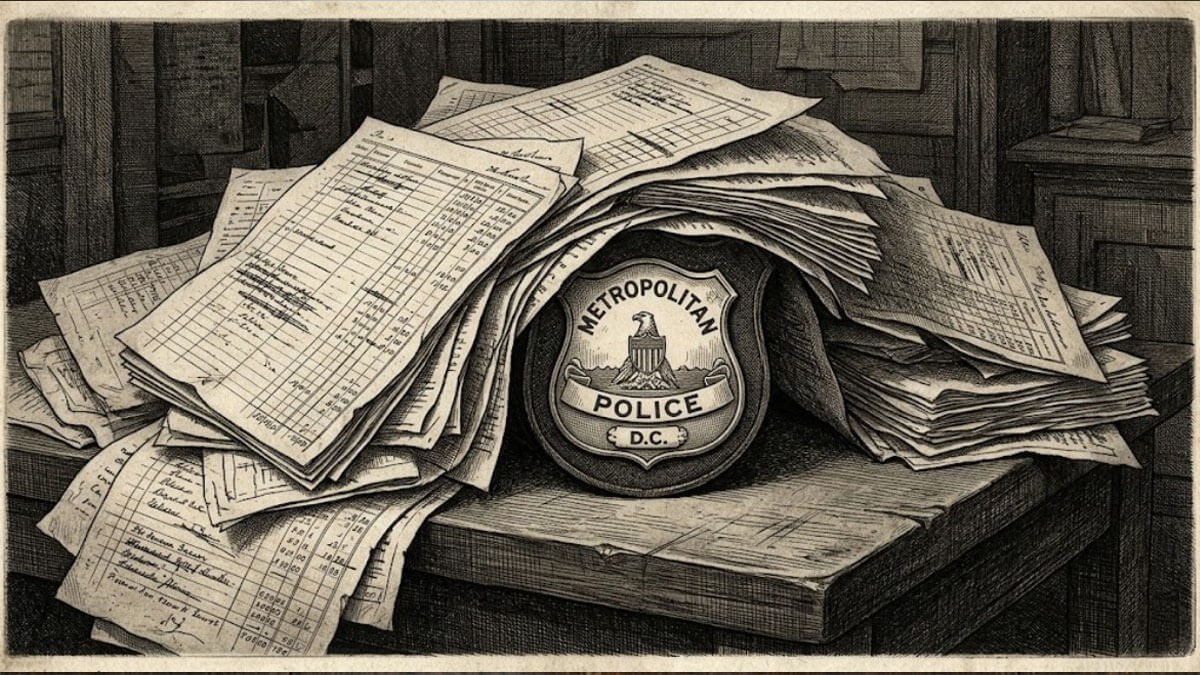
Several high-ranking officials within the Metropolitan Police Department (MPD) were terminated this week, marking the first significant personnel casualties in a widening federal investigation into alleged manipulation of crime statistics. The department's internal affairs division delivered formal termination notices to at least three MPD commanders on Monday, according to reports. This action follows accusations that crime figures were deliberately altered at the command level, leading to inaccurate public reporting of violent crime rates in the nation's capital.
Among those terminated were Commander Michael Pulliam, who oversaw the department’s 3rd District, and Commander Tatjana Savoy of the 2nd District. A third official, identified as a captain, also received a termination notice. Both Commanders Pulliam and Savoy have denied any wrongdoing. Commander Pulliam had been on paid leave since July 2025, when investigators first began scrutinizing his district’s crime numbers. Additional personnel across the department have also reportedly been put on notice regarding impending firings or disciplinary actions.
The terminations did not come without prior warning. Throughout late 2025, two separate federal bodies had been examining the MPD’s data practices. In December 2025, the Department of Justice (DOJ) released a draft report that concluded MPD’s crime statistics were “likely unreliable and inaccurate due to misclassifications.” The report specifically stated that “violent crime is not being accurately documented and reported to the public,” alleging that the department had quietly downgraded the severity of hundreds of crimes, thereby artificially reducing the city’s official violent crime numbers.
Concurrently, the House Oversight Committee released its own report titled “How D.C.’s Police Chief Undermined Crime Data Accuracy.” This report alleged that officers who failed to produce sufficiently low crime figures faced humiliation and removal under then-Chief Pamela Smith. Both federal reports directly named Chief Smith, with the DOJ’s findings describing a department operating under a “culture of coercive fear that emanates from Pamela Smith,” and alleging she pressured subordinates to ensure crime numbers reflected a desired narrative.
The controversy surrounding DC’s crime data had been simmering for months. As early as October 2025, an exclusive report by The Daily Caller, citing sources with direct knowledge of law enforcement operations, indicated that suspects were routinely allowed to “wiggle out of … more serious charges.” These sources described directives to suppress violent crime reporting as “pervasive from the top, all the way down,” influencing cases from arrest through the courts. In August 2025, DC Police Union Chairman Gregg Pemberton publicly expressed skepticism about the city’s celebrated decline in crime, suggesting it was not as real as officials claimed.
Despite mounting scrutiny, Mayor Muriel Bowser defended the department in December 2025, pushing back against the federal reports. She stated, “People are very clear about the precipitous decline in crime in the District from murder, shootings, homicides, you name it,” adding that crime classification “is a very complicated business” that “precedes this chief of police.”
Chief Smith announced her resignation in December 2025, framing her decision as a personal one. Her departure occurred just days after both federal reports became public record. Following these developments and citing what he described as “phony” crime numbers, President Donald Trump announced a federal takeover of the MPD at a White House news conference.
MPD’s interim chief, Jeffery Carroll, has declined to issue a public statement on the recent terminations, calling it an internal matter. U.S. Attorney for D.C. Jeanine Pirro also declined to address the firings. With these terminations, the Metropolitan Police Department now faces the complex task of addressing the systemic issues that the manipulated data concealed and rebuilding public trust. The full scope of the federal investigation and its long-term impact on the department's leadership and operations remain subjects of ongoing observation.