

Breaking
Sponsor Advertisement
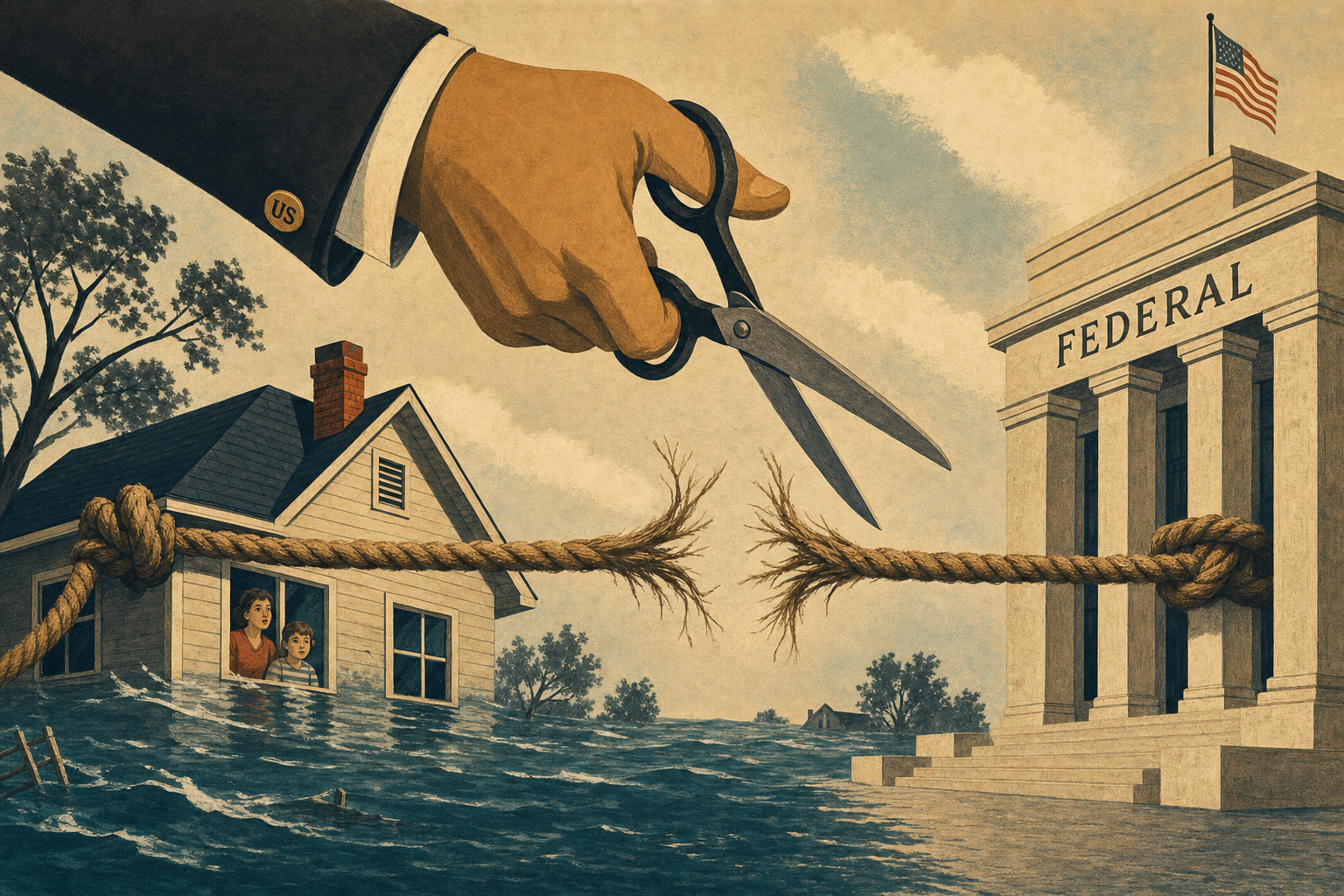
25 States Sue Trump Admin Over Disaster Fund Conditions
Image for: 25 States Sue Trump Admin Over Disaster Fund Conditions

25 States Sue Trump Admin Over Disaster Fund Conditions

A coalition of 25 states and the District of Columbia has filed a federal lawsuit challenging new Trump administration requirements that tie billions in homeland security and disaster preparedness funding to state compliance with federal election and immigration policies.
Jump to The Flipside Perspectives

WASHINGTON D.C. – A coalition of 25 states and the District of Columbia initiated a federal lawsuit on Thursday, challenging new requirements imposed by the President Donald Trump administration that link billions of dollars in federal homeland security and disaster preparedness funding to state adherence to specific federal election and immigration policies. The legal action, filed in federal court in Rhode Island, targets the Department of Homeland Security (DHS) and the Federal Emergency Management Agency (FEMA) as defendants, seeking to prevent the immediate loss of access to crucial grant funding.

"Election security is national security." — FEMA Spokesperson

The lawsuit asserts that DHS and FEMA have overstepped their statutory authority by attaching new conditions to grants that were originally appropriated by Congress for the express purposes of emergency preparedness, counterterrorism initiatives, and disaster response. According to the complaint, the agencies are in violation of both the Administrative Procedure Act and the U.S. Constitution's Spending Clause. The plaintiffs contend that these new conditions compel states to adopt policies unrelated to the intended goals of the grant programs, effectively leveraging federal funding to enforce the administration's broader political priorities.

At the core of the dispute is FEMA’s Homeland Security Grant Program, a vital source of funding that supports a wide array of critical services, including first responders, bomb squads, cybersecurity programs, and security measures for houses of worship, alongside general disaster preparedness. Under the administration's updated requirements, states must implement several new election-related procedures to receive their full grant allocations. These include verifying the citizenship of registered voters using the U.S. Citizenship and Immigration Services’ Systematic Alien Verification for Entitlements (SAVE) database, transitioning voting systems to equipment capable of accepting hand-marked paper ballots, conducting manual post-election audits, reconciling ballots, and confirming the citizenship of election workers. The lawsuit specifically highlights that at least 20 percent of Homeland Security Grant Program awards may be withheld from states until they demonstrate compliance with these new election integrity requirements.

Beyond election policies, the lawsuit also challenges new immigration-related conditions. Grant recipients are now reportedly required to cooperate with federal immigration enforcement activities, provide information regarding detainees’ immigration status, and refrain from publicizing federal immigration operations. The states argue that these mandates force them to divert resources and personnel from their primary disaster response and public safety duties to assist with federal immigration enforcement, an area they claim falls outside the scope of preparedness grants.

Furthermore, the complaint objects to new provisions introduced by FEMA that would allow the agency to terminate grants if they are deemed no longer to advance the “national interest” or simply for the agency’s convenience. The plaintiff states argue that Congress did not grant FEMA such broad and discretionary authority to unilaterally terminate funding programs, especially those critical for public safety and disaster readiness.

The coalition of states warns that these new conditions could jeopardize billions of dollars allocated for essential emergency preparedness. The lawsuit estimates that FEMA could immediately withhold approximately $148 million from the plaintiff states through the 20 percent restriction alone. The broader authority to terminate grants for "national interest" or "convenience" could place substantially more funding at risk, potentially undermining states' abilities to respond effectively to natural disasters, terrorist threats, and other emergencies.

FEMA has publicly defended the policy changes, asserting that the new requirements are integral to strengthening national security by enhancing election integrity. In a statement, a FEMA spokesperson articulated the agency's stance, stating, "Election security is national security." The spokesperson further contended that states must undertake "critical, common-sense steps" to protect the integrity of their elections before they can receive their full Homeland Security Grant Program awards. The agency characterized the lawsuit as anticipated opposition from states predominantly led by Democratic governors, describing their resistance as an expected reaction to measures designed to safeguard election integrity. The Department of Homeland Security did not immediately respond to requests for comment regarding the lawsuit.

The legal challenge underscores a growing tension between federal and state authorities regarding the conditions attached to federal funding, particularly in areas traditionally managed with a degree of state autonomy. The outcome of this lawsuit could significantly impact the distribution of federal grants and the operational independence of states in managing their election processes and engagement with federal immigration policies.

Advertisement

The Flipside: Different Perspectives

Progressive View

The lawsuit filed by 25 states and D.C. highlights a concerning instance of federal overreach by the Trump administration, attempting to coerce states into adopting policies that may undermine voting access and civil liberties. Progressives argue that tying essential disaster preparedness funds to unrelated election and immigration policies weaponizes critical aid, diverting resources from vital public safety functions. Requiring citizenship verification for voters and election workers, and mandating specific voting system changes, could disenfranchise eligible voters and place undue burdens on state election systems, often disproportionately affecting minority communities, students, and low-income individuals. The U.S. Constitution's Spending Clause is intended to ensure federal funds are used for their congressionally appropriated purpose, not as leverage to impose unrelated partisan policy agendas. Similarly, forcing states to participate in federal immigration enforcement can erode trust between local communities and law enforcement, making communities less safe and hindering the ability of states to manage their own resources and priorities. This approach undermines states' rights and collective well-being by prioritizing political goals over humanitarian needs and effective disaster response, potentially leaving communities vulnerable in times of crisis.

Conservative View

The Trump administration's new conditions on homeland security and disaster preparedness grants reflect a commitment to national security and election integrity, core tenets of conservative governance. By tying federal funds to verifiable election security measures like citizenship verification for registered voters and election workers, and the use of auditable hand-marked paper ballots, the administration aims to restore public confidence in the electoral process. Conservatives view secure elections as fundamental to a functioning republic, arguing that federal funding should not subsidize states that fail to meet basic standards of integrity, especially when significant federal resources are at stake. Furthermore, requiring states to cooperate with federal immigration enforcement aligns with the principle of upholding the rule of law and securing national borders. States receiving federal funds for homeland security should not actively impede federal efforts to manage immigration, which is undeniably a federal responsibility. This approach ensures that taxpayer dollars are used in a manner consistent with national priorities, promoting both internal security and fiscal responsibility by preventing the misuse of funds. The argument that these conditions constitute an overreach ignores the federal government's legitimate interest in ensuring the effective and secure operation of critical national systems and upholding the integrity of its borders. These measures are seen as necessary steps to protect the nation from both internal vulnerabilities and external threats.

Common Ground

Despite the legal and political disagreements, there are genuine areas of common ground regarding the underlying issues. All parties agree on the paramount importance of robust disaster preparedness and response capabilities to protect citizens from natural catastrophes, technological failures, and security threats. Ensuring the efficient and effective use of taxpayer dollars for these critical services, without unnecessary bureaucratic hurdles, is a shared goal across the political spectrum. Additionally, there is bipartisan consensus on the fundamental need for secure and fair elections, though the specific methods to achieve this may differ. Both federal and state governments have a vested interest in preventing fraud, maintaining public confidence in the electoral system, and ensuring that every eligible vote is counted accurately. Dialogue could focus on establishing clear, non-punitive guidelines for federal grant funding that respect both federal interests and state autonomy, without compromising essential public safety and emergency services. Exploring technology and best practices that genuinely enhance election security without disenfranchising eligible voters could also be a productive avenue for collaboration, alongside discussions on streamlined and respectful cooperation between federal and state entities on immigration matters that acknowledge local jurisdictions.

What's your view on this story? Share your thoughts and remember to consider multiple perspectives and being respectful when forming and voicing your opinion. "If you resort to personal attacks, you have already lost the debate..."

Advertisement

Contact Us About This Article

Have a question or comment about this article? We'd love to hear from you.

About Fair Side News

At Fair Side News, we believe in presenting news with perspectives from both sides of the political spectrum. Our goal is to help readers understand different viewpoints and find common ground on important issues.