


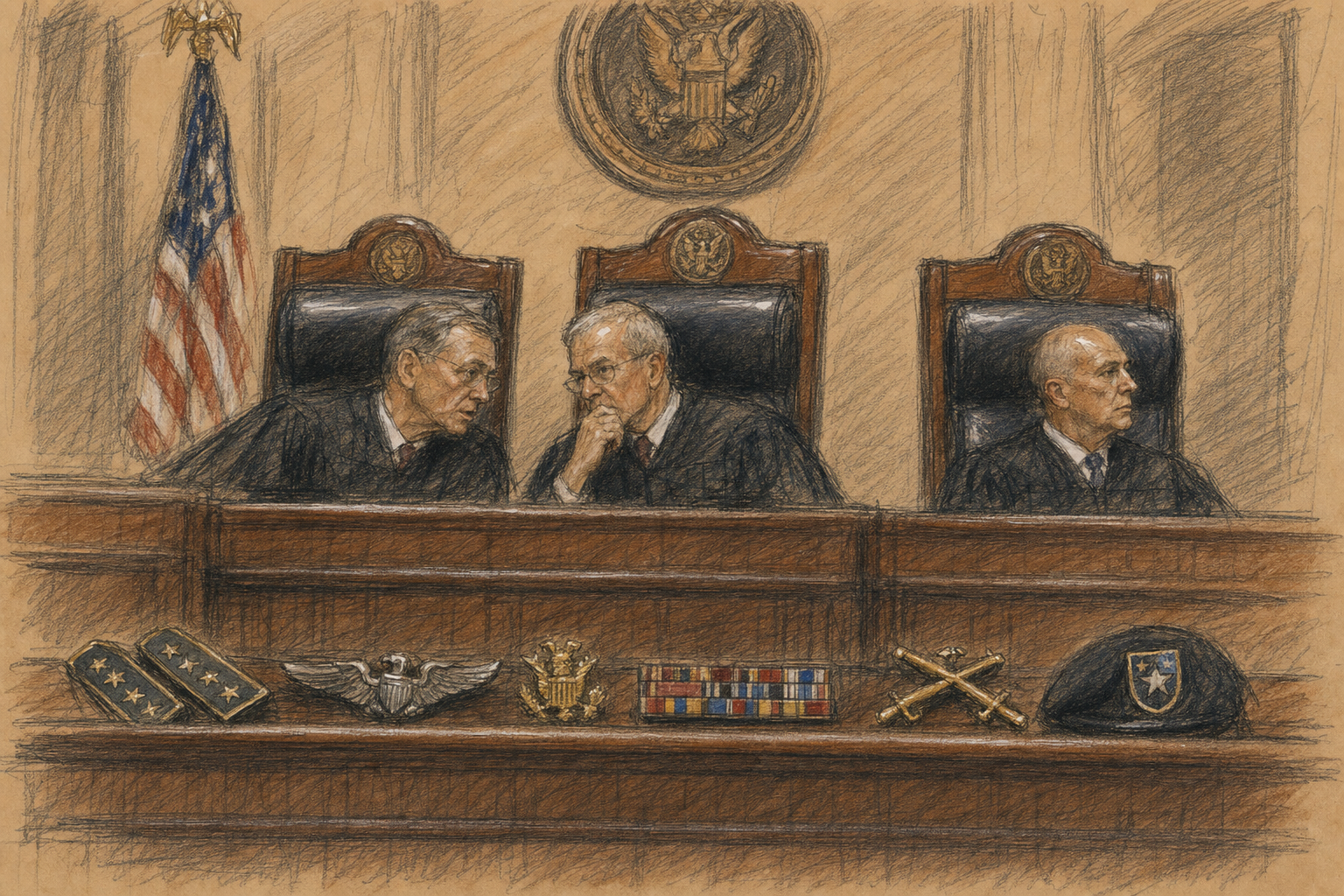
A federal appeals court panel delivered a significant legal blow to the President Donald Trump administration on Monday, ruling that the Pentagon’s policy banning transgender military service likely runs afoul of the U.S. Constitution. The decision came from a three-judge panel sitting on the U.S. Court of Appeals for the D.C. Circuit, which divided 2-1 against the administration’s position.
"See you at SCOTUS." — Pete Hegseth, Defense Secretary
Defense Secretary Pete Hegseth rolled out the policy in question. The majority of the panel, Judges Judith Rogers and Robert Wilkins, concluded the ban was built on motivations "far more troubling than military readiness concerns." They determined that the policy likely runs counter to the Constitution’s equal protection guarantee, a foundational legal protection against government discrimination.
Judge Wilkins, in his written opinion, stated the administration’s justifications amounted to a "cover story," arguing the real motivation was to target a group that had fallen out of political favor. Wilkins went further, writing that President Trump "declared transgender people as categorically unfit for military service explicitly because of their gender identity."
The immediate practical effect of the ruling was the preservation of a preliminary injunction, which prevents the Defense Department from discharging transgender troops currently serving. However, this protection applies only to the active-duty plaintiffs directly involved in this particular lawsuit.
Not every part of the ruling went against the administration. Judge Wilkins and dissenting Judge Justin Walker found common ground on one point, agreeing that the government could continue blocking transgender recruits who had not yet enlisted from joining the military.
Defense Secretary Hegseth wasted no time responding to the ruling, taking to social media within hours to state, "See you at SCOTUS." This indicates the administration's intention to appeal the decision to the Supreme Court.
The political backgrounds of the judges involved drew immediate attention. Judge Walker, who wrote the dissent, earned his federal appointment from President Trump in 2020. Judge Wilkins was placed on the D.C. Circuit by President Barack Obama, and Judge Rogers received her seat from President Bill Clinton.
The origins of this controversy stretch back to the earliest days of President Trump’s second term. He signed an executive order targeting active-duty troops and prospective enlistees diagnosed with gender dysphoria. The order framed the military’s demanding culture, citing "high standards for troop readiness, lethality, cohesion, honesty, humility, uniformity and integrity," as fundamentally at odds with the "medical, surgical and mental health constraints on individuals with gender dysphoria."
Following the executive order, Secretary Hegseth quickly directed the Pentagon to freeze new enlistments for individuals with a history of gender dysphoria and to halt medical procedures for transgender troops already serving. A formal departmental policy followed in February 2025, establishing gender dysphoria as a disqualifying condition for service, absent a waiver.
Legal challenges materialized rapidly, with cases filed in both Washington, D.C., and Tacoma, Washington. The Supreme Court weighed in on the Tacoma litigation in May 2025, allowing the administration to continue enforcing its policy while the broader legal battle played out.
The D.C. case was filed by more than a dozen transgender active-duty service members alongside transgender individuals blocked from enlisting. Their core argument held that the Pentagon’s policy constituted unlawful sex discrimination. Federal District Judge Ana Reyes sided with the plaintiffs in March 2025, blocking enforcement and issuing a pointed ruling that the policy stemmed from unconstitutional animus. The administration appealed immediately, successfully persuading a separate appeals panel to pause Reyes’ injunction during the review process.
Judge Wilkins, in Monday’s opinion, specifically targeted the policy’s sweeping scope, writing that it "does not classify whether persons are eligible to serve in the military in a reasonable and evenhanded manner." His objection centered on the policy’s disqualification of anyone ever diagnosed with gender dysphoria, regardless of how long ago that diagnosis occurred or whether the condition remains active. He highlighted the plaintiffs’ records, noting their collective 130 years of military service and more than 80 commendations earned. Wilkins further noted that the Trump administration never disputed that these individuals served with distinction and met the military’s standards.
The administration’s own concessions became a focal point of the opinion. Wilkins noted officials "conceded" there was "no evidence to establish that persons with gender dysphoria are not honest, humble, and full of integrity."
The scope of the issue extends across the entire force. A defense official reported approximately 4,200 troops carried a gender dysphoria diagnosis as of December 2024. Between January 2016 and May 2021, roughly 1,900 active-duty service members received gender-affirming care through the Defense Department, according to a Congressional Research Service report published in January 2025. This ruling sets the stage for a potential high-stakes legal battle at the nation's highest court, determining the future of transgender service in the U.S. military.

