


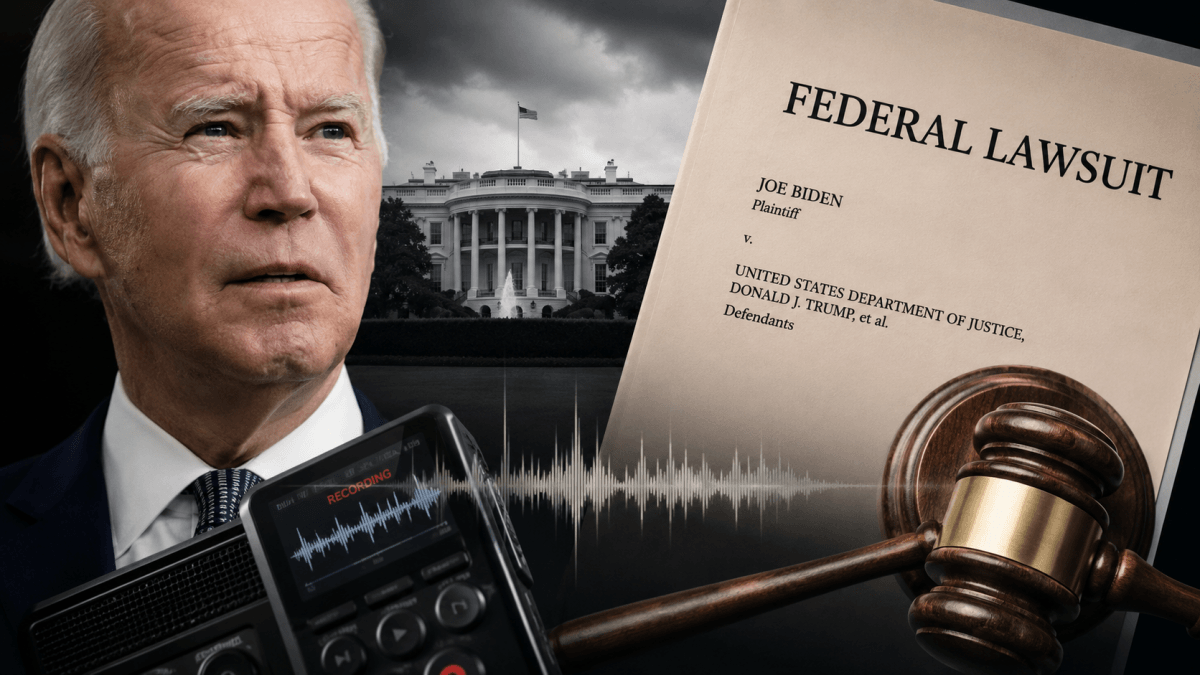
Washington, D.C. – Joe Biden has initiated a federal lawsuit in U.S. District Court, aiming to block the Trump Justice Department from releasing approximately 70 hours of audio recordings and transcripts to Republican members of the House Judiciary Committee and the conservative Heritage Foundation. The Justice Department, under the current administration, has indicated its intent to release these files, with redactions, by June 15.
"This is the most transparent Department of Justice in history, and we will fight to ensure the American people can hear these recordings and draw their own conclusions about the former President’s mental acuity before he sought the presidency." — DOJ spokesperson
The recordings originated between 2016 and 2017 when Biden was collaborating with biographer Mark Zwonitzer on his memoir, "Promise Me, Dad." These private sessions, conducted at Biden's home, were not initially intended for government access. However, they became central to a federal inquiry when Special Counsel Robert Hur subpoenaed them as part of his investigation into Biden’s handling of classified documents.
Special Counsel Hur's February 2024 report detailed significant findings from these tapes. According to the report, Biden stated during one session with Zwonitzer, "I just found all the classified stuff downstairs." The report further indicated that Biden, on at least three separate occasions, read classified intelligence almost verbatim from his personal journals. Hur concluded that Biden "willfully retained and disclosed" classified materials. Despite these findings, Hur recommended against prosecution. His rationale cited the likely perception of Biden by a jury as a "sympathetic, elderly man whose memory had deteriorated to a degree that made proving criminal intent nearly impossible." Hur's report suggested it would be difficult to secure a conviction for a "serious felony that requires a mental state of willfulness" against Biden, who would be "by then a former president well into his eighties." The report's characterization of Biden as "an elderly man with a poor memory" sparked considerable political debate, particularly concerning his capacity for public office.
The legal landscape surrounding these recordings has shifted following President Trump's return to office in 2025. In 2024, while Biden was still President, the Justice Department had blocked the Heritage Foundation’s initial request for these files, citing exemptions under public records law. However, President Trump reversed this position upon assuming office. Biden’s attorneys noted that in February 2026, without formal explanation, the Department informed Biden of its intention to release the recordings and transcripts to the parties seeking them through a Freedom of Information Act (FOIA) action.
Biden’s legal team argues that the planned release constitutes a constitutional overstep. The lawsuit states, "Every American, including a sitting or former Vice President, has a right to privacy in the personal conversations he has within his own home." It further asserts that "when the U.S. Department of Justice obtains that private information through a criminal investigation, the Department bears a particular responsibility to protect it from disclosure." Biden's attorneys also distinguish these memoir recordings from Hur's direct interview with Biden, a separate set of tapes that Biden is attempting to suppress through parallel legal action.
The Heritage Foundation has publicly expressed its interest in the material, specifically noting that the tapes reportedly document Biden experiencing memory lapses well before he became President. Court records also reveal that Zwonitzer deleted portions of the audio after learning in 2023 that Hur had been appointed special counsel, though investigators later recovered these deleted files.
The Justice Department responded defiantly to the lawsuit on Tuesday. A spokesperson stated, "This is the most transparent Department of Justice in history, and we will fight to ensure the American people can hear these recordings and draw their own conclusions about the former President’s mental acuity before he sought the presidency." President Trump also commented on the lawsuit via Truth Social shortly after it became public, labeling Biden "A Crooked Politician!!!"
The Special Counsel investigation into Biden's handling of classified documents began in January 2023, after classified materials from his vice-presidential tenure were discovered at a former Washington office and at his Wilmington, Delaware, residence. Then-Attorney General Merrick Garland subsequently appointed Hur as special counsel. The recovered materials included classified documents related to U.S. military and foreign policy in Afghanistan, alongside handwritten notebooks containing Biden’s notes on national security matters. The question of whether a federal judge will grant an injunction to halt the June 15 release remains open.

