

Breaking
Sponsor Advertisement
Biden Tapes Released, Revealing Classified Material Discussions
Image for: Biden Tapes Released, Revealing Classified Material Discussions

Biden Tapes Released, Revealing Classified Material Discussions

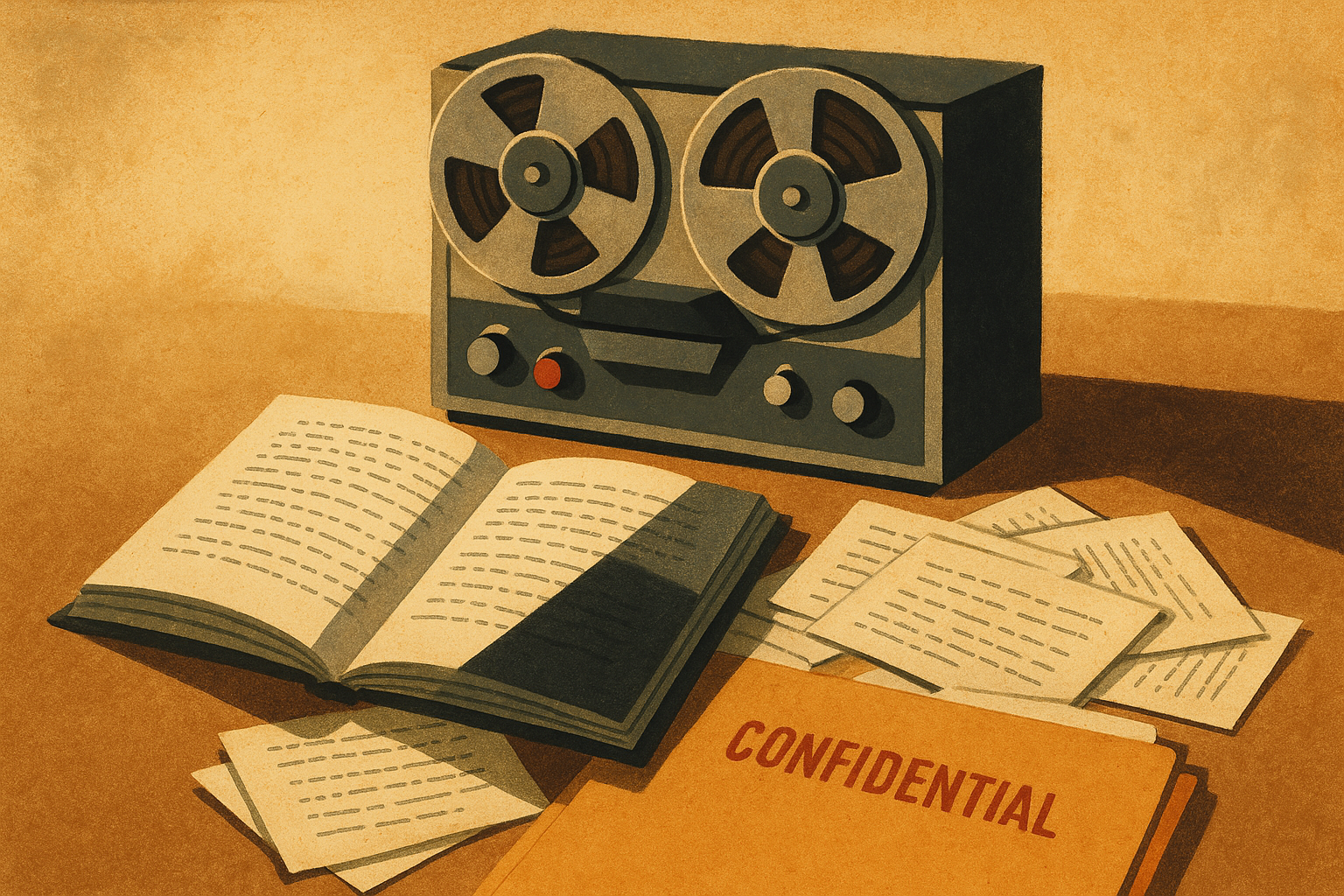
Nearly three hours of audio recordings featuring Joe Biden discussing sensitive government material with his memoir ghostwriter have entered the public record. The tapes, from 2016 and 2017, also reveal instances where Biden appeared to struggle with memory recall.
Jump to The Flipside Perspectives

WASHINGTON D.C. – A trove of private audio recordings featuring Joe Biden, from his time as Vice President and shortly after, has been released to the public, offering new insight into his interactions with a ghostwriter for his 2017 memoir, "Promise Me, Dad." The nearly three hours of recordings capture Biden speaking candidly with Mark Zwonitzer in 2016 and 2017, during which he appears to acknowledge handling sensitive government material while speaking with a private citizen without security clearance.

"Some of this may be classified so be careful with it." — Joe Biden, Former Vice President

The existence of these recordings first became public through the House Judiciary Committee Republicans, who announced they had secured access to the tapes. Committee members credited officials within the current administration for the release, specifically acknowledging "the transparency of President Trump and Todd Blanche at DOJ." The recordings had previously been collected by Special Counsel Robert Hur's team as part of their investigation into whether Biden improperly retained or disclosed classified records after leaving the vice presidency.

During one taping session on November 3, 2016, Biden can be heard flipping through material and remarking, "and then, uh, the next thing I have here is, um, this is classified." A second instance, roughly six months later on April 24, 2017, features Biden directly cautioning Zwonitzer, stating, "Some of this may be classified so be careful with it." These direct statements from the tapes underscore the central concern of the Special Counsel's investigation regarding the handling of sensitive information.

House Judiciary Republicans highlighted findings from Hur’s original report, noting that investigators determined Biden had read from classified notes "nearly verbatim on at least three occasions" while speaking with Zwonitzer. The committee further suggested that these tapes, including segments where Biden's memory appeared to falter, were a significant factor in Special Counsel Hur's decision not to prosecute Joe Biden. Hur's report, issued in February 2024, characterized Biden as an elderly man with significant memory lapses, a description that generated considerable political discussion.

Beyond the discussions of classified material, several segments of the recordings capture Biden struggling mid-conversation to maintain focus or recall specific details. In one 2017 session, Biden appeared to lose his train of thought entirely, telling Zwonitzer, "I was going to ask you something else. Uh. Um. Oh gosh. I can’t think what it is." A separate recording taken just days later depicts Biden attempting to reconstruct memories of an earlier meeting, remarking, "It’s confusing me," before an aide intervened to redirect the conversation.

These newly surfaced audio clips provide the public with direct access to material that was previously only summarized in Hur’s written findings. The controversy surrounding Biden's handling of classified documents initially arose from discoveries in 2022 and 2023 of classified materials at his Delaware residence and a former office space he used after his vice presidency concluded. Federal investigators spent months examining the circumstances of these documents' storage and whether Biden had knowingly retained or shared them.

Mark Zwonitzer, an experienced author known for ghostwriting for other public figures, collaborated closely with Biden throughout the interview process for "Promise Me, Dad." The memoir, published in November 2017, primarily focused on the death of Biden's son Beau and his decision not to pursue a presidential run in 2016.

Neither Mr. Biden nor his representatives have issued a public response since the recordings became available. It remains uncertain whether the House Judiciary Republicans plan to release additional portions of the audio beyond what has already been made public, or if these releases will prompt further congressional action or public debate. The release of these tapes adds a new dimension to the ongoing public discourse surrounding classified document handling by high-ranking officials and the implications for national security.

Advertisement

The Flipside: Different Perspectives

Progressive View

While the proper handling of classified documents is a serious matter, the context surrounding these tapes warrants a nuanced perspective. The recordings stem from a Special Counsel investigation that ultimately concluded without charges, citing Mr. Biden's cooperation and the lack of intent to illegally retain or disclose documents. The selective release of these tapes by House Republicans, rather than a full, unedited disclosure, raises questions about the motivations behind their public dissemination and whether they are being used for political leverage rather than genuine oversight.

It is also important to consider the broader political landscape, where discussions about classified documents have become highly politicized. Equating these circumstances to other cases without acknowledging differing facts and legal conclusions risks creating a false equivalency. The focus on Mr. Biden's memory, as noted in the Hur report and highlighted by these tapes, also veers into territory that can be seen as ageist or an invasion of privacy regarding a public figure's health, especially when the legal conclusion was no wrongdoing. The emphasis should remain on the rule of law and the specific legal findings, not on weaponizing personal health observations for partisan gain.

Conservative View

The release of these tapes directly reinforces concerns about the proper handling of classified information by high-ranking officials and the principle of equal application of the law. President Trump has faced intense scrutiny over his own handling of classified documents; therefore, any evidence suggesting similar conduct by other officials, especially those who have held or aspire to hold the nation's highest office, demands rigorous examination. The explicit statements by Mr. Biden on the tapes, acknowledging the classified nature of materials he was discussing with an un-cleared private citizen, point to a serious lapse in judgment and adherence to national security protocols.

Furthermore, the segments revealing Mr. Biden's struggles with memory and focus during these critical discussions raise significant questions about the cognitive fitness required for leadership, particularly when handling sensitive national security matters. Special Counsel Hur's report cited these memory issues as a factor in declining prosecution, which some conservatives view as a double standard. The transparency provided by these tapes, released through the efforts of the current administration, is crucial for public accountability and ensuring that all individuals, regardless of political stature, are held to the same standards regarding the protection of classified information and the integrity of federal investigations.

Common Ground

Regardless of political affiliation, there is universal agreement on the critical importance of safeguarding classified national security information. The proper handling and storage of such documents are paramount to protecting national interests and ensuring the security of the United States. All government officials, past and present, must adhere to strict protocols designed to prevent unauthorized disclosure, and any deviation from these standards warrants thorough investigation.

Furthermore, transparency in federal investigations, particularly those involving high-ranking officials, is a shared value. The public has a right to understand the facts and findings of such inquiries. While the interpretation of specific evidence may differ, the principle that evidence gathered in a federal investigation should, where appropriate and legally permissible, be made available to the public enhances trust in institutions and promotes accountability. Ensuring consistent application of the law and upholding national security protocols are objectives that transcend partisan divides.

What's your view on this story? Share your thoughts and remember to consider multiple perspectives and being respectful when forming and voicing your opinion. "If you resort to personal attacks, you have already lost the debate..."

Advertisement

Contact Us About This Article

Have a question or comment about this article? We'd love to hear from you.

About Fair Side News

At Fair Side News, we believe in presenting news with perspectives from both sides of the political spectrum. Our goal is to help readers understand different viewpoints and find common ground on important issues.