

Breaking
Sponsor Advertisement
California Vows Tax on Trump's Anti-Weaponization Fund
Image for: California Vows Tax on Trump's Anti-Weaponization Fund

California Vows Tax on Trump's Anti-Weaponization Fund

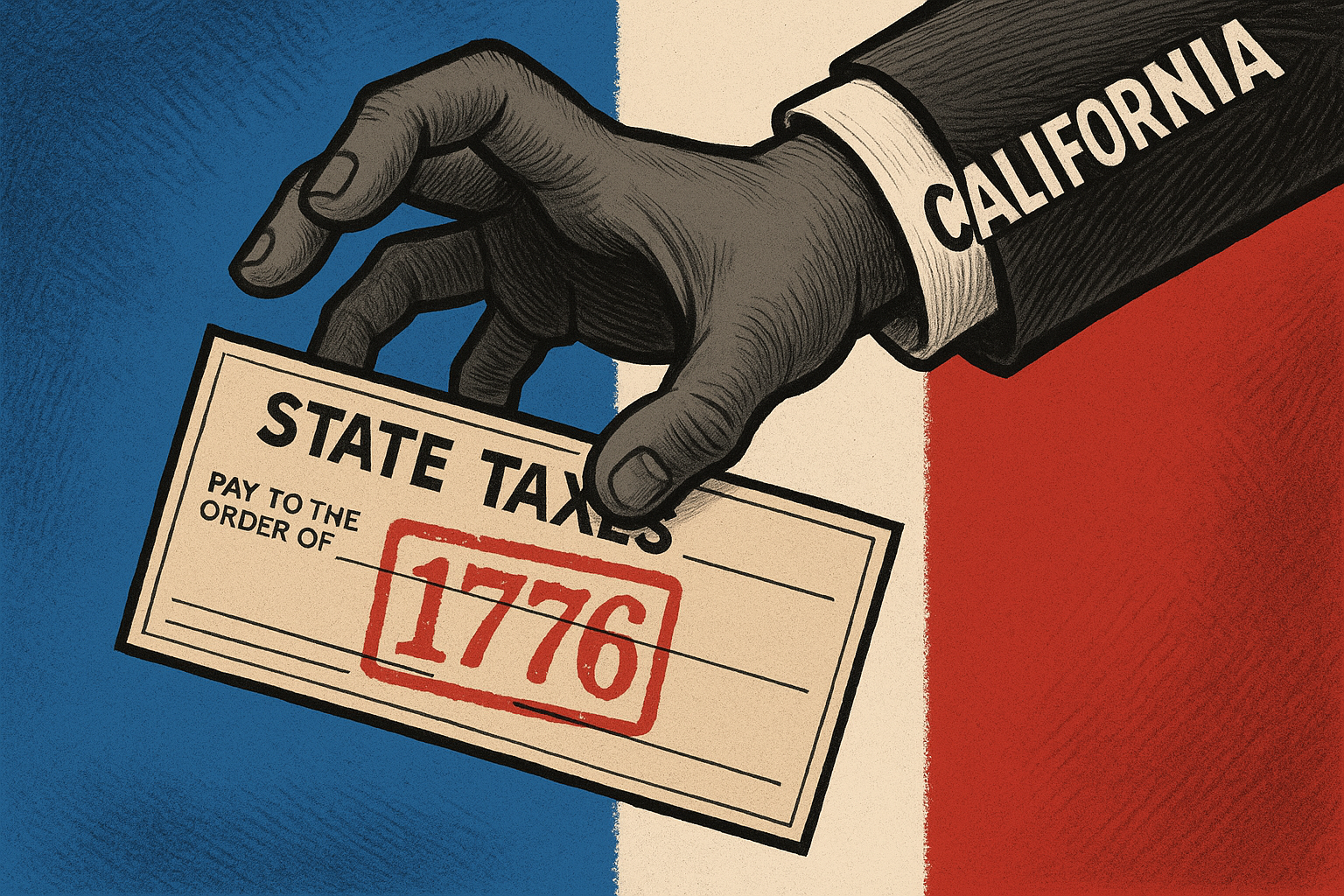
California Governor Gavin Newsom announced plans to tax 100% of proceeds received by state residents from President Donald Trump's new $1.776 billion Anti-Weaponization Fund.
Jump to The Flipside Perspectives

Sacramento, CA – California Governor Gavin Newsom declared Wednesday that the state intends to tax 100% of any payments received by California residents from President Donald Trump's recently established Anti-Weaponization Fund. Speaking at a news conference in Sacramento, Governor Newsom stated the state's clear intention to reclaim the entirety of these proceeds.

"Anyone from California that receives any of those funds, we want to tax 100% of those proceeds. And that's an action the State of California can take." — Gavin Newsom, California Governor

"Anyone from California that receives any of those funds," Newsom said, "We want to tax 100% of those proceeds and that's an action the state of California can take. It's an action we look forward to taking." The governor did not specify an effective date for the proposed tax.

The $1.776 billion Anti-Weaponization Fund was created as part of an agreement where President Trump dropped a $10 billion lawsuit against the IRS concerning the leak of his tax returns. The fund is designed to compensate Americans who can demonstrate they were unfairly targeted by government actions and will be overseen by five individuals appointed by the U.S. attorney general.

The fund's creation has ignited controversy. Supporters argue it provides a legitimate avenue for redress for individuals subjected to government overreach. However, critics, particularly Democrats, express concerns that the fund could disburse payments to individuals charged or convicted in connection with the January 6, 2021, Capitol riot, a group President Trump had previously pardoned en masse upon re-entering the White House. Governor Newsom amplified this criticism in a post on X, linking the pardons to the fund's establishment. "He pardoned all of those folks that were beating up cops and absolved them, providing them 1.776 billion dollars. So not only do you get a pardon, you get rewarded," Newsom wrote, asserting, "That’s why this is needed." Newsom's office further characterized the fund as a "Jan. 6th slush fund" in official communications.

The Justice Department quickly responded to Newsom's announcement. Natalie Baldassarre, a spokesperson for the department, issued an email statement criticizing the governors of California and New York. "Instead of flaunting their love of lawfare and taxing constituents into oblivion, Governors Hochul and Newsom should focus on preventing more of their residents from fleeing in droves to free states with lower taxes, less crime, and governments that actually serve the people they represent," Baldassarre stated.

Republicans within California also criticized Governor Newsom's proposal, drawing attention to what they describe as a pattern of questionable fiscal management. California Republican Senate Minority Leader Brian Jones previously labeled a $25 million California legal fund, created by Newsom to combat "legal warfare" from the Trump administration, as a "slush fund."

Broader scrutiny of Newsom's financial record includes a Kaiser Health News investigation that reported California awarded billions of dollars in emergency contracts during the pandemic to firms with ties to donors, political allies, and well-connected insiders. Critics argued that the state's emergency procurement system allowed these taxpayer-funded contracts to be awarded with limited competition and oversight. The governor's proposed tax comes as California faces an estimated $2.9 billion shortfall for the 2027 fiscal budget.

Furthermore, Newsom's administration has faced sustained criticism over the state's infrastructure spending. California's high-speed rail project, for example, carries an estimated cost of $128 billion with no operational track yet laid. A wildlife crossing bridge also garnered ridicule after exceeding its budget by $21 million, prompting Transportation Secretary Sean Duffy to publicly label it a "bridge to nowhere."

California is not alone in its efforts to counteract the Anti-Weaponization Fund. Similar legislation proposing a 100% tax on fund payouts is being pursued in New Jersey and New York. New York State Assembly member Alex Bores has introduced a bill titled the Anti-Insurrectionist Act, specifically targeting these payments. The fund's creation has also drawn criticism from some Republican senators who have expressed anger at acting Attorney General Todd Blanche regarding the arrangement.

Governor Newsom is widely considered a strong contender for the Democratic presidential nomination in 2028. His frequent and public confrontations with the Trump White House have consistently kept him at the forefront of national Democratic politics. Fox News Digital reportedly reached out to both the White House and Newsom’s office for comment on the matter.

Advertisement

The Flipside: Different Perspectives

Progressive View

Governor Newsom's proposed 100% tax on payments from the Anti-Weaponization Fund is a necessary and morally grounded response to what many progressives view as a dangerous and inappropriate use of public funds. The fund's creation, stemming from a settlement with President Trump, raises serious concerns about its potential to reward individuals involved in anti-democratic actions, particularly those associated with the January 6 Capitol riot. To allow public money to flow to individuals who engaged in violence or sedition, as some critics fear, would be a profound betrayal of democratic values and an insult to law enforcement officers. Newsom's action aims to prevent the legitimization of such behavior and uphold the integrity of the state's financial resources. Moreover, the context of the fund's creation—a deal involving President Trump's tax returns—suggests a political motivation rather than a genuine pursuit of justice for all. From a progressive perspective, government funds should be allocated to strengthen social safety nets, invest in equitable public services, and address systemic inequalities, not to compensate individuals for alleged targeting without robust, independent oversight. The move by California, alongside other states, reflects a commitment to protecting collective well-being and ensuring that state resources are not inadvertently used to support activities that undermine the nation's democratic foundations.

Conservative View

The creation of the Anti-Weaponization Fund represents a critical step towards reining in government overreach and ensuring individual accountability for bureaucratic misconduct. For conservatives, the principle of compensating citizens who have been unfairly targeted by state agencies, such as the IRS, aligns with the fundamental belief in limited government and the protection of individual liberties. President Trump’s initiative to establish this fund, rather than pursuing a personal lawsuit, demonstrates a commitment to broad justice for all Americans. Governor Newsom's immediate move to tax 100% of these proceeds is viewed as a punitive, ideological attack on this principle and an alarming expansion of state power. It undermines the very idea of redress for government abuses and punishes citizens for receiving legitimate compensation. Furthermore, this action highlights California's ongoing fiscal challenges, with the state facing significant budget shortfalls and a track record of exorbitant spending on projects like the high-speed rail. Rather than addressing these internal issues, Newsom appears to be engaging in political posturing, attempting to seize funds that are intended to rectify federal injustices, thereby penalizing his own constituents who may have been victims of government weaponization. This intervention by the state is a direct affront to free markets and individual economic autonomy.

Common Ground

Despite deep disagreements on the Anti-Weaponization Fund, there are underlying areas of common ground that both conservatives and progressives could acknowledge. Both sides generally agree on the importance of government accountability and the need to prevent abuse of power by federal agencies. The concept of due process and fair treatment under the law is a shared value, even if interpretations of "fairly targeted" differ. Furthermore, both viewpoints express concern over the responsible use of taxpayer dollars, albeit from different angles—conservatives focusing on preventing punitive taxation and wasteful spending, and progressives on ensuring funds serve public good and do not reward harmful actions. There is also a shared interest in transparent governance and ensuring that any funds established to address grievances are managed with integrity and clear criteria. A bipartisan approach could involve establishing an independent, non-partisan body to oversee any such compensation funds, ensuring strict eligibility requirements that preclude those convicted of violent crimes or sedition, and focusing on victims of demonstrable, non-political government overreach. This would allow for legitimate redress without creating perceived loopholes or rewarding behaviors that undermine democratic institutions.

What's your view on this story? Share your thoughts and remember to consider multiple perspectives and being respectful when forming and voicing your opinion. "If you resort to personal attacks, you have already lost the debate..."

Advertisement

Contact Us About This Article

Have a question or comment about this article? We'd love to hear from you.

About Fair Side News

At Fair Side News, we believe in presenting news with perspectives from both sides of the political spectrum. Our goal is to help readers understand different viewpoints and find common ground on important issues.