

Breaking
Sponsor Advertisement
Crockett Links World Cup Fandom to Racism at Smithsonian Hearing
Image for: Crockett Links World Cup Fandom to Racism at Smithsonian Hearing

Crockett Links World Cup Fandom to Racism at Smithsonian Hearing

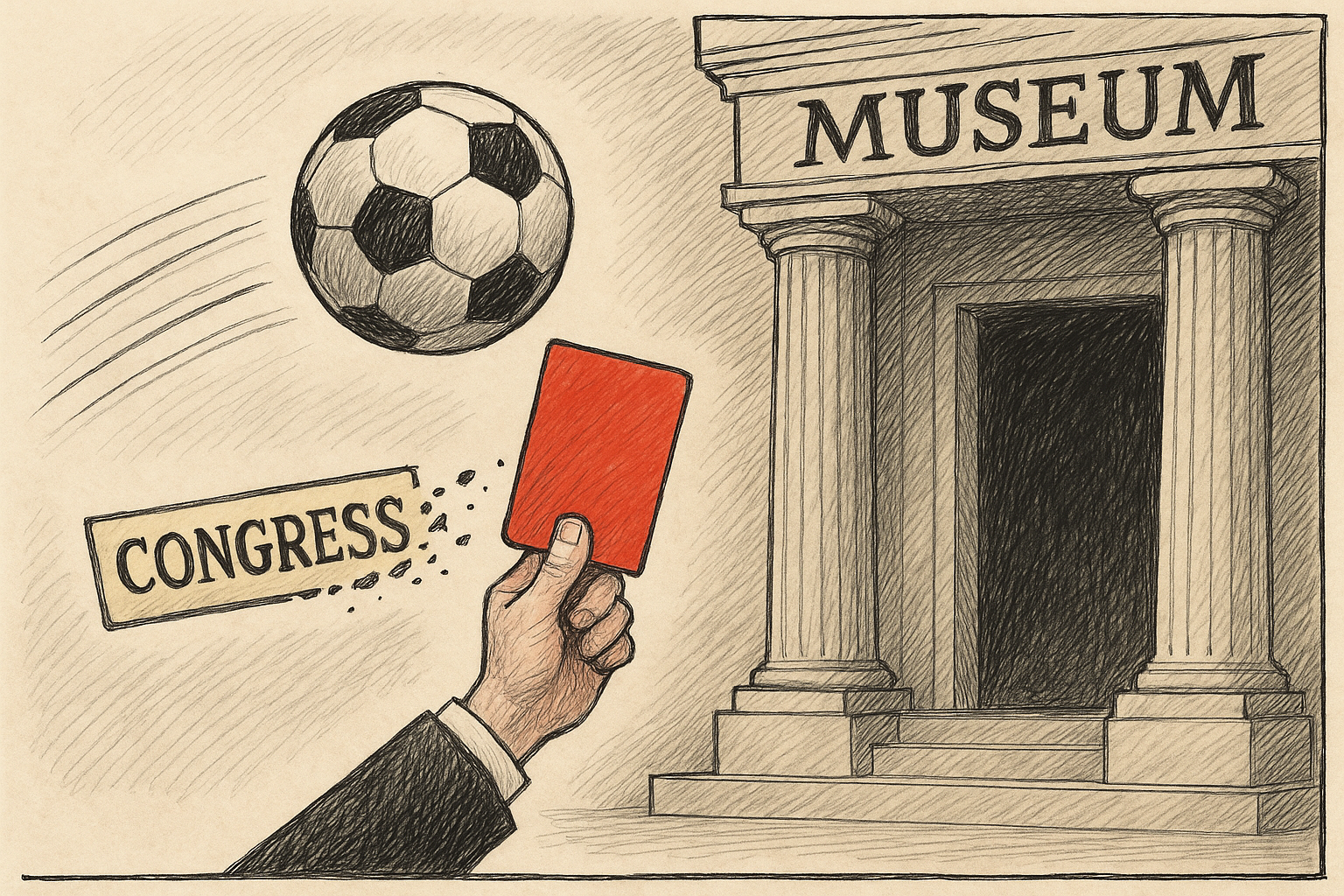
During a House Oversight Committee hearing on the Smithsonian Institution, Rep. Jasmine Crockett (D-TX) suggested global World Cup viewership favored Spain over Argentina due to racial bias. She also characterized the hearing itself as a "white pride rally disguised as a Congressional hearing.
Jump to The Flipside Perspectives

A routine congressional hearing aimed at scrutinizing the Smithsonian Institution took an unexpected turn this week when Representative Jasmine Crockett (D-TX) linked international soccer fandom to racial bias and leveled sharp criticism at her Republican colleagues. The detour occurred during a Tuesday session of the House Oversight and Government Reform Subcommittee on Delivering on Government Efficiency, which had convened to examine the operations and content of the Smithsonian's extensive network of museums.

"The Republicans' white pride rally disguised as a Congressional hearing." — Rep. Jasmine Crockett, U.S. Representative (D-TX)

The hearing featured Professor David Blight, a witness called by Democrats, providing testimony related to Smithsonian programming. However, the discussion shifted abruptly when Representative Crockett used her allotted time to question Blight not about museum policy, but about the recently concluded World Cup final, which saw Spain defeat Argentina 1-0 after extra time. The tournament had captivated global audiences just days prior to the Capitol Hill proceedings.

Representative Crockett initiated her line of questioning by framing the World Cup as a showcase of diversity. "I want to go back real quick, though, Dr. Blight, because you talked about the World Cup, the World Cup that that captured the imaginations of the entire world when they saw all of these people of color that was playing for all these teams, and ultimately, if you recall, the last two teams, it was Argentina and Spain, and it seemed like the vast majority of the world was rooting for Argentina, or actually against Argentina, right?" she asked. She then pressed Professor Blight to speculate on the underlying reasons for this perceived sentiment. "And why was that? Just give me an explanation if you could guess," she requested.

Professor Blight's response, however, did not align with a racial interpretation, instead attributing Spain's popularity to competitive performance. "Spain’s had the best team. Maybe that’s why they were rooting for them," Blight stated. Unconvinced by this explanation, Representative Crockett attempted to introduce a historical context to her claim, asserting, "There’s also a racist history that exists as it relates to Argentina." Before she could elaborate further on this point, Chairman Tim Burchett intervened, cutting off her line of questioning regarding the soccer tournament.

The exchange over the World Cup was not the sole flashpoint of the hearing. Representative Crockett subsequently broadened her critique, casting doubt on the motivations of the Republican lawmakers leading the proceedings. In a particularly striking comment, she characterized the congressional gathering as a "white pride rally disguised as a Congressional hearing." She further suggested that any discomfort among committee members stemmed from an unwillingness to confront what she termed "uncomfortable historical realities." "It might be uncomfortable for some people on this committee to hear about the true history of America, and I hate that for them, but facts are facts," Crockett said.

The hearing itself was part of a larger, ongoing effort by Republican lawmakers to scrutinize the Smithsonian Institution. Congressional Republicans have consistently criticized what they perceive as ideologically driven content and programming within various Smithsonian exhibits in recent months, with Professor Blight's testimony forming one component of this broader review.

Representative Crockett's comments regarding both the World Cup and the nature of the hearing quickly became the most widely discussed elements of a session originally intended to focus on federal museum system policy. The World Cup final, which provided the initial context for Crockett's remarks, had concluded days earlier without any reported controversy from players, coaches, or tournament organizers concerning racial bias in fan support. The lawmaker's characterizations, however, brought a new dimension of debate to the congressional oversight process.

Advertisement

The Flipside: Different Perspectives

Progressive View

Progressives would argue that Representative Crockett's comments, while perhaps unconventional in a Smithsonian hearing, serve to highlight the interconnectedness of culture, history, and systemic issues, even in seemingly unrelated contexts like international sports. From this perspective, institutions like the Smithsonian have a crucial role in confronting and presenting "the true history of America," including uncomfortable truths about race, colonialism, and their legacies. Crockett's attempt to link World Cup fandom to historical racial dynamics, even if speculative, reflects a progressive concern with examining underlying biases in cultural phenomena. Her characterization of the hearing as a "white pride rally" can be interpreted as a sharp critique of what progressives see as Republican efforts to sanitize history and resist discussions about systemic inequities within public institutions. For progressives, challenging dominant narratives and pushing for a more inclusive and critical understanding of history is essential for social justice and collective well-being.

Conservative View

From a conservative perspective, Representative Crockett's remarks represent a significant deviation from the intended purpose of a congressional oversight hearing. The core function of such a hearing is to ensure accountability and efficient use of taxpayer funds within federal institutions like the Smithsonian. Introducing unsubstantiated claims about racism in international sports, followed by labeling the hearing itself a "white pride rally," is seen as a politicization of a policy discussion, undermining the decorum and serious work of Congress. Conservatives prioritize individual liberty and personal responsibility, advocating for evidence-based arguments rather than broad accusations that can stifle open debate. They view such rhetoric as a distraction from substantive policy issues and an attempt to inject identity politics into every facet of public life, including cultural institutions. The focus should remain on ensuring the Smithsonian accurately represents American history and culture without succumbing to ideological agendas, rather than engaging in unrelated cultural critiques.

Common Ground

Despite the contentious nature of the discussion, there are areas of common ground regarding federal institutions and oversight. Both conservatives and progressives can agree on the importance of transparency and accountability for federally funded institutions like the Smithsonian. There is a shared interest in ensuring that these museums are well-managed and effectively serve the public. Furthermore, both sides generally value accurate historical representation, even if their interpretations of historical narratives or the emphasis placed on certain aspects differ significantly. A common goal is to foster an environment where complex historical topics can be discussed thoughtfully, with robust oversight ensuring that taxpayer money is utilized responsibly and that cultural institutions remain relevant and accessible to all Americans, regardless of political affiliation.

What's your view on this story? Share your thoughts and remember to consider multiple perspectives and being respectful when forming and voicing your opinion. "If you resort to personal attacks, you have already lost the debate..."

Advertisement

Contact Us About This Article

Have a question or comment about this article? We'd love to hear from you.

About Fair Side News

At Fair Side News, we believe in presenting news with perspectives from both sides of the political spectrum. Our goal is to help readers understand different viewpoints and find common ground on important issues.