


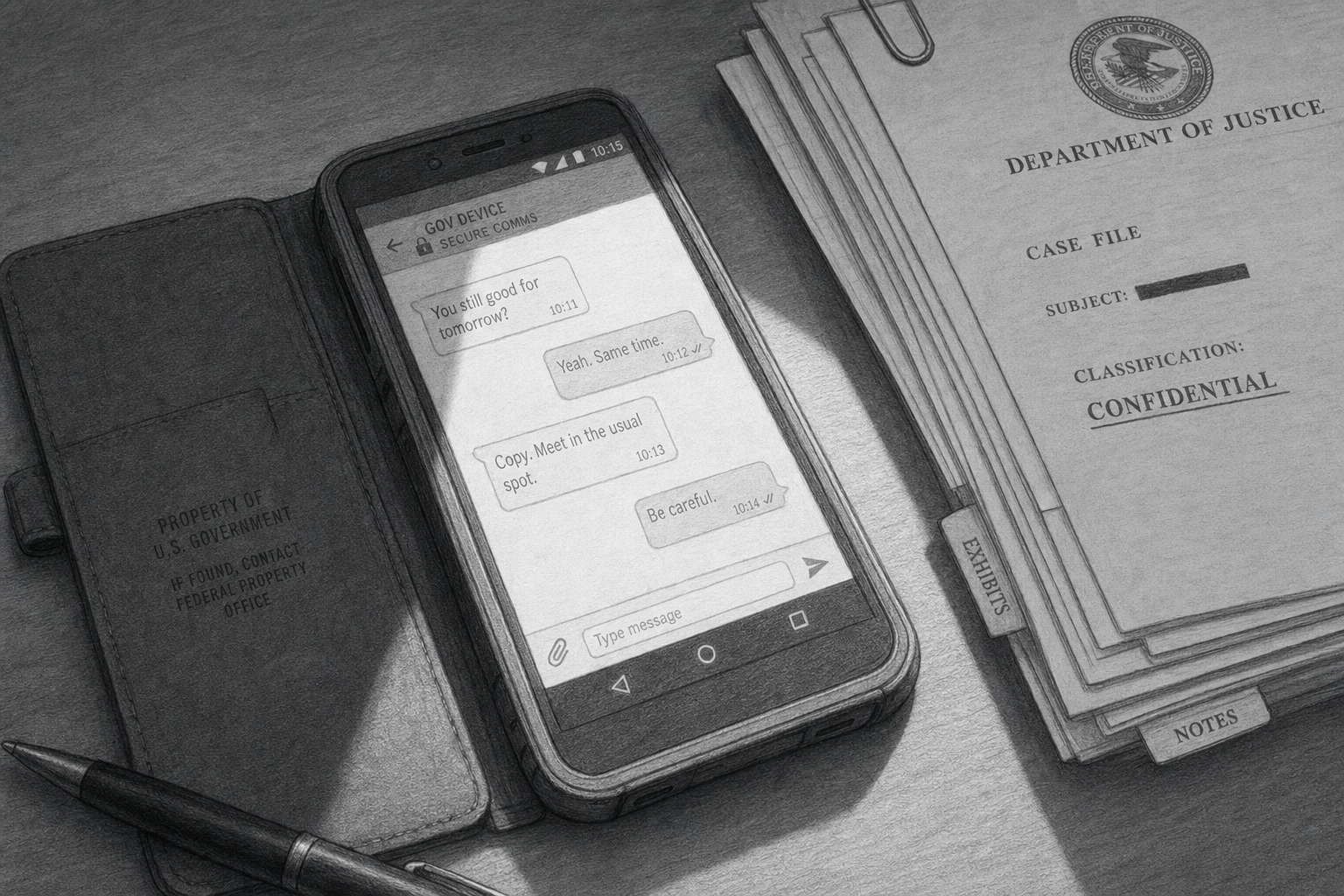
Washington D.C. — Senators Ron Johnson (R-WI) and Rand Paul (R-KY) announced this week that they have obtained and begun releasing contents from a government phone used by Dr. Anthony Fauci during the COVID-19 pandemic. The disclosure includes private text messages from January 2021 that reveal internal discussions among top federal health officials about potential risks, including miscarriage, for pregnant women receiving the newly rolled-out COVID-19 vaccines.
"definitely a good point, esp after dose two." — Rochelle Walensky, then-CDC Director
The device, which served as Dr. Fauci's primary government phone throughout his tenure overseeing the nation's COVID-19 response as Director of the National Institute of Allergy and Infectious Diseases (NIAID), reportedly contains over 34,000 text messages and 522 voicemails, despite listing only three saved contacts. Senators Johnson and Paul have cautioned that investigators are still working to confirm whether any material may have been removed from the device. The release of these communications has reignited scrutiny over the transparency and consistency of public health messaging during the pandemic.
Among the first messages made public is an exchange from January 25 and 26, 2021, involving Dr. Fauci, then-CDC Director Rochelle Walensky, and then-Surgeon General Vivek Murthy. The central topic of their conversation was the potential risk of miscarriage for pregnant women receiving the COVID-19 vaccine.
The discussion was initiated by Dr. Murthy, who directly questioned Dr. Fauci about the existence of any data or theoretical basis suggesting a preference for vaccinating pregnant women earlier or later in their pregnancies. Dr. Murthy also pressed for a timeline on when more comprehensive safety data might become available, noting that he had been reassuring pregnant patients that initial clinical trials showed no evidence of troubling outcomes.
In his initial response, Dr. Fauci aligned with Dr. Walensky’s perspective, stating there was "no data or theoretical reason to believe that vaccinating early versus later in pregnancy would be preferred." He further dismissed a circulating rumor that mRNA vaccines could alter a person’s genetic code, a concern he acknowledged was heightened when applied to a developing fetus.
However, approximately two hours after his initial message, Dr. Fauci sent a follow-up text to the group, introducing a new concern he had "only just uncovered." He explained that many vaccine recipients experienced a cytokine storm, accompanied by fever, following their second dose. Dr. Fauci raised the possibility that this intense immune reaction could theoretically trigger a miscarriage if it occurred during the first trimester of pregnancy. The Cleveland Clinic describes a cytokine storm as an overwhelming release of immune-system proteins that can damage tissues and organs.
Dr. Walensky’s reply to Dr. Fauci's warning was concise but significant, stating it was "definitely a good point, esp after dose two." Dr. Murthy also acknowledged that this warning aligned with other concerns he had been hearing, specifically about mRNA vaccines potentially causing mutations in developing fetuses, and agreed the cytokine storm theory warranted attention.
Dr. Fauci then elaborated on his broader reasoning for public health officials, emphasizing that when safety data is limited for a specific population, it is crucial to balance the unknown risks of a vaccine against the known dangers of the disease itself. He highlighted that COVID-19 could severely impact pregnant women. By that point in early 2021, Dr. Fauci noted that more than 10,000 pregnant women had already received the vaccine under its emergency authorization, concluding, "No issues have arisen."
Dr. Murthy raised another concern during the exchange, expressing surprise that the World Health Organization had issued a "forceful public statement" on the topic, which he worried could erode public trust among expectant mothers. Weeks later, in a February 2021 interview, Dr. Fauci publicly stated that "no red flags" had surfaced after approximately 20,000 pregnant women received the vaccine—a message that was subsequently repeated by health officials for several months.
Senators Johnson and Paul have indicated that the messages released this week represent only a small fraction of the material recovered from Dr. Fauci’s phone, with tens of thousands of additional texts still undergoing review. The full extent to which further disclosures may reveal other private deliberations that diverged from the administration's public health messaging remains a subject of ongoing investigation and public interest.

