

Breaking
Sponsor Advertisement
FBI Captures $32 Million COVID Relief Fraud Fugitive in Jamaica
Image for: FBI Captures $32 Million COVID Relief Fraud Fugitive in Jamaica

FBI Captures $32 Million COVID Relief Fraud Fugitive in Jamaica

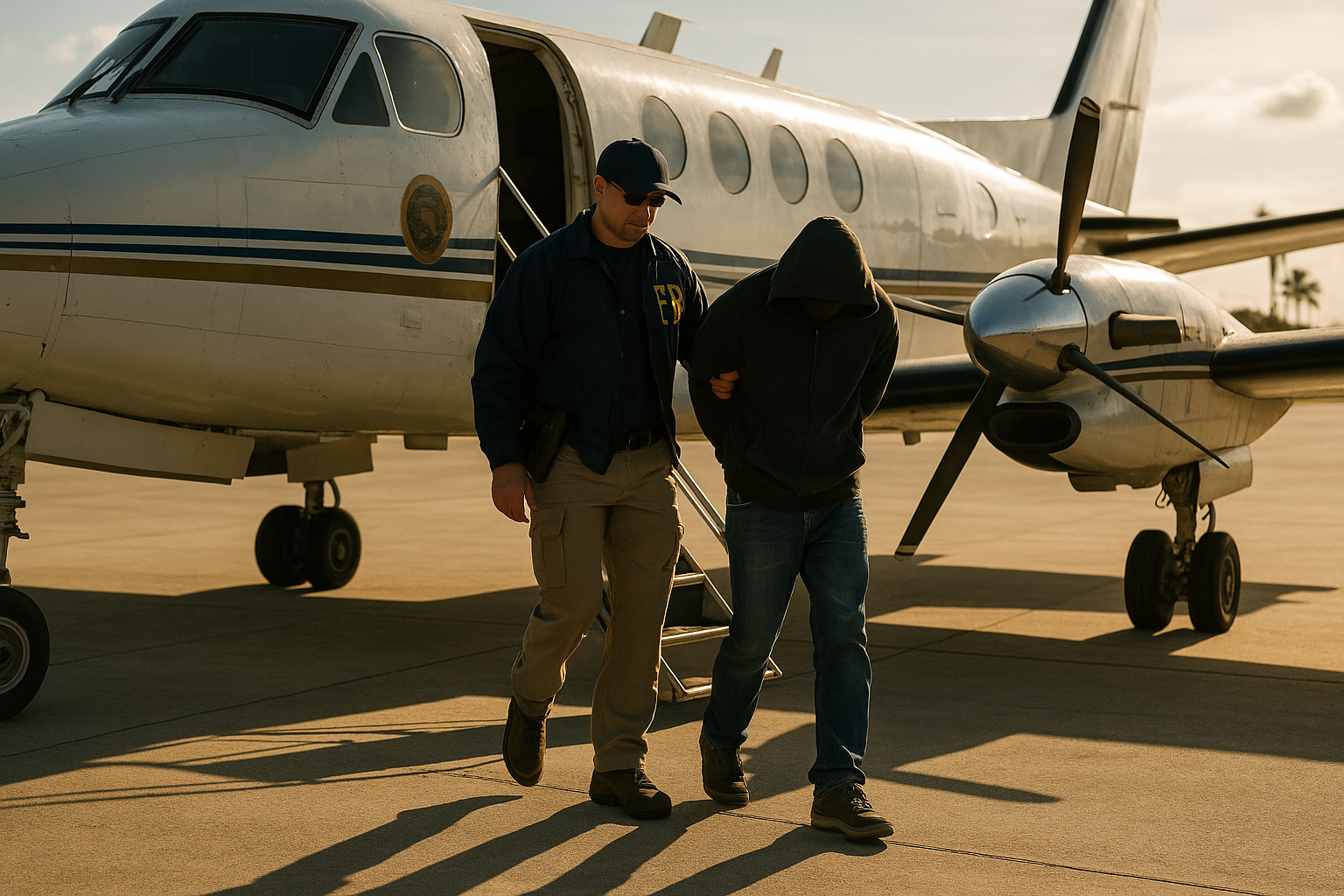
Elaine Angene Escoe, a Jamaican national accused of participating in a $32 million COVID-19 relief fraud scheme, has been arrested in Jamaica and returned to the U.S. to face federal charges. Her capture marks the fourth from the FBI's Most Wanted Fraudsters list in the past five weeks.
Jump to The Flipside Perspectives

A Jamaican national accused of orchestrating a multimillion-dollar COVID-19 relief fraud scheme has been apprehended in Jamaica and returned to the United States to face federal charges. Elaine Angene Escoe, 41, arrived in South Florida on Thursday, July 24, 2026, following her arrest by Jamaican law enforcement, as announced by the FBI and the U.S. Attorney’s Office for the Southern District of Florida. This development marks a significant step in federal efforts to prosecute individuals who allegedly defrauded pandemic relief programs.

"Escoe’s arrest marks the fourth capture from the FBI’s Most Wanted Fraudsters list in the past five weeks." — Kash Patel, FBI Director

Federal prosecutors have charged Escoe with conspiracy to commit wire fraud, wire fraud, conspiracy to commit money laundering, and multiple counts of money laundering. According to investigators, Escoe and five co-defendants allegedly submitted more than 90 fraudulent applications for various federal pandemic relief programs between May 2020 and November 2021. These programs included the Paycheck Protection Program (PPP), the Economic Injury Disaster Loan (EIDL) program, the Restaurant Revitalization Fund (RRF), and the Shuttered Venue Operators Grant (SVOG) program, all designed to support businesses and individuals impacted by the COVID-19 pandemic.

Authorities allege that the applications contained false information regarding crucial metrics such as employee counts, payroll expenses, and business revenues, misleading federal agencies into disbursing funds. The alleged scheme resulted in the fraudulent acquisition of approximately $29.1 million from PPP, $1.2 million from RRF, and $3.8 million from SVOG, accumulating a total of more than $32 million in federal relief money. Following the fraudulent acquisition, the FBI stated that Escoe and her alleged co-conspirators transferred money among themselves and businesses they controlled. They also reportedly withdrew substantial amounts of cash and utilized blank signed checks in an attempt to obscure the origin of the illicit proceeds, characteristic tactics in complex money laundering operations.

All five of Escoe’s co-defendants have either pleaded guilty or been convicted at trial, highlighting the collaborative nature of the alleged fraud and the ongoing legal proceedings against those involved. Escoe, however, became a fugitive after a federal arrest warrant was issued for her on May 22, 2025, in the U.S. District Court for the Southern District of Florida. Investigators stated that Escoe had been notified of a scheduled court appearance on June 5, 2025, but failed to appear. She was last seen in Palm Beach County on June 3, 2025, before allegedly fleeing to Jamaica.

In Jamaica, Escoe reportedly lived under the assumed name "Harley Newman" in an attempt to evade capture. The FBI had placed her on its Most Wanted Fraudsters list, underscoring the severity of the charges and the agency's commitment to her apprehension. A reward of up to $150,000 was offered for information leading to her arrest and conviction. The FBI eventually received a tip that proved crucial, leading Jamaican authorities to locate and arrest her, facilitating her return to the U.S. to face justice.

FBI Director Kash Patel commented on the significance of Escoe's capture, noting it as the fourth arrest from the FBI’s Most Wanted Fraudsters list within the past five weeks. Patel further elaborated on the broader success of federal law enforcement efforts, stating that the FBI and its partners have returned more than 30 high-value fugitives to the U.S. since June. According to Director Patel, the four recently captured suspects collectively face allegations involving nearly $1.8 billion in fraud, having spent more than 3,500 days as fugitives across three continents. This underscores the scale of fraud perpetrated against federal programs and the extensive efforts required to bring alleged perpetrators to justice.

Court records indicate that Escoe immigrated to South Florida from Jamaica at age nine. She later graduated from Olympic Heights High School in Boca Raton with a 3.8 grade-point average and subsequently earned degrees in psychology and finance from Lynn University. Her academic background provides a stark contrast to the sophisticated financial crimes she is now accused of committing. With her return to the U.S., Escoe will now proceed through the federal judicial system to address the charges leveled against her.

Advertisement

The Flipside: Different Perspectives

Progressive View

The alleged $32 million COVID relief fraud involving Elaine Angene Escoe and her co-defendants presents a critical opportunity to examine systemic vulnerabilities that allow such large-scale deception to occur. While individual accountability is paramount, the sheer volume of fraud, totaling billions across various schemes, suggests that the design and implementation of these emergency relief programs may have lacked sufficient safeguards. Progressives emphasize that the primary goal of these programs was to provide urgent support to struggling businesses and workers, and any diversion of funds through fraud undermines public trust and deprives those genuinely in need. The fact that Escoe and others allegedly exploited these programs highlights the necessity for robust oversight mechanisms, advanced data analytics, and pre-emptive fraud detection systems within government agencies. This incident should prompt a comprehensive review of how emergency funds are distributed and monitored to ensure equity and prevent future exploitation. Rather than solely focusing on individual culpability, a progressive approach also calls for addressing the conditions that enable such crimes, including potential weaknesses in regulatory frameworks and the need for greater transparency in financial transactions related to public funds.

Conservative View

The arrest of Elaine Angene Escoe for her alleged role in a $32 million COVID relief fraud scheme highlights critical concerns for conservatives regarding government spending and accountability. This case underscores the immense vulnerability of large-scale government programs to fraud, especially when implemented rapidly without sufficient oversight. From a conservative perspective, such widespread fraud represents a direct attack on taxpayer money, diverting funds intended for legitimate relief to illicit gains. It reinforces the argument for limited government intervention and rigorous fiscal responsibility. The sheer volume of fraudulent applications and the subsequent money laundering activities demonstrate a profound disrespect for the rule of law and the integrity of federal programs. Conservatives advocate for robust enforcement mechanisms and severe penalties to deter such criminal behavior, emphasizing that individual responsibility for fraudulent acts must be met with swift and decisive justice. The FBI's efforts in tracking down and apprehending fugitives like Escoe are commendable, showcasing the importance of strong law enforcement in protecting public funds and maintaining societal order. This incident serves as a stark reminder of the financial risks associated with expansive government programs and the imperative to safeguard taxpayer dollars against waste, fraud, and abuse.

Common Ground

Both conservative and progressive viewpoints converge on the fundamental principle that fraud against government programs, particularly those designed for emergency relief, is unacceptable and must be vigorously prosecuted. There is bipartisan agreement on the imperative to protect taxpayer funds and ensure that resources intended for public good reach their legitimate recipients. The apprehension of Elaine Angene Escoe, a high-profile fugitive accused of $32 million in COVID relief fraud, demonstrates a shared commitment to upholding the rule of law and bringing alleged criminals to justice. Both sides can agree on the importance of strong, effective law enforcement agencies, like the FBI, in investigating and dismantling complex fraud schemes. Furthermore, there is common ground in advocating for enhanced program integrity measures, improved oversight, and the implementation of advanced technologies to detect and prevent fraud in federal programs. Strengthening inter-agency cooperation, both domestically and internationally, to track down fugitives and recover stolen funds is also a point of consensus, ensuring that those who attempt to defraud the system face consequences regardless of where they flee.

What's your view on this story? Share your thoughts and remember to consider multiple perspectives and being respectful when forming and voicing your opinion. "If you resort to personal attacks, you have already lost the debate..."

Advertisement

Contact Us About This Article

Have a question or comment about this article? We'd love to hear from you.

About Fair Side News

At Fair Side News, we believe in presenting news with perspectives from both sides of the political spectrum. Our goal is to help readers understand different viewpoints and find common ground on important issues.