

Breaking
Sponsor Advertisement
FBI Director Patel's College Arrests Resurface Amidst New Allegations
Image for: FBI Director Patel's College Arrests Resurface Amidst New Allegations

FBI Director Patel's College Arrests Resurface Amidst New Allegations

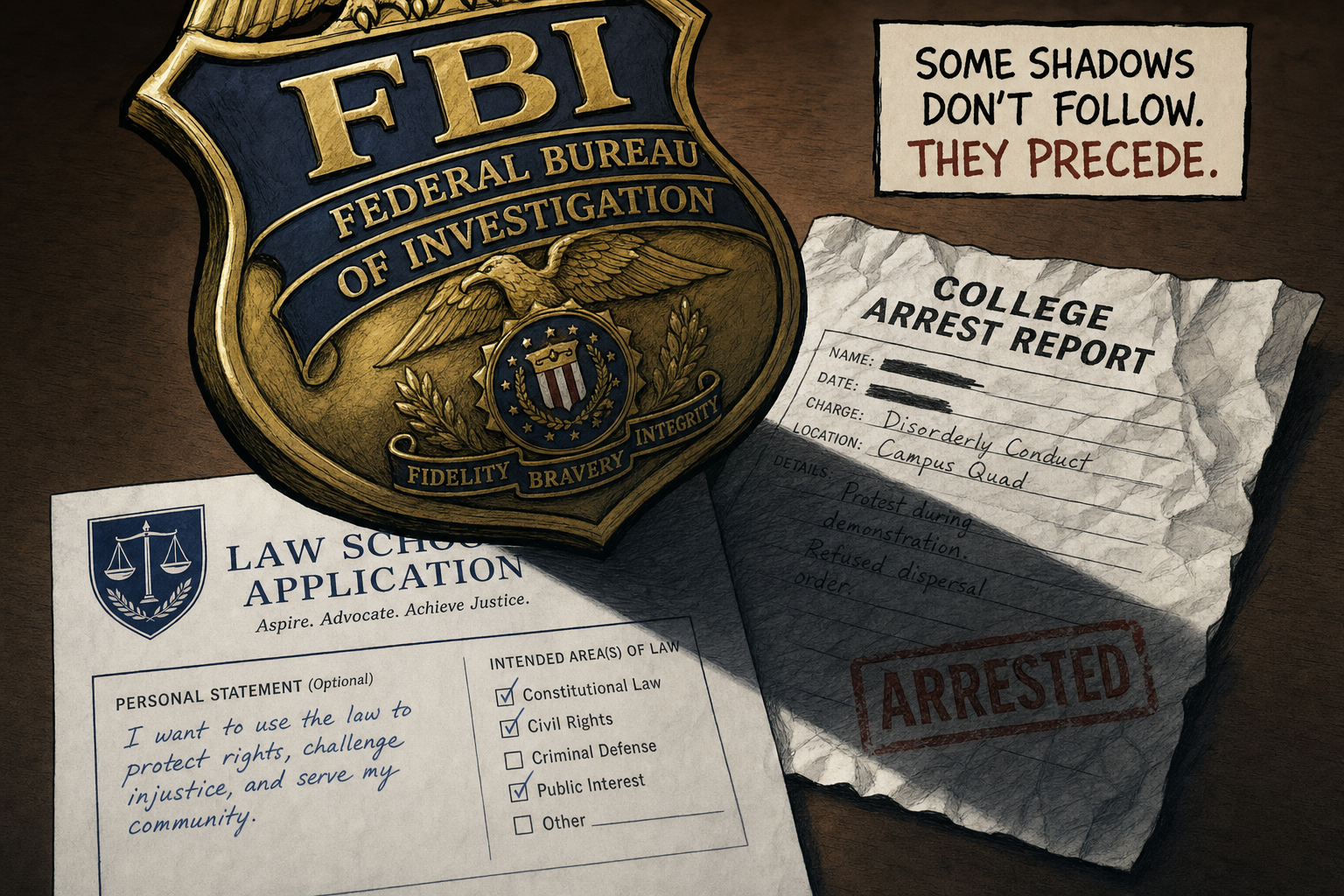
FBI Director Kash Patel's college-era arrests for public intoxication and attempted public urination have resurfaced through a 2005 letter he submitted for his Florida Bar application.
Jump to The Flipside Perspectives

FBI Director Kash Patel's past conduct during his college and law school years has re-entered public discussion following the disclosure of records by The Intercept. These records detail two alcohol-related arrests from over two decades ago, which Patel himself outlined in a 2005 letter concerning his Florida Bar application. The letter, found within Patel’s personnel file at the Miami-Dade Public Defender’s Office where he later worked, provides his account of the incidents.

"I have never been intoxicated on the job, and that is why we filed a $250 million defamation lawsuit." — Kash Patel, FBI Director

The first incident occurred in 2001 while Patel was an undergraduate student at the University of Richmond in Virginia. According to his letter, Patel had consumed two alcoholic drinks before attending a home basketball game, where he was involved with the Richmond Rowdies, a student fan organization. He stated that a school officer escorted him from the arena due to what he described as excessive cheering. "Upon exiting the arena," Patel wrote in his 2005 letter, "the officer placed me under arrest for public intoxication, as I was not yet of 21 years of age." Patel indicated that he paid a fine following this incident. NBC News had previously reported on this 2001 arrest, noting that Patel was found guilty of a misdemeanor charge days later.

A second arrest took place in 2005, during Patel's time as a law student at Pace University School of Law in New York. Patel recounted celebrating with friends, which involved visiting several local bars and consuming alcohol. While walking home, Patel and others attempted to urinate in public. "In a gross deviation from appropriate conduct, we attempted to relieve our bladders while walking home," Patel wrote. He further explained that a police cruiser stopped the group before they could complete the act. "Before we could even do so, a police cruiser stopped the group," he stated, adding, "We were then arrested for public urination." Patel also said he paid a fine after this arrest.

In his 2005 letter, Patel addressed both incidents, expressing regret for his behavior and emphasizing that these arrests were not reflective of his typical conduct. "Both of these incidents are not representative of my usual conduct of behavior," Patel wrote, expressing hope that they would be considered "an anomaly."

The resurfacing of this letter and the details of these decades-old incidents occur at a sensitive time for Director Patel, who is currently confronting separate allegations regarding his alcohol consumption. The Atlantic recently published a report, citing anonymous sources, which claimed that Patel's drinking had become "a recurring source of concern across the government." The report further alleged that Patel had been intoxicated at private clubs in Washington and Las Vegas.

Patel has vehemently denied these contemporary allegations, asserting that claims of excessive drinking affecting his work are "fabricated." His attorney, Jesse Binnall, reiterated this position in a defamation complaint filed on Patel’s behalf, for which Patel is seeking $250 million in damages.

Speaking at a press conference on Tuesday, the FBI Director directly refuted the accusations, stating, "I have never been intoxicated on the job, and that is why we filed a $250 million defamation lawsuit." He also issued a warning to any others considering making similar allegations: "And any one of you who wants to participate, bring it on. I’ll see you in court."

A spokesperson for Director Patel, Erica Knight, defended him following the publication of the records, highlighting that his background had been thoroughly examined prior to his appointment as FBI Director. "Kash’s entire background was thoroughly examined and vetted prior to him assuming this role," Knight stated. She characterized the renewed attention on these decades-old incidents as an attempt to undermine Patel's leadership and distract from his ongoing work at the FBI.

Despite these past incidents, Patel went on to establish a career in law, holding various national security positions before his current role as the ninth director of the Federal Bureau of Investigation. The timing of these disclosures, amidst the current allegations and the defamation lawsuit, places a renewed focus on the standards of conduct for high-ranking federal officials.

Advertisement

The Flipside: Different Perspectives

Progressive View

From a progressive viewpoint, the resurfacing of FBI Director Kash Patel's past arrests, even if decades old, combined with recent allegations of problematic alcohol consumption, raises concerns about the consistent judgment and integrity required of such a critical public office. While youthful indiscretions can be forgiven, the pattern of alcohol-related incidents, from public intoxication and attempted public urination to more recent claims by anonymous sources, warrants serious consideration. The FBI Director holds immense power and is responsible for upholding the law and maintaining public trust.

Progressives emphasize accountability and the high ethical standards expected from those in positions of power. The fact that these past incidents were disclosed in a bar application doesn't negate their occurrence; rather, it highlights a history of behavior that, while not criminal in a serious sense, suggests a lack of discretion. Given the sensitive nature of the FBI Director's role, any suggestion of impaired judgment, whether past or present, due to alcohol consumption is a matter of public interest. It is crucial for the public to have absolute confidence in the Director's capacity to lead and make sound decisions, unburdened by personal issues that could compromise their effectiveness or create vulnerabilities.

Conservative View

From a conservative perspective, the resurfacing of decades-old college incidents involving FBI Director Kash Patel appears to be a politically motivated attempt to discredit a high-ranking official. These incidents, occurring when Patel was underage or a young law student, were self-disclosed by him during his Florida Bar application process in 2005. This demonstrates transparency and personal responsibility, as he openly accounted for his past behavior. The fact that he was vetted and approved for numerous sensitive national security roles, culminating in his appointment as FBI Director, underscores that these youthful indiscretions were deemed irrelevant to his professional capabilities.

Conservatives emphasize individual liberty and the right to move past youthful mistakes, especially when those mistakes were acknowledged and addressed. The focus should remain on Patel's current performance and adherence to the law in his capacity as FBI Director. The timing of these leaks, coinciding with unsubstantiated allegations of current drinking habits and his subsequent $250 million defamation lawsuit, raises questions about the motives of those bringing these old records to light. It suggests an effort to undermine public trust in a key federal law enforcement leader through character assassination rather than substantive policy critique, which runs counter to principles of fair play and due process.

Common Ground

Regardless of political affiliation, there is common ground in the expectation that high-ranking public officials, particularly those leading critical law enforcement agencies like the FBI, must maintain a high standard of conduct and integrity. Both conservatives and progressives agree on the importance of transparency in the vetting process for such roles, ensuring that a candidate's full background is considered. While there may be differing views on the relevance of decades-old youthful indiscretions, there is shared agreement that any current allegations of misconduct or impaired judgment must be thoroughly investigated and addressed.

Furthermore, both sides can concur on the right of any individual, including a public official, to due process and to defend their reputation against what they perceive as false or defamatory claims. The legal process initiated by Director Patel through his defamation lawsuit is a mechanism for seeking resolution and establishing truth, which both conservative and progressive principles support. Ultimately, the public's trust in the FBI and its leadership is paramount, necessitating a careful balance between holding officials accountable and protecting them from unsubstantiated or politically motivated attacks.

What's your view on this story? Share your thoughts and remember to consider multiple perspectives and being respectful when forming and voicing your opinion. "If you resort to personal attacks, you have already lost the debate..."

Advertisement

Contact Us About This Article

Have a question or comment about this article? We'd love to hear from you.

About Fair Side News

At Fair Side News, we believe in presenting news with perspectives from both sides of the political spectrum. Our goal is to help readers understand different viewpoints and find common ground on important issues.