


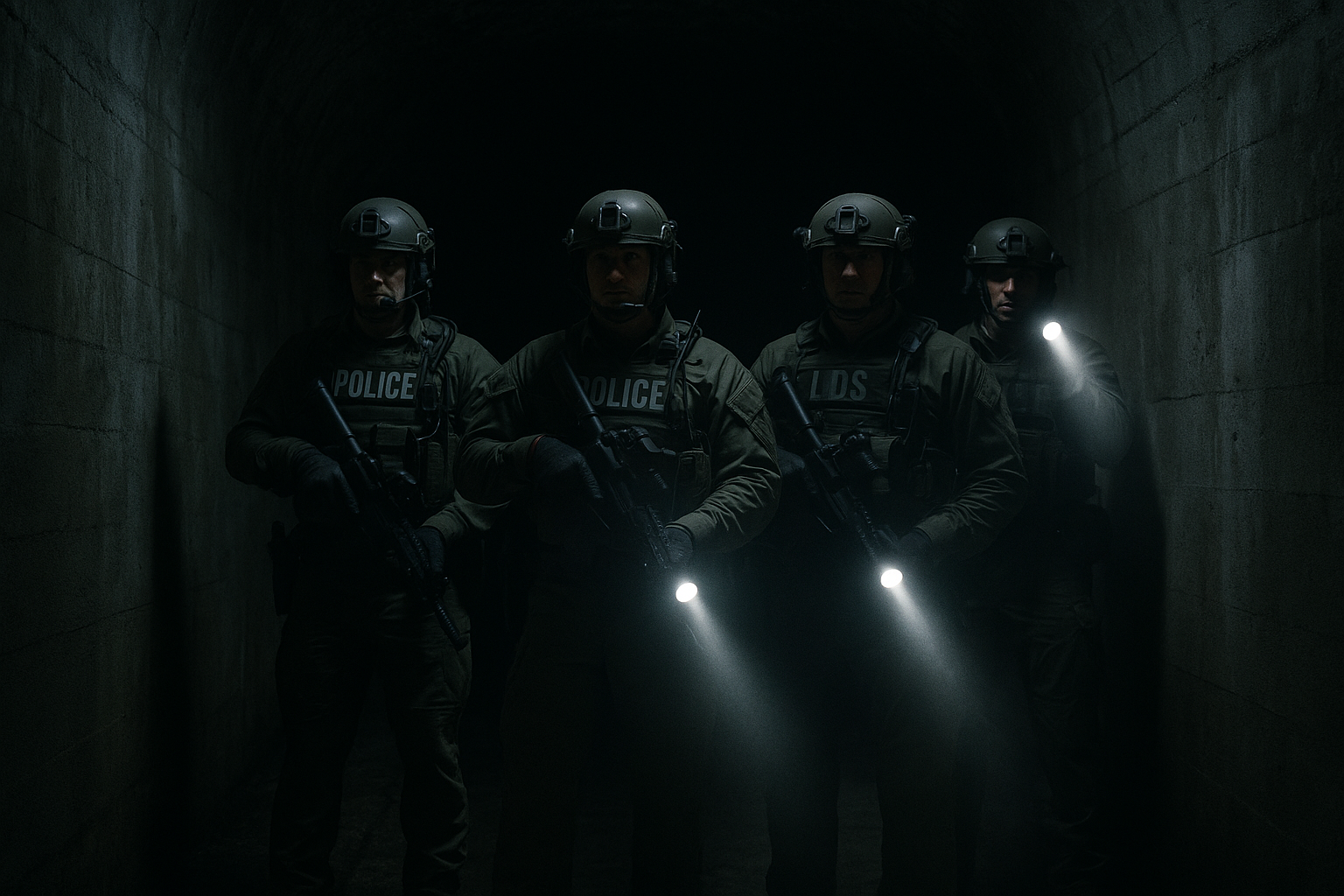
Federal authorities have successfully dismantled a highly sophisticated cross-border smuggling operation following a months-long investigation that culminated in the discovery of an elaborate tunnel beneath the U.S.–Mexico border. The operation, which uncovered more than $45 million worth of cocaine, was linked to a major trafficking network operating between Tijuana, Mexico, and Southern California. Four individuals have been arrested in connection with the case and face federal drug trafficking charges, with one also facing additional charges related to the construction and use of an unauthorized cross-border tunnel.
"The operation as a significant disruption to organized smuggling infrastructure operating along the border, emphasizing the scale and sophistication of the network uncovered during the investigation." — U.S. Attorney Adam Gordon.
The investigation, spearheaded by the Homeland Security Task Force, focused on a warehouse operating under the name “Buy 4 Less” near the Otay Mesa Port of Entry in San Diego. Surveillance teams began monitoring unusual activity at the property in late 2025. Agents observed minimal legitimate retail traffic but frequent movements of sealed containers and suspected transport materials, prompting heightened scrutiny.
As surveillance continued, investigators tracked what appeared to be a coordinated logistics pattern involving the movement of luggage and cargo between vehicles on both sides of the border. This activity escalated on Friday, when agents observed heavy items being loaded into a white van outside the warehouse. The vehicle was then repositioned a short distance away, where a series of coordinated transfers between multiple vans and a truck were observed, involving large sealed packages.
Law enforcement moved in shortly afterward, intercepting several vehicles leaving the area. In a significant interdiction, more than 2,200 pounds of cocaine were recovered across multiple transport units, according to federal filings. This immediate seizure marked a turning point in the investigation, providing the crucial evidence needed for agents to secure a warrant for the warehouse property.
Inside the facility, investigators discovered the concealed entry point to an underground tunnel, ingeniously hidden beneath a storage room floor. The structure extended beneath the international border between Tijuana and San Diego, revealing a high level of engineering and resources. The tunnel featured reinforced walls, sophisticated ventilation systems, lighting, and a rail mechanism specifically designed to move contraband efficiently across the border.
The subterranean passage reached depths exceeding 50 feet underground and spanned approximately 2,000 feet in total length, connecting both sides of the border through an engineered passage built for sustained trafficking operations. Concurrently, Mexican authorities conducting a parallel investigation in Tijuana identified matching infrastructure at a linked site on their side of the border. This included similar ventilation equipment, lighting systems, and an electronic sliding mechanism, confirming the coordinated nature of the cross-border enterprise.
Officials on both sides of the border believe the tunnel was part of a broader logistics network capable of supporting repeated cross-border shipments, though the exact endpoint on the U.S. side has not been publicly disclosed. The four defendants taken into custody now face severe federal drug trafficking offenses, with prosecutors indicating that if convicted, they could face potential life sentences.
U.S. Attorney Adam Gordon described the operation as a "significant disruption to organized smuggling infrastructure operating along the border," emphasizing the extensive scale and sophistication of the network uncovered during the investigation. Homeland Security Investigations (HSI) officials further commented that the tunnel reflects methods commonly employed by transnational criminal organizations to move narcotics through heavily monitored border zones.
Investigators have linked the operation to the Jalisco New Generation Cartel (CJNG), one of the most active and violent trafficking organizations operating in the region, according to federal sources familiar with the case. Authorities stated that the investigation remains active, with additional analysis underway to determine whether this tunnel was part of a larger interconnected smuggling system operating beneath multiple points along the border. The discovery underscores the continued adaptation of cartel infrastructure despite heightened border enforcement efforts, demonstrating the persistent challenges faced by law enforcement in securing the nation's southern frontier.

