

Breaking
Sponsor Advertisement
HHS Secretary Kennedy Proposes New Food Safety Notification Rule
Image for: HHS Secretary Kennedy Proposes New Food Safety Notification Rule

HHS Secretary Kennedy Proposes New Food Safety Notification Rule

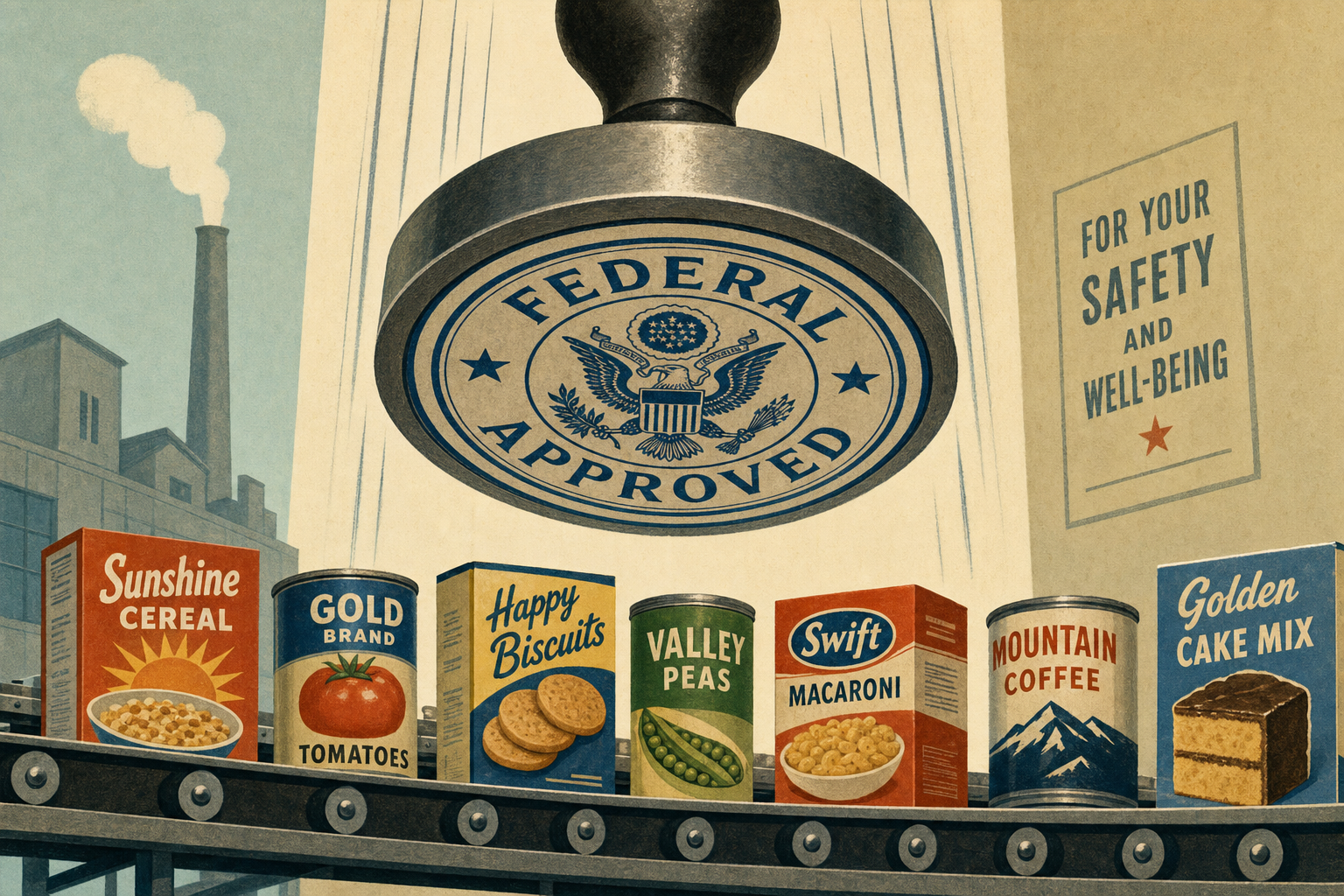
Health and Human Services Secretary Robert F. Kennedy Jr. has proposed a new rule to require food manufacturers to notify the Food and Drug Administration of their "generally recognized as safe" ingredient determinations.
Jump to The Flipside Perspectives

Health and Human Services (HHS) Secretary Robert F. Kennedy Jr. announced a proposed rule on Monday aimed at expanding federal oversight of food ingredients. The new regulation would mandate that food manufacturers notify the Food and Drug Administration (FDA) when they determine a substance qualifies as "generally recognized as safe" (GRAS) for use in food products. This move targets a decades-old system that has allowed companies to make such safety determinations independently without prior formal FDA approval or even mandatory notification.

"These two actions will change how the federal government oversees what’s in our food and how we understand the foods that Americans eat." — Robert F. Kennedy Jr., Health and Human Services Secretary

Under the existing framework, established in part by an FDA policy from 1997, manufacturers are not compelled to inform the agency about their self-determined GRAS substances, although some voluntarily do so. This practice has drawn criticism from consumer advocates who argue it creates a regulatory loophole, allowing ingredients into the food supply without direct federal review. The Center for Science in the Public Interest, for example, has characterized the practice as a significant gap in oversight.

Acting FDA Commissioner Kyle Diamantas addressed this concern, stating on Monday, "Shifting to a mandatory notification system closes a decades-old information gap." He emphasized that the proposed rule would provide regulators with enhanced visibility into the vast array of ingredients entering the nation's food supply.

The GRAS exemption itself dates back to 1958, when Congress established an exception for substances with a long history of safe use, such as common ingredients like vinegar and various spices, from the rigorous pre-market approval process required for new food additives. However, the interpretation and implementation of this exemption have evolved, leading to the current system of company self-determination based on scientific evidence and expert consensus.

The proposal outlines a structured process for manufacturers. Companies would be required to submit detailed information supporting their GRAS safety determinations to the FDA. Upon submission, the FDA would have a 45-day window to assess whether the submission contains all the necessary information. Following this, the agency would have up to 180 days to conduct a more substantive review of the submitted data. It is important to note, however, that under this proposed rule, manufacturers would not be required to await explicit FDA approval before introducing products containing these GRAS substances to the market. Federal officials clarified that mandating formal FDA approval for every GRAS determination before market entry would necessitate additional legislative authority from Congress. Secretary Kennedy has publicly called upon Congress to provide the FDA with such expanded tools to enhance its oversight capabilities for food ingredients.

This proposed rule is a component of Secretary Kennedy’s broader "Make America Healthy Again" (MAHA) agenda, which has prioritized issues related to artificial colors, additives, and highly processed foods in the American diet. In a related development announced on the same day, the FDA confirmed it has completed its work on a federal definition for "ultraprocessed food." While the specific language of this definition has not yet been released to the public, officials confirmed it has been submitted to the White House for further review. Secretary Kennedy underscored the significance of both initiatives at an HHS event, stating, "These two actions will change how the federal government oversees what’s in our food and how we understand the foods that Americans eat."

Consumer advocacy groups have largely welcomed the introduction of a mandatory notification requirement, viewing it as a step towards greater transparency. However, some argue that the proposal does not go far enough to ensure comprehensive food safety. Melanie Benesh of the Environmental Working Group called for the implementation of stronger safety standards and a requirement for independent FDA review *before* chemicals are permitted in food products. Similarly, Thomas Gremillion of the Consumer Federation of America raised concerns about the FDA's existing resources and staffing levels, questioning whether the agency possesses adequate capacity to thoroughly review the increased volume of information it would receive under the new notification system, according to NOTUS.

The proposed rule will now enter a 120-day period for public comment, allowing stakeholders and the public to provide feedback to the agency. The ultimate scope of the FDA's authority regarding GRAS substances, particularly any move towards pre-market approval, remains contingent on potential future action by Congress.

Advertisement

The Flipside: Different Perspectives

Progressive View

Progressives largely view the proposed mandatory notification rule for "generally recognized as safe" (GRAS) food ingredients as a necessary and long-overdue step towards greater public health protection and corporate accountability. For decades, the ability of companies to self-determine GRAS status without even notifying the FDA has been characterized as a glaring loophole, allowing potentially questionable substances into the food supply with minimal governmental oversight. This system disproportionately affects vulnerable populations who may have less access to fresh, unprocessed foods and are often more reliant on packaged goods.

While welcoming the increased transparency, many progressives, echoing consumer advocates, argue that the proposal does not go far enough. They contend that simply notifying the FDA is insufficient; true protection requires independent, pre-market review and approval of all GRAS substances by the agency. This would ensure that public health, not corporate profit, is the primary consideration. This initiative aligns with a broader progressive agenda to address systemic issues in the food industry, including the proliferation of artificial additives and ultraprocessed foods, and to empower federal agencies like the FDA with the resources and authority needed to safeguard the collective well-being of all Americans.

Conservative View

The proposed rule requiring mandatory notification for "generally recognized as safe" (GRAS) food ingredients raises significant concerns for conservatives who advocate for limited government intervention and free-market principles. While transparency in food labeling is generally supported, the expansion of federal oversight through new mandates can be seen as an unnecessary regulatory burden on businesses, particularly small and medium-sized food manufacturers. This additional layer of bureaucracy could stifle innovation, increase compliance costs, and potentially lead to higher prices for consumers without a clear demonstration of widespread harm under the current system.

Proponents of limited government argue that companies already possess strong incentives to ensure the safety of their products, driven by market competition, consumer trust, and potential liability issues. Expanding the FDA's role without granting it the authority for pre-market approval, as federal officials have noted, might create an inefficient system where the agency is inundated with notifications but lacks the power to act decisively. This could divert resources from more critical public health functions. Conservatives often prefer solutions that rely on individual responsibility and informed consumer choice, rather than expanding the federal regulatory apparatus, which can lead to overreach and impede economic growth.

Common Ground

Despite differing approaches to regulation, both conservatives and progressives share a fundamental desire for a safe and transparent food supply for all Americans. There is common ground in the belief that consumers should have access to clear, accurate information about the ingredients in their food to make informed choices. Both sides can agree on the importance of scientific rigor and evidence-based decision-making in assessing the safety of food ingredients.

The proposed mandatory notification system, while viewed differently in terms of its scope and implications, represents a step towards greater transparency that could be broadly supported. Finding common ground involves ensuring that any regulatory framework is efficient, clearly defined, and minimizes unnecessary burdens while still prioritizing public health. Discussions could focus on how to best equip the FDA with the necessary resources and expertise to effectively review information, streamline processes, and foster collaboration with the food industry to achieve shared goals of safety and clarity, without resorting to excessive bureaucracy or stifling innovation.

What's your view on this story? Share your thoughts and remember to consider multiple perspectives and being respectful when forming and voicing your opinion. "If you resort to personal attacks, you have already lost the debate..."

Advertisement

Contact Us About This Article

Have a question or comment about this article? We'd love to hear from you.

About Fair Side News

At Fair Side News, we believe in presenting news with perspectives from both sides of the political spectrum. Our goal is to help readers understand different viewpoints and find common ground on important issues.