


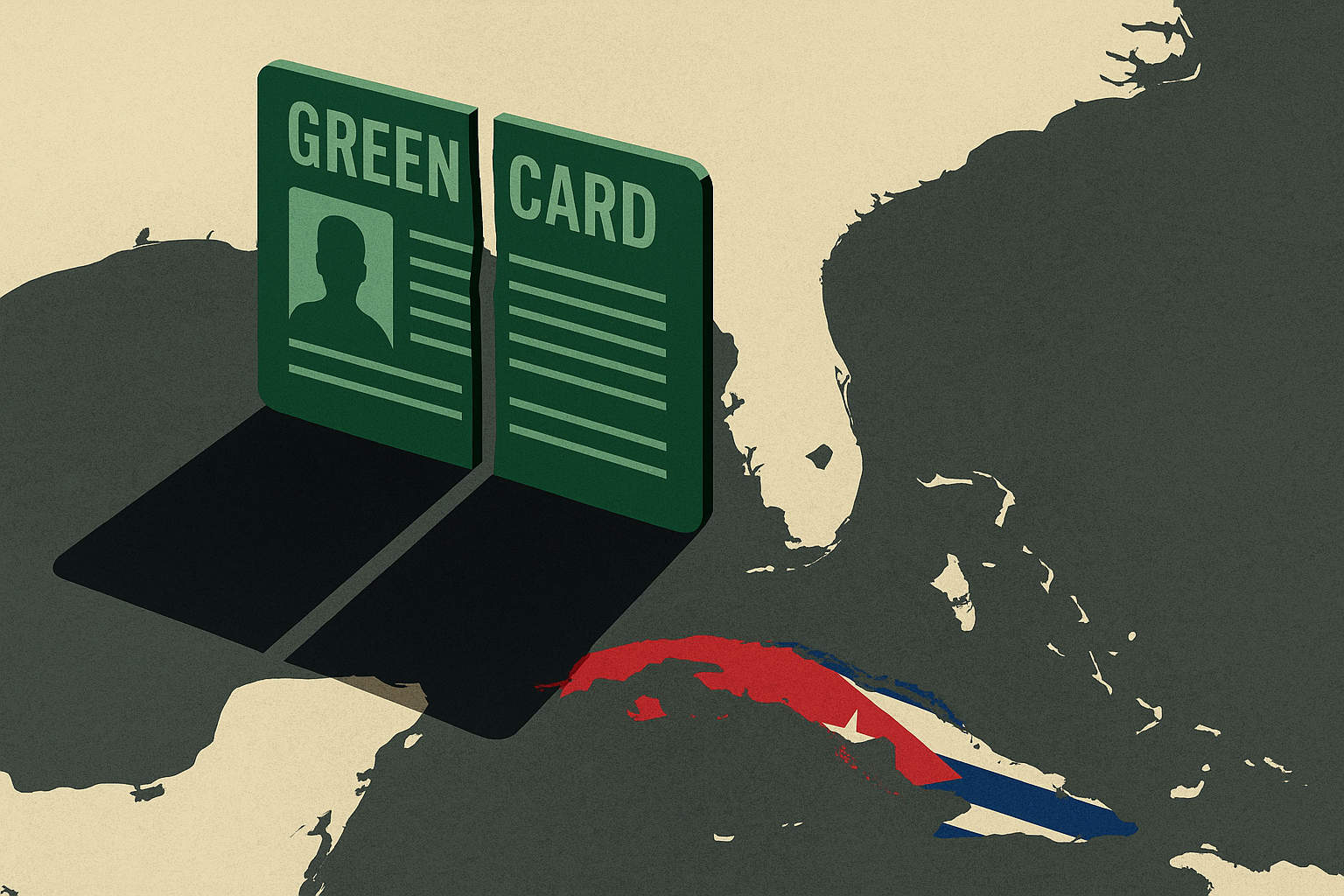
Federal immigration authorities have arrested Adys Lastres Morera in Florida, the sister of a senior Cuban regime official, as part of the Trump administration’s intensified efforts against individuals linked to Havana’s communist government. Secretary of State Marco Rubio announced that Immigration and Customs Enforcement (ICE) took Lastres Morera into custody, where she will remain pending deportation proceedings. Her lawful permanent resident status was revoked after the administration determined her presence posed a threat to American foreign policy interests due to her alleged connections to Cuba’s military-controlled economic conglomerate.
"For far too long, the family members of terrorist organizations, repressive anti-American regimes, and other bad actors who would threaten the national security of the United States have been given a free pass to enjoy the privileges of living in the United States." — Marco Rubio, Secretary of State
According to Secretary Rubio, Adys Lastres Morera entered the United States as a green card holder on January 13, 2023, during the administration of then-President Joe Biden. Rubio stated he personally initiated the termination of her immigration status upon concluding that her continued presence was detrimental to U.S. foreign policy objectives. This determination was based on her alleged ties to Grupo de Administración Empresarial, or GAESA, a vast business network directly controlled by Cuba’s communist regime and its military leadership. Lastres Morera is identified as the sister of Ania Guillermina Lastres, who reportedly oversees this powerful conglomerate.
Rubio and ICE allege that Adys Lastres Morera was actively managing real estate holdings in Florida while simultaneously providing assistance to the Cuban regime and benefiting from wealth associated with the communist government. This enforcement action aligns with the Trump administration's stated commitment to aggressively target foreign nationals connected to adversarial regimes, a policy stance articulated by Secretary Rubio.
GAESA is widely recognized as one of the most influential organizations within Cuba, reportedly controlling as much as 70% of the island nation's economy. Its extensive reach encompasses critical sectors such as tourism, remittances, banking operations, and numerous state-run businesses, all of which are directly linked to the communist government. U.S. officials estimate that GAESA manages billions of dollars in overseas assets, functioning as a vital financial engine for the Castro-era government and its ongoing operations. The administration asserts that individuals connected to such entities contribute to the perpetuation of an oppressive regime and undermine U.S. efforts to promote democracy and human rights in Cuba.
The legal basis for Lastres Morera’s removability falls under Section 237(a)(4)(C) of the Immigration and Nationality Act. This provision permits the deportation of a foreign national when the Secretary of State determines that their presence in the United States could lead to serious adverse foreign policy consequences. This authority grants the Secretary of State significant discretion in identifying and addressing perceived threats to national security and international relations through immigration channels.
Secretary Rubio emphasized the administration's departure from what he described as past leniency towards individuals associated with hostile foreign powers. "For far too long, the family members of terrorist organizations, repressive anti-American regimes, and other bad actors who would threaten the national security of the United States have been given a free pass to enjoy the privileges of living in the United States," Rubio stated. He continued, "Past Administrations have permitted the families of Cuban military elites, Iranian terrorists, and other reprehensible organizations to enjoy lavish lifestyles in our country funded by stolen blood-money, while the people they repress at home suffer in increasingly dire circumstances."
Rubio underscored the shift in policy under President Trump, asserting, "No longer. Under President Trump, we are removing from our country the family members of IRGC terrorists and Cuban regime elites." He issued a direct warning: "Let me be very clear: if you threaten the national security of the United States, there will be nowhere on this earth — much less in our country — that you and your cronies can live lavishly."
John Condon, a commentator on foreign policy, supported the administration's action, stating that allowing individuals tied to Cuba’s ruling apparatus to remain in the United States would undermine national security and foreign policy objectives. Condon remarked, “Allowing Lastres Morera to remain in the country would send a signal that Cuban regime-affiliated networks could continue to access the U.S.’s financial, educational and social institutions.”
This arrest represents one of the most high-profile immigration enforcement actions taken by the Trump administration directly targeting family members of senior Cuban regime officials residing in the U.S. The administration's move signals a broader intent to utilize immigration enforcement as a tool to counter the influence and financial operations of adversarial foreign governments within American borders.

