

Breaking
Fair Side News (formerly BalancedRight News), was created to help readers move b… | ● BREAKING Beyond the Library and the Boardroom: Celebrating the Illustrious, Multi-Talented Life of Anthony Stewart Head | Newsom Proposes 100% Tax on Trump Anti-Weaponization Fund | Senators Block Election Security Amendment in Immigration Bill | SPLC Accused of Funding KKK Members in Federal Indictment | Albanian Protests Erupt Over Kushner-Linked Resort Deal | NIH Researchers Charged in Alleged Monkeypox Smuggling Scheme | Trump Alleges Cheating in California Primary Vote Count | Google Seeks EPA Permit for Mosquito Release in California, Florida | Federal Agents Uncover $45M Cocaine Tunnel Under US-Mexico Border | Missing Los Alamos Lab Worker Found Deceased | Fair Side News (formerly BalancedRight News), was created to help readers move b… | ● BREAKING Beyond the Library and the Boardroom: Celebrating the Illustrious, Multi-Talented Life of Anthony Stewart Head | Newsom Proposes 100% Tax on Trump Anti-Weaponization Fund | Senators Block Election Security Amendment in Immigration Bill | SPLC Accused of Funding KKK Members in Federal Indictment | Albanian Protests Erupt Over Kushner-Linked Resort Deal | NIH Researchers Charged in Alleged Monkeypox Smuggling Scheme | Trump Alleges Cheating in California Primary Vote Count | Google Seeks EPA Permit for Mosquito Release in California, Florida | Federal Agents Uncover $45M Cocaine Tunnel Under US-Mexico Border | Missing Los Alamos Lab Worker Found Deceased |
Sponsor Advertisement
Justice Thomas Blasts Court's Priority in Death Penalty Case
Image for: Justice Thomas Blasts Court's Priority in Death Penalty Case

Justice Thomas Blasts Court's Priority in Death Penalty Case

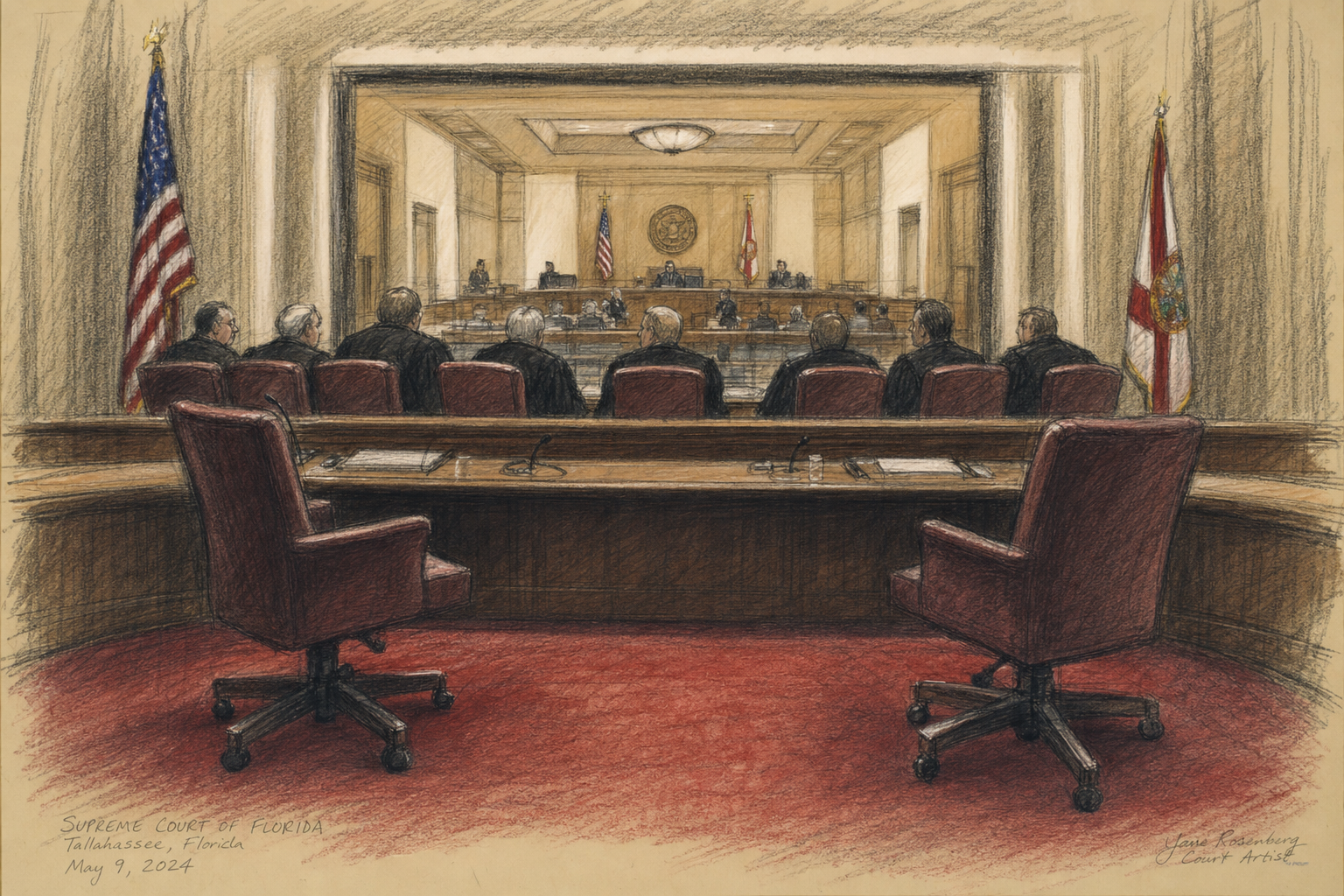
Justice Clarence Thomas, joined by Justice Samuel Alito, issued a sharp dissent in a Supreme Court ruling that vacated an appellate decision in a Florida death penalty case. Thomas argued the Court intervened over a minor procedural error while declining to hear more significant cases.
Jump to The Flipside Perspectives

The Supreme Court is grappling with renewed internal tensions following a sharp rebuke from Justice Clarence Thomas, who, joined by Justice Samuel Alito, criticized the Court's decision to intervene in a Florida death penalty case. Thomas argued that the majority's focus on what he termed a "minor procedural issue" was misplaced, especially given other disputes of greater consequence that the justices have declined to hear.

"It is unfortunate that the Court chose to intervene at the request of a convicted murderer to correct the Eleventh Circuit’s inconsequential foot fault." — Justice Clarence Thomas, Supreme Court Justice

The case, *Whitton v. Dixon*, concerns death row inmate Gary Whitton, who was convicted in 1991 for the 1990 murder of James Maulden in a Florida motel room. Whitton's appeal centered on allegations under *Giglio v. United States*, claiming a jailhouse informant falsely testified about having no prior criminal record when he told jurors Whitton confessed to the killing. Prosecutors acknowledged the informant's statement was inaccurate but maintained it was not material to the outcome, citing overwhelming evidence including forensic records, witness testimony, and circumstantial evidence.

In a 7–2 ruling, the Supreme Court vacated a decision by the 11th U.S. Circuit Court of Appeals. The Court instructed the lower appellate court to reconsider whether Whitton should receive a new trial, specifically stating that the 11th Circuit had improperly weighed DNA evidence developed years after the original trial. This post-trial DNA evidence, which indicated blood on Whitton’s boots belonged to the victim, was not presented to the jury that originally decided the case. The majority emphasized that the legal question was narrow: whether the appellate court had erred by considering evidence not available to the original jury when evaluating the impact of the alleged false testimony. By sending the case back, the Supreme Court did not grant Whitton a new trial but mandated a reassessment of the *Giglio* claim without factoring in the later DNA evidence.

Justice Thomas, however, sharply rejected the Court's intervention. In his fiery dissent, he characterized the issue as an "inconsequential foot fault" that had no meaningful impact on the case's outcome. "It is unfortunate that the Court chose to intervene at the request of a convicted murderer to correct the Eleventh Circuit’s inconsequential foot fault," Thomas wrote. He further contended that the Court was misplacing its attention by prioritizing this case while refusing to hear others he deemed more critical.

Thomas pointed to a range of cases the justices have declined to review, including claims of racial discrimination in university admissions policies, restrictions on free speech on college campuses, and lawsuits brought by families of military personnel. He articulated his frustration, stating, "What makes it even worse is that the Court does so even while it refuses to correct far more consequential errors for law-abiding citizens." Thomas also warned that the ruling would likely have little practical effect, suggesting the lower court could easily reach the same conclusion after making minor revisions to its analysis. He used his dissent as a platform to argue that the Court exhibits inconsistent prioritization in its docket, granting emergency relief in some matters while declining review in others that involve broader civil rights questions.

Justice Alito joined Thomas's dissent in part, aligning with the criticism of the Court's intervention in the *Whitton* case but not fully endorsing all of Thomas's broader criticisms regarding unrelated cases. The 11th Circuit had previously upheld Whitton's conviction, citing what it described as "overwhelming evidence" of guilt, including physical evidence, witness accounts, and Whitton’s presence with the victim shortly before the murder. Whitton has consistently maintained his innocence throughout post-conviction proceedings.

The Supreme Court’s decision to vacate and remand means the case returns to the 11th Circuit for further proceedings consistent with the high court's directive. This ongoing legal dispute underscores persistent divisions within the Supreme Court regarding when intervention is warranted and which types of cases merit the justices' attention, particularly in the sensitive area of death penalty appeals. The dissent highlights a philosophical divide over judicial restraint and the Court's role in correcting perceived errors in lower court proceedings.

Advertisement

The Flipside: Different Perspectives

Progressive View

From a progressive viewpoint, the Supreme Court's decision to vacate the 11th Circuit ruling, even if for a narrow procedural reason, underscores the critical importance of due process and meticulous judicial review, especially in death penalty cases. The concern is not about the individual's guilt or innocence, but about ensuring that every step of the legal process is free from error and that constitutional rights are upheld. The fact that an informant's testimony was found to be inaccurate, regardless of its perceived materiality by the prosecution, necessitates a rigorous re-evaluation to ensure a fair trial standard was met. The death penalty is irreversible, and thus, any potential flaw in the process, no matter how "minor" it may seem to some, warrants the highest level of scrutiny. While Justice Thomas criticized the Court's priorities, progressives might argue that safeguarding the integrity of the justice system in individual cases is foundational. The Court's action, in this view, reinforces the principle that appellate courts must adhere strictly to legal standards, particularly when assessing the impact of flawed evidence on a jury's verdict, protecting against potential wrongful convictions and upholding the foundational tenets of justice for all.

Conservative View

From a conservative perspective, Justice Thomas's dissent highlights critical concerns about judicial restraint and the proper role of the Supreme Court. Conservatives often advocate for a judiciary that interprets the law strictly, avoiding intervention in state judicial processes unless absolutely necessary to correct profound constitutional errors. Thomas's argument that the Court wasted its time on an "inconsequential foot fault" in a death penalty case, particularly one involving a convicted murderer, while declining to hear cases impacting "law-abiding citizens" on issues like free speech and racial discrimination in admissions, resonates deeply. This viewpoint prioritizes the protection of individual liberties and property rights for law-abiding citizens over procedural technicalities that may not alter a conviction supported by overwhelming evidence. Furthermore, intervening in a case where the lower court already found "overwhelming evidence" of guilt can be seen as an overreach, undermining the finality of legal judgments and potentially burdening the justice system with protracted appeals based on minor issues. Conservatives believe that the Court's limited resources should be reserved for cases with broad national implications that uphold constitutional principles, rather than delving into the minutiae of individual criminal appeals.

Common Ground

Despite the ideological differences, there are areas of common ground regarding the Supreme Court's role and the administration of justice. Both conservatives and progressives can agree on the fundamental importance of a fair and impartial judicial process. There is shared value in ensuring that trials are conducted according to established legal standards and that appellate courts apply the law correctly. Both sides would likely agree that judicial resources, particularly those of the Supreme Court, are finite and should be allocated efficiently to address significant legal questions. Furthermore, ensuring the accuracy of testimony and evidence presented in court is a shared goal, as it contributes to the integrity of verdicts and public trust in the justice system. While they may differ on which cases warrant intervention, there is a mutual interest in the Court providing clear guidance to lower courts and upholding the rule of law, thereby strengthening the foundation of American jurisprudence.

What's your view on this story? Share your thoughts and remember to consider multiple perspectives and being respectful when forming and voicing your opinion. "If you resort to personal attacks, you have already lost the debate..."

Advertisement

Contact Us About This Article

Have a question or comment about this article? We'd love to hear from you.

About Fair Side News

At Fair Side News, we believe in presenting news with perspectives from both sides of the political spectrum. Our goal is to help readers understand different viewpoints and find common ground on important issues.