


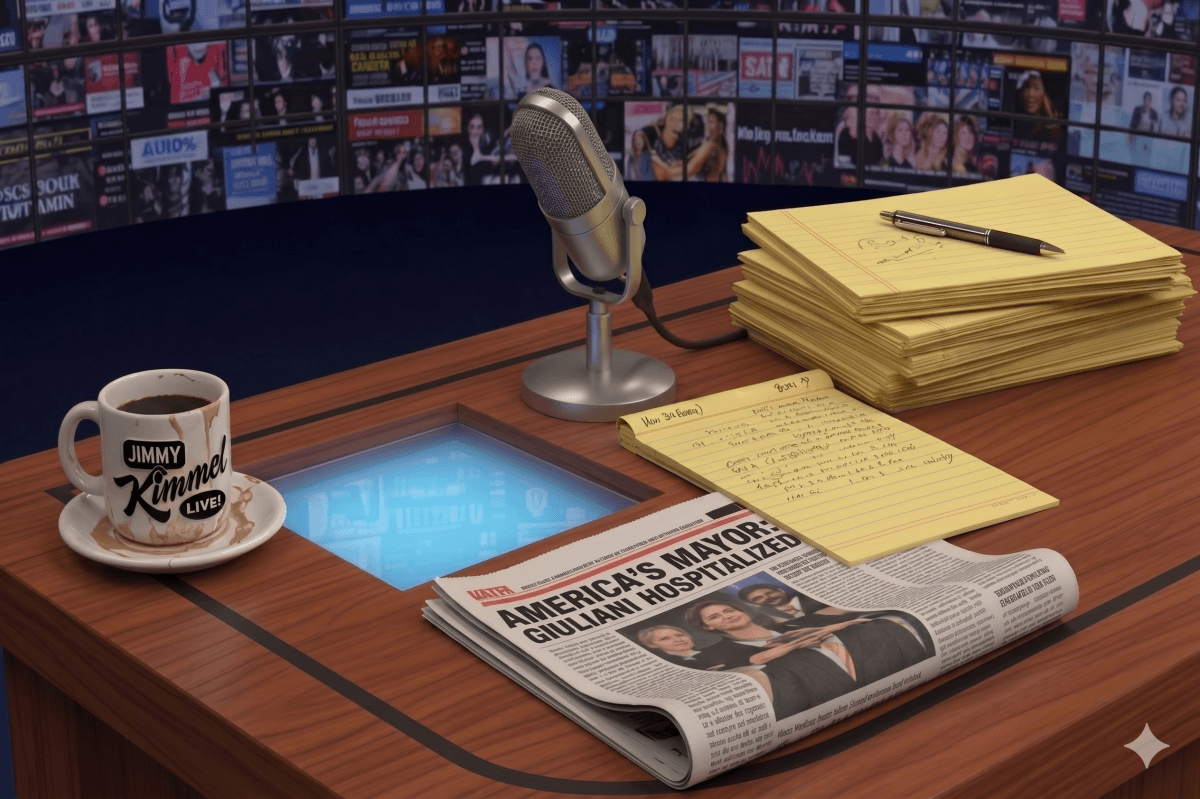
A recent episode of "Jimmy Kimmel Live!" has reignited scrutiny over the evolving role and boundaries of late-night television in handling political figures. The controversy stems from a monologue by host Jimmy Kimmel, who, in response to comments made by Rudy Giuliani on a podcast, joked that Giuliani had "rose from the grave" to weigh in on a discussion. This remark, made prior to Giuliani's reported hospitalization, quickly circulated online, prompting widespread criticism from political commentators and social media users.
"a fighter who has faced every challenge in his life with unwavering strength" — Spokesperson for Rudy Giuliani
The segment featured Kimmel playing a clip of Giuliani, who had previously called the host "one of the most distasteful human beings in this country." Kimmel responded with extended sarcasm, incorporating references to several well-known public moments involving Giuliani that have previously gone viral. The "rose from the grave" line became a focal point of online reaction, contributing to renewed criticism from observers who questioned the tone and timing of the exchange. This back-and-forth is part of an ongoing pattern, as Giuliani has previously responded to Kimmel’s earlier political jokes involving various public figures. This history has kept the exchange in the spotlight, especially among critics who argue that modern late-night comedy increasingly blends satire with direct personal targeting of political personalities, as noted by the Daily Mail.
In the days following the broadcast, Giuliani was reported to have been hospitalized in critical but stable condition, according to a spokesperson, a development highlighted by Resist the Mainstream. Officials did not immediately provide details regarding the cause of his condition but confirmed he was under medical care. A statement from his representative described Giuliani as "a fighter who has faced every challenge in his life with unwavering strength" and asked supporters to "join us in prayer for America’s Mayor—Rudy Giuliani." The timing of Kimmel's segment relative to Giuliani's health news added significant momentum to an ongoing conversation among media analysts about whether late-night political comedy has become more confrontational in tone.
Some critics argue that the genre has shifted toward sharper, more personalized attacks on public figures in recent years, moving beyond traditional satire. These critics often point to instances where comedic segments appear to target individuals' personal attributes or circumstances rather than solely their political actions or policies. The concern is that such humor can contribute to a more hostile political environment and erode the civility of public discourse.
Conversely, defenders of Kimmel and similar hosts argue that political satire has long been a fixture of American television and traditionally includes pointed commentary aimed at figures across the political spectrum. They contend that late-night comedy serves as a vital outlet for social and political commentary, often holding powerful individuals accountable through humor. The New York Post reported that proponents view these jokes as within the bounds of satire, intended to provoke thought and laughter rather than to be taken as literal commentary or personal attacks.
The current controversy also draws parallels to earlier backlash over Kimmel’s comments involving First Lady Melania Trump. Those remarks, made during a comedic segment, also drew criticism from allies of President Donald Trump, who interpreted them as crossing personal lines. Supporters, however, maintained that those comments, like the recent ones concerning Giuliani, remained within the established boundaries of satire.
Kimmel himself has previously defended his comedic approach, stating that his material is intended as comedy rather than literal commentary. He has emphasized his support for free expression while rejecting political violence. Despite ongoing criticism, he has continued to address backlash directly on-air, often weaving clips of political figures into his monologues as part of his comedic responses. This ongoing cycle highlights how quickly moments from late-night television can escalate into broader political and cultural debates, underscoring the delicate balance between comedic expression and public perception, particularly when dealing with prominent public figures and sensitive topics like health.

