

Breaking
Sponsor Advertisement
Leavitt Departs White House, Shifts to Outside Advisory Role
Image for: Leavitt Departs White House, Shifts to Outside Advisory Role

Leavitt Departs White House, Shifts to Outside Advisory Role

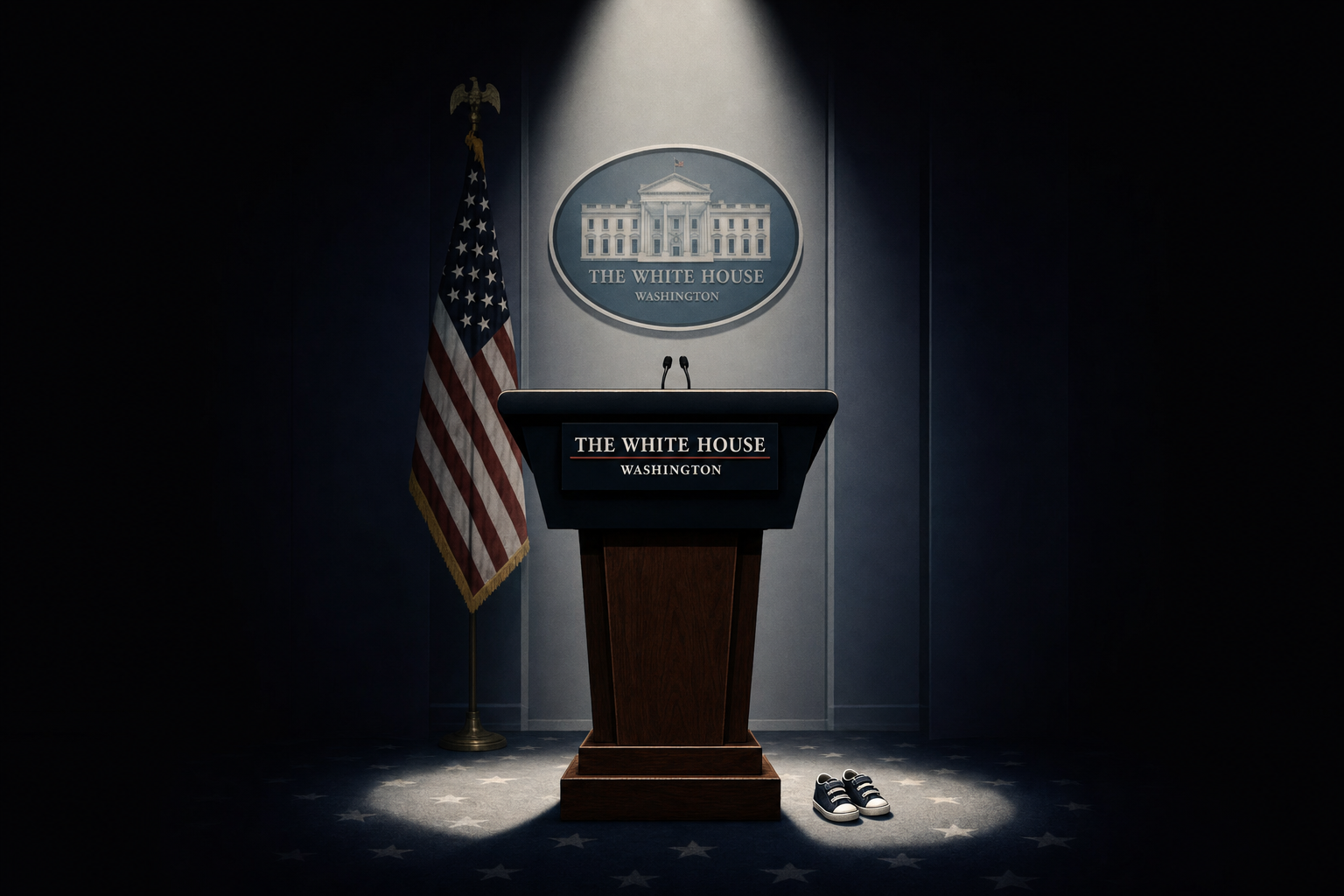
White House Press Secretary Karoline Leavitt will leave her position at the end of August, President Donald Trump announced Wednesday. Leavitt will transition to a role as one of his top outside advisors, focusing on the Republican Party's preparations for the 2026 midterm elections.
Jump to The Flipside Perspectives

White House Press Secretary Karoline Leavitt is set to depart her role at the end of August, marking a significant change within the administration's communications team. President Donald Trump confirmed Leavitt's decision on Wednesday via a Truth Social post, citing her desire to dedicate more time to her children and family. The announcement comes after approximately a year and a half in the high-profile position, during which Leavitt became one of the administration's most visible public figures.

"Karoline has been one of the best White House Press Secretaries in the History of the Office. Thank you, Karoline, for a job well done!" — President Donald Trump, Truth Social Post

President Trump conveyed his understanding and respect for Leavitt's decision, stating, "Our wonderful White House Press Secretary, and one of my most trusted aides, Karoline Leavitt, will be departing her role at the end of the month so she can spend more time with her beautiful young children and family, a decision I totally understand and respect!" While stepping down from her White House post, Leavitt will not entirely disengage from President Trump's political operations. Instead, she will transition into a new capacity as a top outside advisor, a move aimed at bolstering Republican efforts ahead of the 2026 midterm elections.

President Trump elaborated on Leavitt's future involvement, writing, "Karoline will now be one of my top outside advisors, and an influential voice within the Republican Party, as we work to defy History, and conclusively win the Midterm Elections." This strategic shift underscores the administration's focus on future electoral cycles and the pivotal role advisors play in shaping party strategy. The 2026 midterm elections are anticipated to be crucial in determining the control of Congress during the latter half of President Trump's second term.

Leavitt's tenure as White House Press Secretary began in January 2025, following President Trump's return to the White House, making her the youngest individual to hold the position in U.S. history. Her time at the briefing room podium was characterized by robust defenses of the administration's policies and frequent engagements with members of the traditional press corps. She was also instrumental in expanding briefing room access to a broader range of newer and alternative media organizations, reflecting a broader strategy to diversify media engagement.

Before assuming the press secretary role, Leavitt had a long-standing relationship with President Trump, dating back to his first administration where she worked in the White House press office. Her career trajectory also includes serving as communications director for Representative Elise Stefanik (R-NY). In 2022, Leavitt launched her own congressional campaign in New Hampshire's 1st Congressional District, securing the Republican nomination before ultimately losing the general election. Following this, she joined President Trump's 2024 presidential campaign as national press secretary, where she emerged as a prominent media surrogate, advocating for his re-election bid.

Her approach in the press secretary role often involved direct confrontations with journalists, alongside a consistent presence on television and social media platforms, where she actively promoted the administration's agenda and addressed various controversies. This communication style aligned with the administration's broader media strategy, which often sought to bypass traditional media filters.

Despite her departure from the immediate confines of the White House, President Trump's announcement makes it clear that Leavitt will maintain a significant presence within his political ecosystem. Her transition to an outside advisory position is particularly pertinent as President Trump and Republican leadership begin to intensify preparations for the upcoming November midterm elections. These elections are critical for the party's legislative agenda and overall influence in Washington.

President Trump concluded his announcement with a strong endorsement of Leavitt's performance, reiterating his high regard for her contributions. "Karoline has been one of the best White House Press Secretaries in the History of the Office. Thank you, Karoline, for a job well done!" he wrote. Her move represents not an exit from the political arena, but a strategic redeployment within President Trump's broader political operation, focusing on long-term party objectives.

Advertisement

The Flipside: Different Perspectives

Progressive View

The announcement of Karoline Leavitt's departure and new advisory role raises questions from a progressive perspective regarding the administration's communication strategy and its implications for public discourse. While the stated reason for her departure is family, her shift to an "outside advisor" role suggests a continued, albeit less transparent, influence on the political landscape. Progressives often advocate for transparency and accountability in government, and the move of a high-profile figure from an official, public-facing role to an external advisory capacity could be perceived as a way to circumvent direct scrutiny while retaining influence.

Leavitt's tenure was marked by frequent confrontations with the press and an emphasis on engaging alternative media, which some progressives view as contributing to a fragmented and polarized media environment. This approach, while effective for mobilizing a specific base, can undermine the collective well-being by eroding trust in established journalistic institutions and hindering a shared understanding of facts. From a progressive lens, effective governance requires open dialogue and a commitment to factual accuracy, rather than a strategy focused on "sparring with reporters." Her role in preparing for the 2026 midterms, as an "influential voice," signals a continued focus on partisan political maneuvering, rather than fostering broader consensus or addressing systemic issues that affect all Americans.

Conservative View

The departure of Karoline Leavitt from the White House Press Secretary role, and her subsequent transition to an outside advisory position, is a strategic move that aligns with conservative principles of effective governance and political organization. From a conservative perspective, this change reflects a commitment to leveraging experienced personnel in roles where they can maximize impact, particularly in the lead-up to critical electoral cycles like the 2026 midterms. Leavitt's strong advocacy for President Trump's policies, her willingness to challenge the traditional press, and her focus on direct communication resonate with a base that often feels underserved by mainstream media.

Her new role as a top outside advisor provides flexibility and allows her to contribute to the Republican Party's broader objectives without the daily demands of the White House briefing room. This can be seen as an efficient allocation of resources, enabling a trusted voice to focus on long-term strategy and messaging for the party. Conservatives emphasize individual liberty and the importance of strong, clear communication to inform the electorate. Leavitt's continued involvement, even outside the formal administration structure, ensures that a consistent and articulate voice will continue to champion conservative values and President Trump's agenda, particularly as the party prepares to "defy History" in the upcoming elections. This move reinforces the idea of a cohesive political movement rather than just an administration, preparing for future challenges with strategic foresight.

Common Ground

Despite differing perspectives on the nature and impact of Karoline Leavitt's departure and new role, there are areas of common ground regarding the importance of effective communication and strategic planning in politics. Both conservatives and progressives can agree that clear, consistent messaging is crucial for any political administration or party to articulate its vision and goals to the public. The need for skilled communicators who can effectively convey policy positions and respond to public concerns is universally acknowledged.

Furthermore, the strategic importance of the 2026 midterm elections is a shared understanding across the political spectrum. Both major parties recognize that control of Congress significantly impacts legislative outcomes and the ability to implement their respective agendas. Therefore, the deployment of experienced political operatives and advisors, like Leavitt, to focus on these upcoming elections is a pragmatic approach to political organization that both sides engage in. Regardless of ideological differences, the value of dedicated individuals working to achieve electoral success for their party is a fundamental aspect of democratic politics. The transition allows Leavitt to continue contributing her experience to the political process, a common practice for individuals with deep political ties.

What's your view on this story? Share your thoughts and remember to consider multiple perspectives and being respectful when forming and voicing your opinion. "If you resort to personal attacks, you have already lost the debate..."

Advertisement

Contact Us About This Article

Have a question or comment about this article? We'd love to hear from you.

About Fair Side News

At Fair Side News, we believe in presenting news with perspectives from both sides of the political spectrum. Our goal is to help readers understand different viewpoints and find common ground on important issues.