


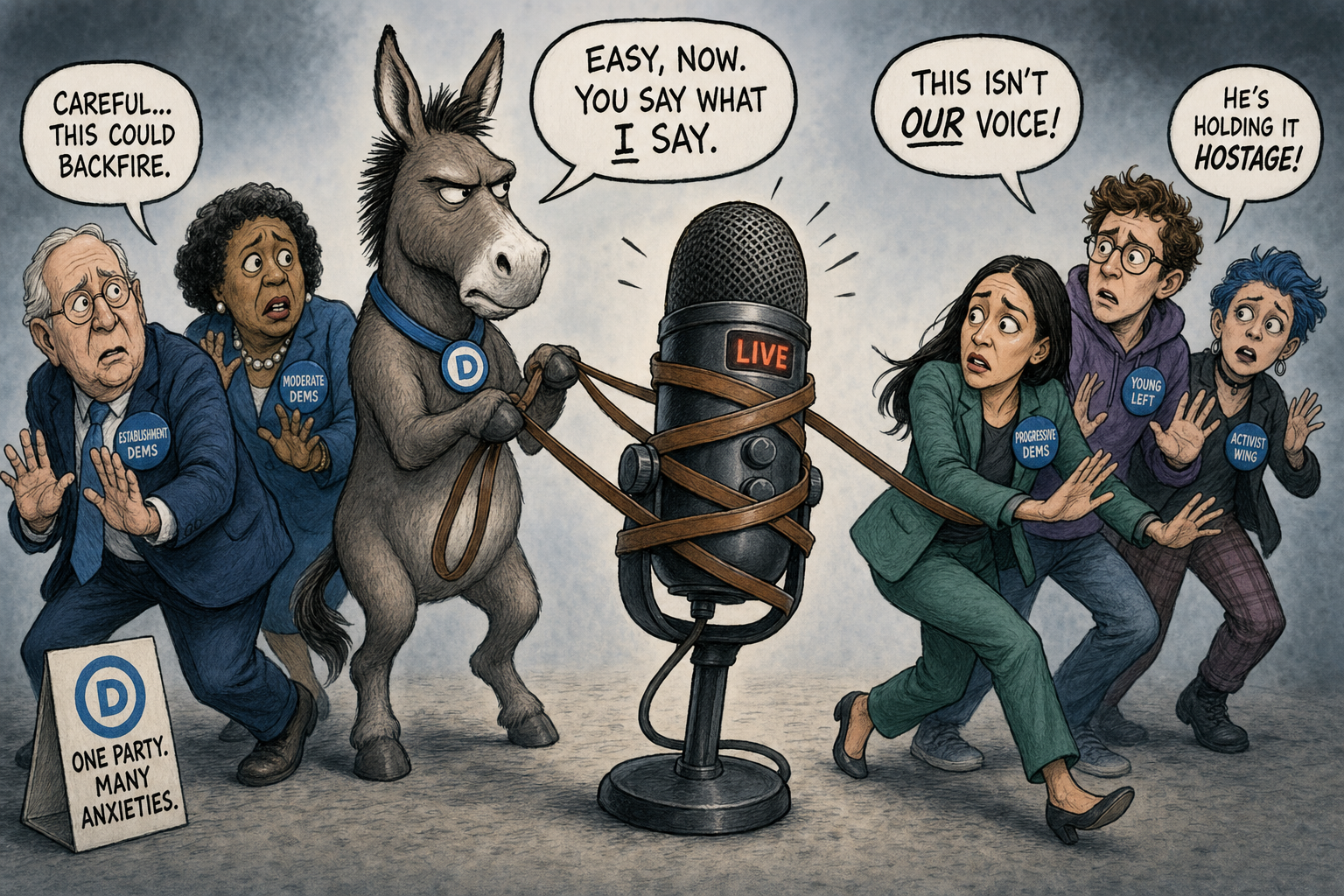
Left-wing political streamer Hasan Piker is under renewed scrutiny following the resurfacing of a video clip where he made inflammatory remarks about "destroying the white race," igniting a debate within the Democratic Party over his increasing associations with progressive candidates and lawmakers. The video, which circulated widely on social media this week and was amplified by Resist the Mainstream on Tuesday, shows Piker discussing immigration and mocking concerns about demographic change when he made the controversial statement.
"We’re gonna destroy the white race, b*tch! That’s what we’re here to do." — Hasan Piker, Political Streamer
Piker, one of the United States' most prominent left-wing political streamers, has cultivated a significant online following, particularly among younger progressive voters. His content often features political commentary, news analysis, and discussions on social issues from a left-leaning perspective. Over recent years, Piker has become increasingly integrated into mainstream Democratic politics, appearing alongside and interviewing various progressive figures. This growing political involvement has brought his past controversial statements into sharper focus, leading to a new wave of criticism and internal party discussions.
In the resurfaced clip, Piker is heard stating, "We’re gonna destroy the white race, b*tch! That’s what we’re here to do." While critics have interpreted the statement literally, Forbes reported on Tuesday that Piker made the remark while mocking right-wing conspiracy theories, rather than genuinely advocating for the destruction of white people. Despite this contextualization, the comment has been widely shared by Piker's detractors, including Elon Musk, who reacted to the controversy by tweeting, "He means what he says."
The controversy comes as Piker has strengthened his ties with several Democratic politicians. He has appeared with Michigan Democratic Senate nominee Abdul El-Sayed and Wisconsin Democratic gubernatorial candidate Francesca Hong. Additionally, Piker has engaged with prominent progressive federal lawmakers, including Representative Alexandria Ocasio-Cortez (D-NY), Representative Ilhan Omar (D-MN), Representative Rashida Tlaib (D-MI), and Representative Ro Khanna (D-CA). These associations have become a point of contention, with Republicans frequently highlighting Piker's history of provocative statements to criticize the Democratic Party.
Abdul El-Sayed, who narrowly won Michigan’s Democratic Senate primary, has faced particular scrutiny over his appearances with Piker. He has defended his association, emphasizing that appearing with someone does not equate to agreeing with all their views. El-Sayed recently told Fox News, according to Forbes, "Because you appear with somebody doesn’t mean you agree with them on everything." Other Democrats have also weighed in. Pennsylvania Senator John Fetterman (D) publicly challenged El-Sayed to continue campaigning with Piker, implicitly drawing attention to the controversy. Veteran Democratic strategist James Carville has also voiced criticism regarding Piker’s increasing prominence within progressive political circles, suggesting a broader unease among some party members about the nature of the rhetoric gaining traction.
This is not the first time Piker has generated significant controversy. In 2019, he drew widespread condemnation for stating that "America deserved 9/11." That remark has repeatedly resurfaced as his public profile has grown. Piker has since acknowledged that the 9/11 statement was inappropriate and expressed that he should have better explained his meaning, though he has stopped short of issuing a full apology. El-Sayed addressed this specific past controversy on Sunday, describing Piker’s 9/11 comment as a "dumb statement." Piker has also faced accusations of antisemitism for his rhetoric concerning Israel and Hamas, with Forbes reporting that he previously stated Israel is worse than Hamas.
Despite the ongoing controversies, Piker maintains a substantial following, leveraging his platform to engage a younger, progressive audience. His increased involvement in electoral politics coincides with a series of primary victories for progressive candidates nationwide, prompting questions about the future ideological direction of the Democratic Party ahead of the 2026 midterm elections. When asked about Piker's role in the progressive movement, Representative Ocasio-Cortez did not directly answer but stressed the importance for Democrats to engage with platforms and conversations that attract younger Americans. Piker himself has acknowledged a performative aspect to his online persona, telling Rolling Stone, according to Forbes, "In some ways it is a performance. But existence is a performance." The debate surrounding Piker highlights the challenges political parties face in navigating the complex landscape of online activism and the implications of associating with figures whose rhetoric, even if presented as satire or hyperbole, can be easily misinterpreted or weaponized by critics.

