

Breaking
Sponsor Advertisement
Mace Proposes Amendment to Bar Foreign-Born from Federal Office
Image for: Mace Proposes Amendment to Bar Foreign-Born from Federal Office

Mace Proposes Amendment to Bar Foreign-Born from Federal Office

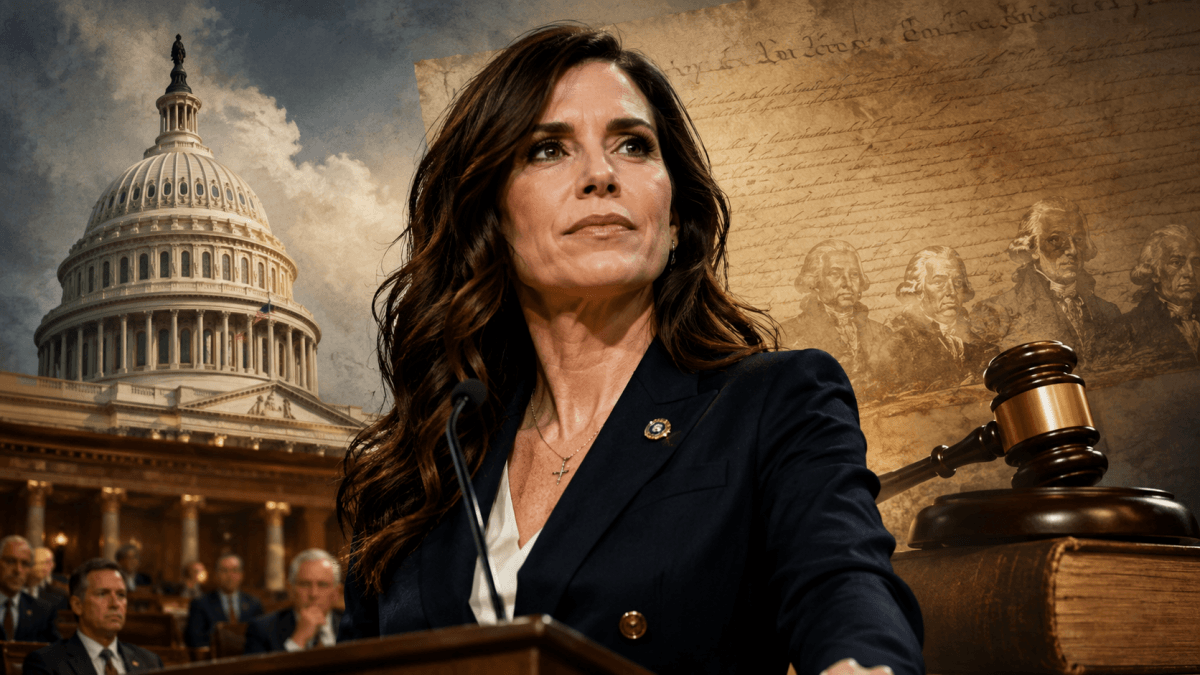
Representative Nancy Mace has proposed a constitutional amendment to restrict federal offices, including Congress, to natural-born citizens. This proposal specifically targets foreign-born members like Representative Ilhan Omar and faces significant political hurdles for ratification.
Jump to The Flipside Perspectives

Representative Nancy Mace (R-SC) last week introduced a proposed constitutional amendment that would dramatically alter eligibility requirements for several federal positions, limiting them exclusively to natural-born American citizens. The amendment seeks to bar foreign-born Americans from serving in Congress, federal judgeships, and Senate-confirmed executive branch roles. The proposal has drawn swift reaction, particularly from Democratic Representative Ilhan Omar (D-MN), one of the individuals specifically highlighted by Mace.

"If you hold power in the American government, you should be a natural-born American citizen." — Rep. Nancy Mace (R-SC)

Currently, the U.S. Constitution mandates that only presidents and vice presidents must be natural-born citizens. Members of Congress, federal judges, and cabinet officials are permitted to serve as long as they meet established citizenship and residency requirements. Mace, however, contends that these criteria are insufficient for positions of power within the American government.

"If you hold power in the American government, you should be a natural-born American citizen," Mace stated in a press release. She added, "For too long we have allowed foreign-born members to hold seats in this government, while making clear their loyalty is not here. We see it every day."

In promoting her amendment online, Mace explicitly named Representative Omar, alongside fellow Democratic Representatives Pramila Jayapal (D-WA) and Shri Thanedar (D-MI), all of whom were born outside the United States. Mace posted on X, "Ilhan Omar. Shri Thanedar. Pramila Jayapal. All born in foreign countries, none were citizens by birth. All sitting in the United States Congress. All making clear every single day their loyalty is not to America."

Representative Omar, who was born in Somalia and became a naturalized American citizen in 2000, appeared unfazed by the proposal when questioned about it last week. "Good luck to her," Omar told Fox News Digital, dismissing the effort.

This latest development marks another chapter in the ongoing political friction between Mace and Omar. Earlier this year, Mace led an unsuccessful effort to secure a House Oversight Committee subpoena related to unverified allegations concerning Omar's marriage history, including claims that Omar married her brother for immigration purposes. These allegations have circulated in conservative media for years but have not resulted in criminal charges or publicly confirmed findings.

Mace's proposed amendment surfaces at a politically charged time for Representative Omar. Last week, during a White House press briefing, Vice President J.D. Vance suggested that the Department of Justice is reviewing matters related to Omar’s immigration history and finances, as reported by the New York Post. "So we’re going to investigate it, we’re going to take a look at it," Vice President Vance said at the time. "If we think there’s a crime, we’re going to prosecute that crime."

Representative Omar vehemently denied these claims, telling Fox News Digital, "That is not something that is happening. That man is delusional."

The process for amending the U.S. Constitution is exceptionally rigorous, requiring a two-thirds vote of approval in both the House of Representatives and the Senate. Following congressional approval, the proposed amendment must then be ratified by three-fourths of the states, totaling 38 states. This high threshold makes constitutional amendments extraordinarily difficult to achieve in modern American politics. The last successful constitutional amendment, the 27th Amendment concerning congressional pay changes, was ratified in 1992 after a process that spanned over two centuries.

Given these procedural hurdles, the proposed amendment faces nearly impossible political odds of passage. Nevertheless, the introduction of the amendment ensures that Representative Omar will remain a prominent political target for Republicans as the nation approaches the 2026 midterm elections. The controversy surrounding Omar continues to unfold amidst broader Republican criticisms involving immigration, loyalty, alleged fraud connections, and the "Feeding Our Future" scandal that has impacted Minnesota politics in recent years.

Advertisement

The Flipside: Different Perspectives

Progressive View

From a progressive standpoint, Representative Mace's proposed constitutional amendment is viewed as discriminatory, xenophobic, and fundamentally contrary to American ideals of inclusion and opportunity. Such a proposal would disenfranchise millions of naturalized citizens who have chosen to become Americans, contribute to society, and have every right to participate fully in the democratic process, including holding public office. Restricting eligibility based on birth origin rather than loyalty, qualifications, or commitment to public service undermines the very premise that America is a nation built by immigrants and strengthened by diversity.

This viewpoint emphasizes that citizenship, once granted, should confer equal rights and responsibilities without creating a tiered system based on birth circumstances. Many naturalized citizens have served in the military, held public office, and contributed significantly to the nation's economic and cultural fabric. To imply that their loyalty is inherently suspect due to their place of birth is seen as a baseless and harmful attack. Progressives argue that this amendment is a politically motivated effort, designed to target specific individuals like Representative Ilhan Omar, rather than a genuine attempt to improve governance. It would perpetuate systemic biases against immigrant communities and diminish the representation of diverse voices in government, ultimately weakening the collective well-being and democratic health of the nation.

Conservative View

The proposal by Representative Nancy Mace to require natural-born citizenship for high federal offices resonates deeply with conservative principles of national sovereignty and securing the integrity of government. From this perspective, ensuring that individuals holding positions of significant power—from legislators to judges and cabinet officials—possess an unquestionable, lifelong allegiance to the United States is paramount. A natural-born citizen requirement would eliminate any potential for divided loyalties, which some conservatives argue can arise when individuals have formative experiences or deep ties to other nations. This is not merely about excluding immigrants, but about establishing the highest standard for national service in an era where global influences and allegiances can be complex.

Furthermore, proponents argue that such a measure reinforces the unique identity and self-governance of the American republic. It reflects a belief that the foundational principles of the nation are best upheld by those whose entire civic identity is rooted in the American experience from birth. This viewpoint often connects to broader concerns about border security, immigration policy, and the perceived erosion of national identity. While acknowledging the contributions of naturalized citizens, conservatives prioritize the symbolic and practical implications of natural-born status for the most sensitive government roles, seeing it as a vital safeguard against foreign influence and a clear statement of national priority.

Common Ground

Despite the stark ideological differences, there are areas of common ground regarding the underlying values that drive this debate. Both conservatives and progressives share an interest in ensuring that elected and appointed officials serve the nation's best interests with integrity and undivided loyalty. There is universal agreement on the importance of national security and safeguarding the American democratic system from undue foreign influence, whether from hostile state actors or other external pressures.

Practical bipartisan approaches could focus on strengthening existing mechanisms for transparency and accountability for all public officials, regardless of their birth status. Enhancing vetting processes for high-level appointments, ensuring strict adherence to ethics rules, and promoting civics education to foster a strong sense of national identity and civic responsibility among all citizens are shared goals. Rather than amending the Constitution to exclude a class of citizens, efforts could be directed towards ensuring that all public servants, natural-born or naturalized, are held to the highest standards of conduct and dedication to the United States, thereby addressing concerns about loyalty and national security through inclusive and equitable means.

What's your view on this story? Share your thoughts and remember to consider multiple perspectives and being respectful when forming and voicing your opinion. "If you resort to personal attacks, you have already lost the debate..."

Advertisement

Contact Us About This Article

Have a question or comment about this article? We'd love to hear from you.

About Fair Side News

At Fair Side News, we believe in presenting news with perspectives from both sides of the political spectrum. Our goal is to help readers understand different viewpoints and find common ground on important issues.