


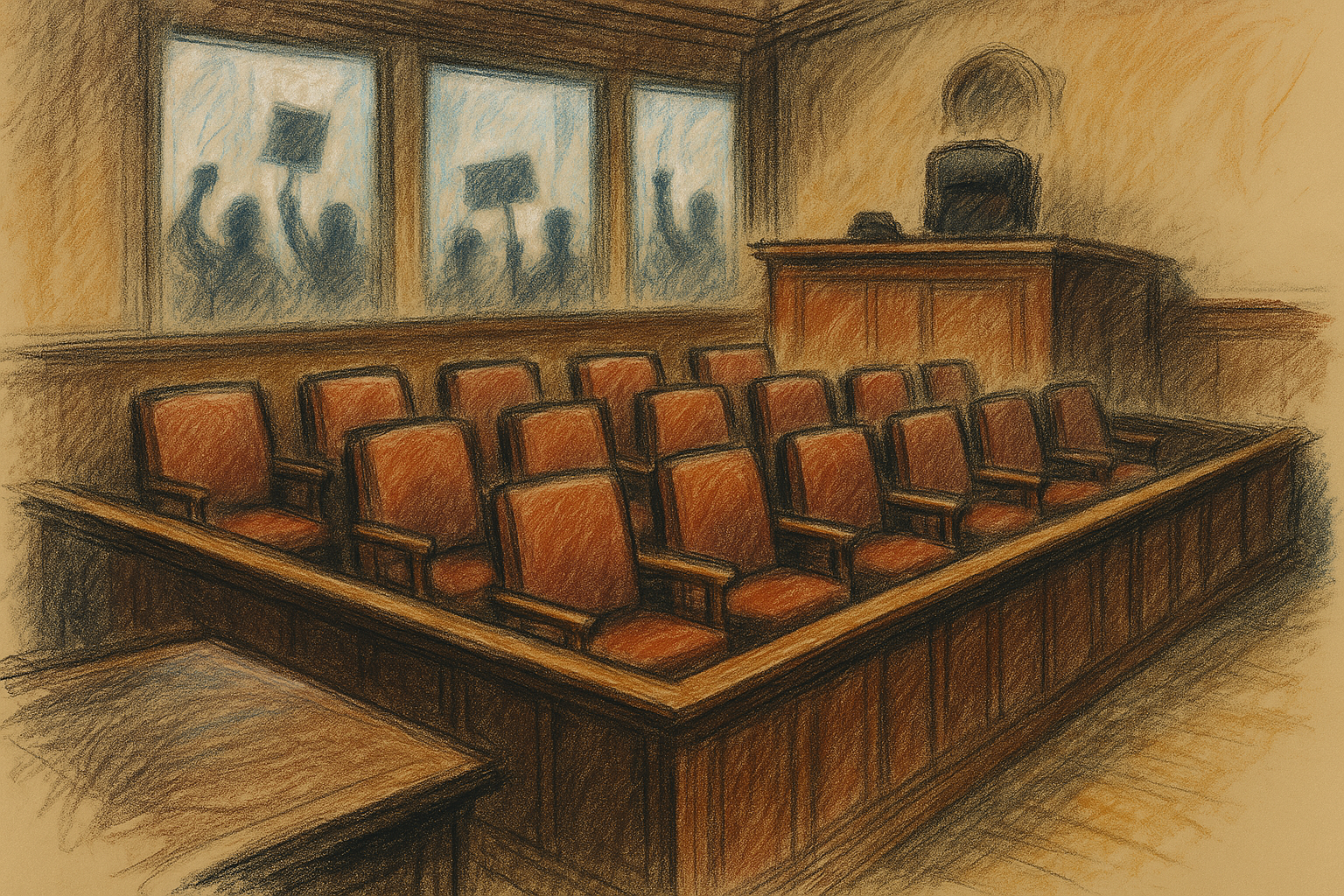
A Texas courtroom has become the focal point of a closely watched murder trial as proceedings commenced against Karmelo Anthony, the teenager accused of fatally stabbing 17-year-old Austin Metcalf. The incident occurred during a high school track meet in 2025, and the trial's opening days have been underscored by both intense courtroom testimony and racially charged demonstrations outside the courthouse.
"This young man, Karmelo Anthony… decided to take a knife to a high school track meet and provoke and go after another young man he didn’t know, and plunged it into his chest, into his heart, causing his death." — Bill Wirskye, Lead Prosecutor
Lead prosecutor Bill Wirskye began by presenting a detailed account of Metcalf's final moments to the jury. Wirskye stated that Metcalf, after being stabbed, lifted his shirt, observed his wound, and uttered, “I’ve been stabbed” before collapsing down the bleacher steps. His twin brother, Hunter Metcalf, was reportedly waiting at the bottom and rushed to his side. The Daily Mail reported these details, which silenced the courtroom.
Wirskye asserted that Anthony made a deliberate decision on the day of the track meet. He told the jury, “This young man, Karmelo Anthony… decided to take a knife to a high school track meet and provoke and go after another young man he didn’t know, and plunged it into his chest, into his heart, causing his death.” The prosecutor characterized the act as “unjustified, unprovoked murder,” a classification the defense is expected to challenge as the trial progresses.
The altercation reportedly originated over a team tent at the track meet. Athletes from Memorial High School had set up their designated area, and Metcalf was informed that Anthony was not permitted inside. NBC5 reported that Wirskye explained to jurors that these team tents function similarly to locker rooms, serving as private spaces for athletes and their belongings. Metcalf, following instructions from his coach to act as a leader, approached Anthony and instructed him to leave the tent area. Anthony's response, according to the prosecution, was a warning: “Touch me and see what happens.”
Despite initial reluctance to engage physically, Metcalf eventually became involved in the confrontation. Wirskye noted that in the ensuing chaos, Metcalf reportedly did not realize he had been stabbed until it was too late. Anthony reportedly fled the scene immediately following the incident but was apprehended by coaches who had witnessed the altercation. Anthony informed the coaches that Metcalf had initiated physical contact. Wirskye dismissed this explanation before the jury, stating, “As if that justifies his act, as if it justifies the murder he just committed.”
The drama surrounding the trial has extended beyond the courtroom walls. Controversy began even before opening statements, as jury selection concluded without a single Black juror being seated on the panel. Dominique Alexander, a spokesperson for the Anthony family, publicly voiced concerns regarding the jury's composition, stating that it means Anthony is “not receiving a fair trial.” This declaration immediately garnered significant attention and contributed to an already tense atmosphere surrounding the high-profile case.
Outside the courthouse, a confrontation erupted between supporters of the Metcalf family and a group backing Karmelo Anthony. Reports indicate that an individual within the Anthony support group directed a threat at two men supporting the Metcalf family, saying, “Imma push you if I get close enough, push you right into that grave,” and subsequently added a racial slur. Another Anthony supporter maintained that the defendant bore no responsibility for escalating the situation, claiming he was “minding his d*mn business when them boys came up to him.” These interactions highlight the deep divisions and raw emotions surrounding the trial.
The commencement of the Karmelo Anthony trial has thus become a focal point for discussions on justice, racial fairness, and community tensions within the legal system. As the trial proceeds, the court will continue to hear evidence and arguments, while the public remains engaged with the unfolding events both inside and outside the courtroom. The case draws national attention due to the sensitive nature of the allegations, the youth of those involved, and the racial dynamics that have emerged.

