


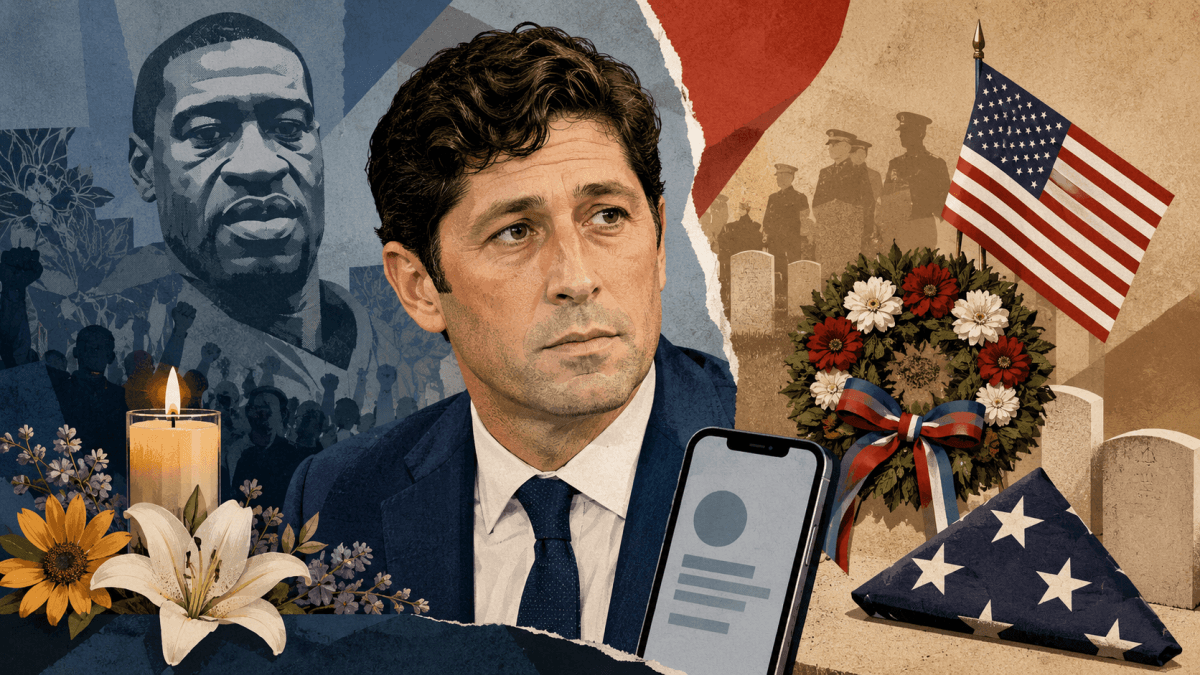
Minneapolis Mayor Jacob Frey faced public backlash this week after social media posts marking the anniversary of George Floyd's death coincided with Memorial Day observances, reigniting political tensions in the city. Critics argued that the timing of Frey's initial messages prioritized Floyd's remembrance over the federal holiday honoring fallen U.S. service members, while supporters defended the mayor's focus given Floyd's historical significance to Minneapolis.
"Today, we remember George Floyd, who was murdered by a former Minneapolis police officer six years ago. That moment changed our city forever." — Mayor Jacob Frey, Minneapolis
On Memorial Day, Mayor Frey posted a message reflecting on the lasting impact of George Floyd's death in Minneapolis. His post stated, "Today, we remember George Floyd, who was murdered by a former Minneapolis police officer six years ago. That moment changed our city forever." In his message, Frey detailed how the 2020 killing forced the city to confront "painful truths about race, policing, inequity, and trust," describing it as a turning point that reshaped public institutions and community expectations. He highlighted ongoing efforts to rebuild trust and reform policing practices, as well as redevelopment initiatives around George Floyd Square, framing them as part of a broader effort to balance memorialization with long-term community rebuilding. These initiatives include construction and planning aimed at transforming the site into both a commemorative space and a functional neighborhood hub.
The timing of this initial post, published on Memorial Day, a federal holiday dedicated to honoring U.S. service members who died in military service, quickly drew criticism online. Many social media users argued that the mayor's primary focus on Floyd before acknowledging Memorial Day demonstrated misplaced priorities. For example, the account @Breaking911 posted, "Minneapolis Mayor Jacob Frey is choosing to post about George Floyd while remaining silent about Memorial Day." Another user, @EricLDaugh, expressed similar sentiments, stating, "Minneapolis Mayor Jacob Frey is focused on honoring GEORGE FLOYD this Memorial Day... He has NOT posted about Memorial Day on his official account!" These reactions underscored a broader national divide in how Floyd's legacy continues to be interpreted and commemorated.
Later, Mayor Frey issued a separate statement specifically honoring fallen U.S. service members for Memorial Day, expressing the nation's "deepest gratitude" to those who gave their lives. However, this follow-up post itself became part of the controversy. Critics pointed to the sequence of messages as evidence of poor messaging judgment, suggesting that the initial omission of Memorial Day was rectified only after public outcry. Supporters, conversely, maintained that both observances could be acknowledged independently and that the mayor's remarks were appropriate given Floyd's profound role in Minneapolis history and the continuing impact of his death on the city.
The dispute also revived scrutiny of Mayor Frey’s leadership during and after the 2020 unrest that followed Floyd’s death. The killing, captured on video and widely circulated, triggered nationwide protests and civil unrest, with Minneapolis serving as a central point for demonstrations that resulted in widespread property damage and significant political pressure on city leadership. Frey's handling of the aftermath, including debates over policing reforms and public safety, has remained a point of division in local politics. His administration's proponents credit him with pursuing reform-oriented changes, while detractors argue that the city's response contributed to instability and long-term challenges in law enforcement staffing and public safety policy.
Adding to the complexity of the ongoing public discourse, official findings from the Hennepin County Medical Examiner ruled that Floyd’s death was the result of an overdose, while also noting the presence of underlying health conditions and drugs in his system as contributing factors. This aspect of the case has been a recurring point of contention in public discussions surrounding the incident.
The controversy surrounding Mayor Frey's Memorial Day posts highlights how George Floyd's death continues to shape Minneapolis politics years later. It remains a flashpoint in discussions over civic memory, public messaging, and how elected officials navigate the balance between commemorating historical events and observing national holidays. The incident underscores the persistent challenges in achieving consensus on sensitive historical narratives and community priorities.

