


Federal prosecutors have filed charges against two National Institutes of Health (NIH) researchers, Vincent Munster, 53, and Claude Kwe, 38, in connection with the alleged improper transport of viral materials into the United States. The charges stem from an incident at Detroit Metropolitan Airport on January 25, when the researchers arrived from Brazzaville, Republic of Congo, where a monkeypox outbreak had been reported. Both Munster, Chief of the Virus Ecology Section, and Kwe, a research fellow, are affiliated with the NIH’s Rocky Mountain Laboratory in Montana, a facility operating at Biosafety Level 4, the highest classification for handling dangerous pathogens.
"individuals working in sensitive research environments are still required to follow federal law when transporting materials. He said accurate disclosure at ports of entry is essential for maintaining biosecurity controls." — Jerome F. Gorgon Jr., U.S. Attorney
The case involves allegations of conspiracy to smuggle monkeypox and making false statements to federal agents. According to federal documents, the researchers specialize in studying emerging viral diseases and their transmission between species, work that typically mandates strict documentation and regulatory oversight for international transport of biological materials.
Upon their arrival at Detroit Metropolitan Airport, Customs and Border Protection (CBP) officers selected the pair for inspection. CBP routinely screens travelers from regions experiencing infectious disease outbreaks and is authorized to inspect biological materials entering the country. Officers observed Munster and Kwe carrying a large, sealed black case. The researchers allegedly informed officials that the case contained diagnostic and testing equipment for laboratory work.
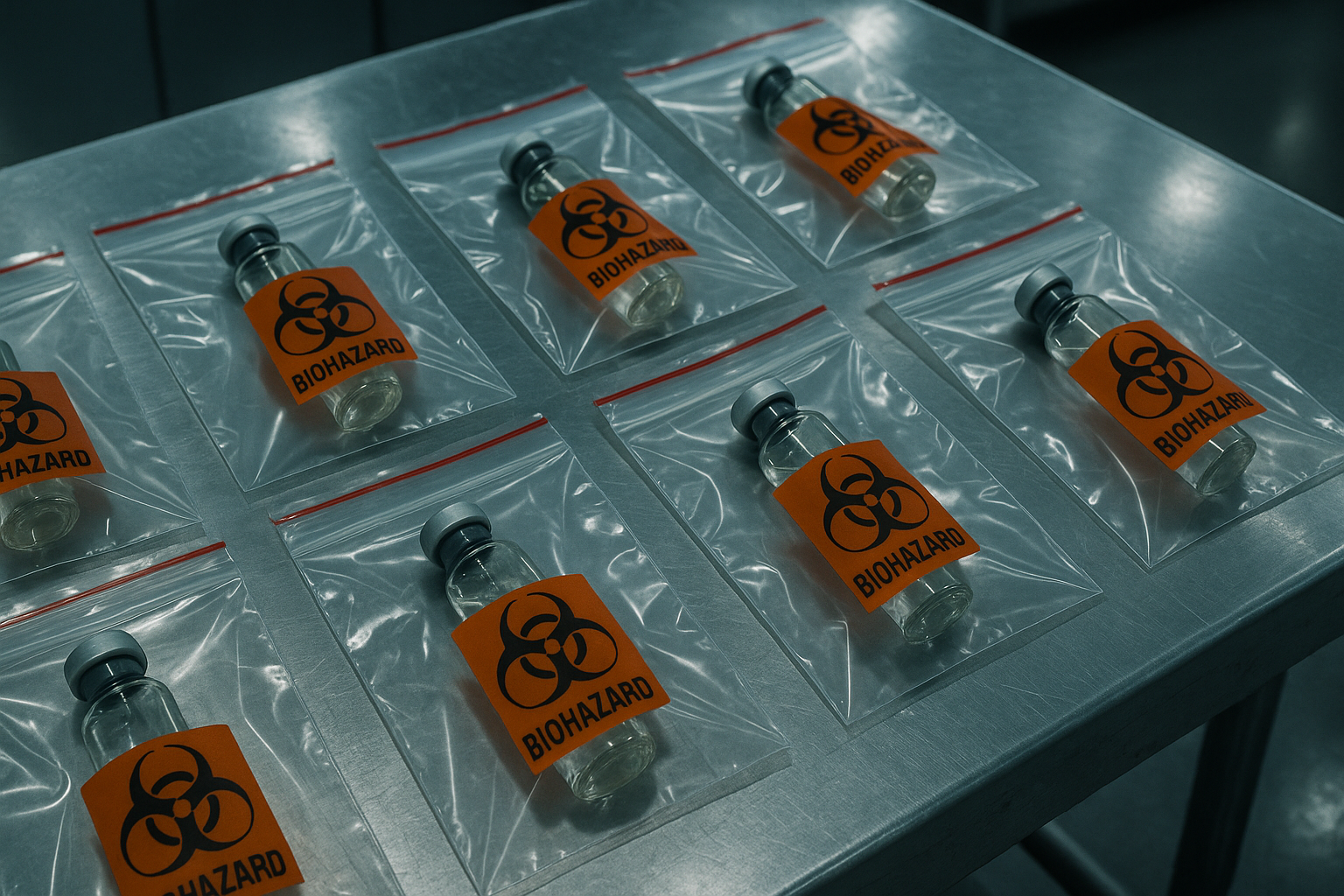
However, investigators later determined that the container allegedly held biological samples that had not been properly declared for entry into the United States, according to FOX 2 Detroit. Federal authorities reported that the case contained 113 vials, stored in insulated packaging designed for biological preservation. Of 20 samples tested to date, 17 contained deactivated monkeypox material, one contained chickenpox virus, and two contained human DNA, based on federal testing results cited by USA Today.
Federal health import guidance mandates that a broad spectrum of biological materials, including inactivated or non-infectious samples, must be properly declared upon entry into the United States. The Centers for Disease Control and Prevention (CDC) outlines specific import permit requirements for infectious substances and related biological materials to ensure proper tracking and compliance with biosafety standards. Even if materials are not capable of causing infection, their transport is regulated to ensure chain-of-custody documentation, risk assessment, and adherence to federal biosafety protocols. Customs officials rely on these declaration requirements to verify that biological shipments align with what travelers disclose.
U.S. Attorney Jerome F. Gorgon Jr. publicly criticized the alleged conduct, emphasizing that "individuals working in sensitive research environments are still required to follow federal law when transporting materials. He said accurate disclosure at ports of entry is essential for maintaining biosecurity controls."
FBI Detroit Special Agent in Charge Jennifer Runyan added that the allegations encompass both the improper transport of biological materials and alleged attempts to mislead investigators. She underscored that "professional credentials do not exempt individuals from enforcement actions." Officials from the Department of Health and Human Services Office of Inspector General characterized the case as a "breach of public trust" involving individuals entrusted with safeguarding public health research. They noted that the investigation involved multiple agencies, including the FBI, CBP, and HHS oversight teams.
CBP Director of Field Operations Marty Raybon reiterated the agency's commitment to enforcing strict controls on the cross-border movement of regulated materials. He stated that CBP maintains "zero tolerance for attempts to bypass inspection procedures or misrepresent cargo."
If convicted, Munster and Kwe each face potential sentences of up to five years in federal prison. The charges highlight the stringent regulations governing the international movement of biological research materials and the serious consequences for alleged non-compliance.

