


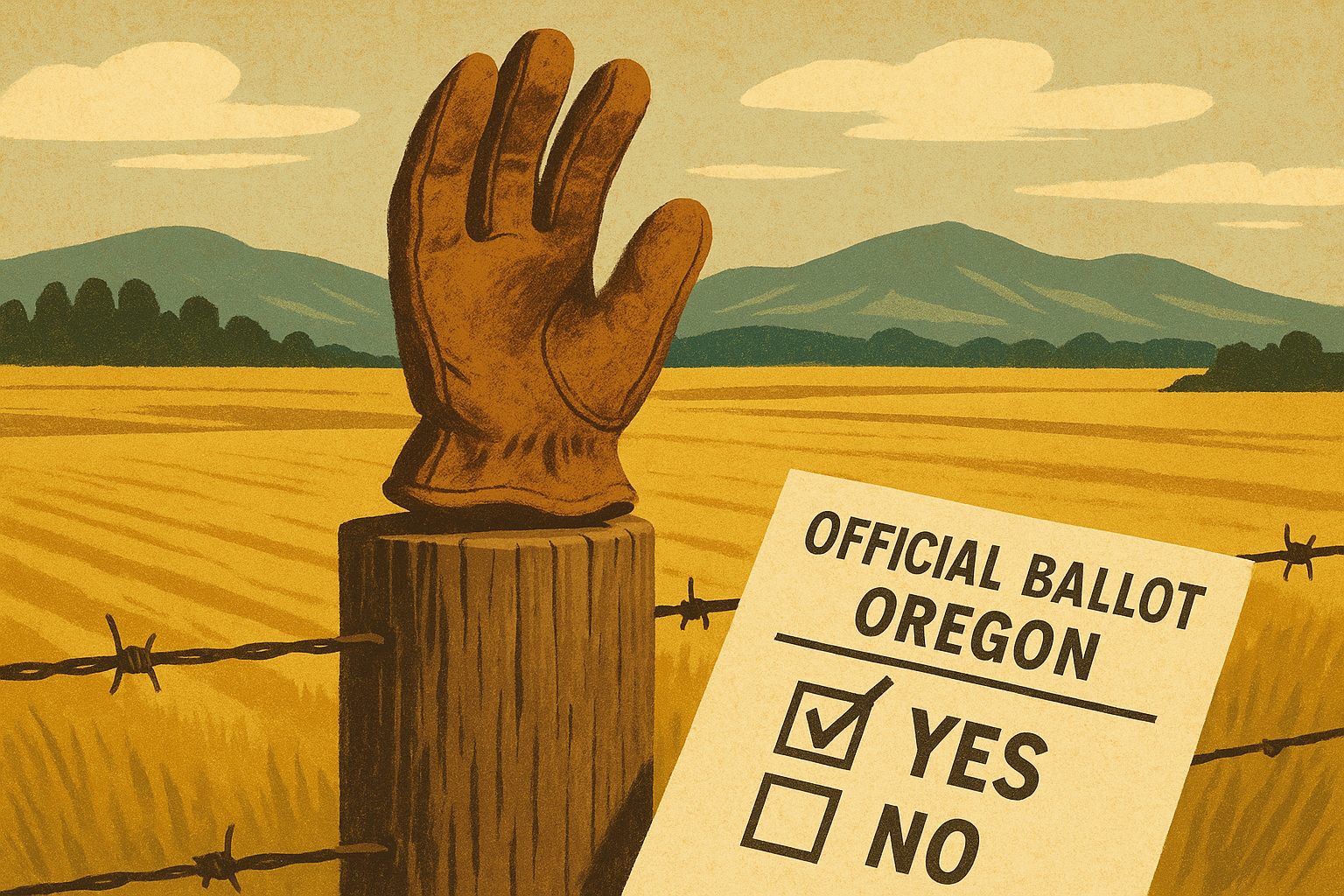
A ballot initiative known as Initiative Petition 28 (IP28), formally titled the People for the Elimination of Animal Cruelty Exemptions Act, is currently undergoing signature verification in Oregon. This measure, if certified and passed, has the potential to fundamentally alter over a century of established agricultural and outdoor traditions within the state. Organizers behind the petition recently announced they have collected the necessary raw signatures to potentially place the measure on the November 2026 general election ballot.
"IP28 asks Oregon voters to dramatically redefine animal abuse in state law by making the killing or injury of animals illegal." — Oregon Farm Bureau
The Oregon Secretary of State’s Office is now responsible for verifying the submitted signatures. IP28 requires 117,173 validated signatures by a July 2, 2026 deadline to officially qualify. Organizers typically gather a buffer of signatures to account for disqualifications due to changes in voter registration or residency over time. This is the third iteration of such a campaign, with previous versions failing to qualify for the ballot in 2020 and subsequent years.
At the core of IP28 is a proposed rewrite of Oregon’s animal abuse laws. Currently, licensed hunters, commercial fishermen, and farmers operate under specific legal exemptions that shield their professional activities from the state’s animal cruelty statutes. IP28 seeks to eliminate these protections entirely, classifying the act of causing an animal’s death—whether "intentionally, knowingly, or recklessly"—as first-degree animal abuse.
The initiative’s scope extends beyond the conventional understanding of animal cruelty. It proposes to broaden the legal definition of animal sexual assault to include artificial insemination, a routine procedure widely utilized in Oregon’s livestock industry for breeding and genetic management. The campaign behind IP28, operating under the name Yes on IP28, states on its website that the measure "would extend the legal protections that keep our companion animals safe to animals currently on farms, in research labs, and in the wild." The group further clarifies that IP28 "would also expand protections against animal sexual assault by classifying both the masturbation and impregnation of animals as sexual assault even when done for agricultural purposes."
Opposition to IP28 has been vocal and spans across various sectors of Oregon’s rural economy. The Oregon Farm Bureau has issued strong warnings about the initiative’s potential implications. The organization stated that IP28 "asks Oregon voters to dramatically redefine animal abuse in state law by making the killing or injury of animals illegal," emphasizing that while the language may appear straightforward, its consequences are "sweeping." The Bureau argues that passage of IP28 would expose "farmers, ranchers, veterinarians, breeders, and animal owners to criminal liability for standard, humane practices that are essential to animal health, food production, and genetic management." They also suggested that Oregonians could be compelled "either into a vegan lifestyle or to rely on food shipped in from other states or countries," which would likely increase food costs and disrupt the state’s local food supply chain.
Similarly, the Oregon Cattlemen’s Association declared that the measure would "prohibit processing of animals, in addition to restricting hunting and fishing, under the guise of preventing animal cruelty" and would strip "the freedom of choice from every consumer." The Oregon Hunters Association provided specific figures, estimating that approximately one million Oregonians involved in hunting, fishing, trapping, or agriculture could face criminal prosecution under the proposed law. The Association also highlighted the significant economic contribution of these activities, citing over $1.9 billion in annual economic activity generated by Oregon’s hunting and fishing sectors alone.
The opposition to IP28 has garnered bipartisan concern, with lawmakers from both major political parties publicly expressing apprehension about the measure’s potential severe consequences for conservation funding and rural economies.
The campaign supporting IP28 has received financial backing from national animal rights organizations, including a $10,000 contribution from PETA and $30,000 from the Craigslist Charitable Fund. These funds have enabled organizers to hire paid signature gatherers, transforming the effort from a grassroots activist push into a more organized political operation. Despite their efforts, the Yes on IP28 campaign has acknowledged on its website that securing immediate victory is a long shot, stating that the initiative "is unlikely to secure 50% of the vote in 2026." The group frames its current push as part of a longer-term strategy, suggesting alternative approaches such as "greater investment in plant agriculture, utilizing non-lethal wildlife management practices, or implementing non-animal methods for research."
Should IP28 successfully clear the signature verification process and appear on the November 2026 ballot, it would require only a simple majority vote to become law. For Oregon’s agricultural, hunting, and fishing communities, the ongoing process of signature verification represents a critical juncture for their livelihoods and long-standing traditions.

