


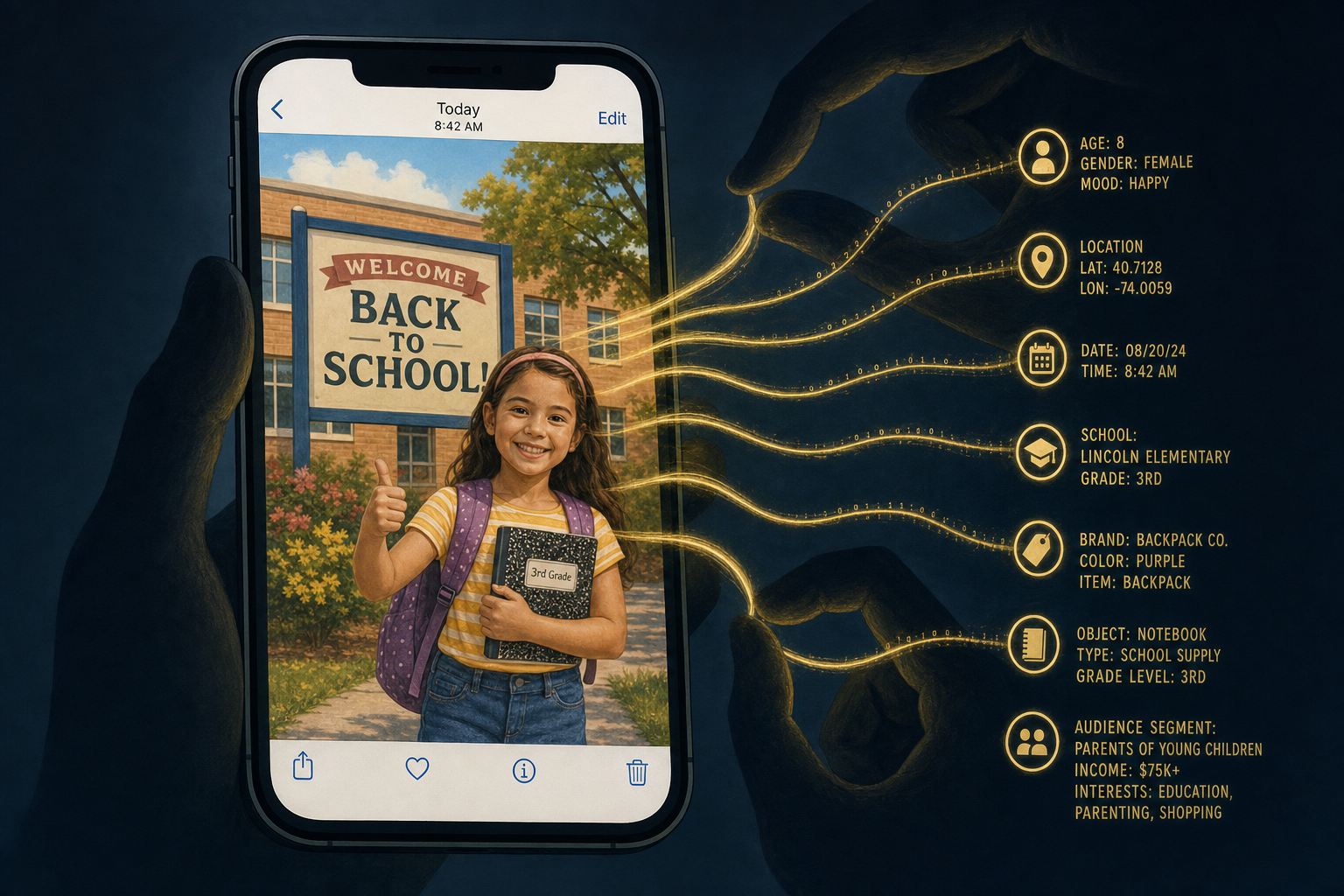
As millions of students across the United States embark on a new academic year, the time-honored tradition of capturing first-day-of-school photographs has been met with a growing chorus of warnings from police and child-safety officials. These authorities are urging parents to exercise extreme caution when sharing these seemingly innocuous images on social media, highlighting the potential for personal information to be inadvertently disclosed, making children vulnerable to exploitation by strangers.
"What may have started as a wholesome family tradition could inadvertently tip off bad actors to personal details of your child's life and whereabouts." — WFLA News, Tweet
The ritual of photographing children in their new outfits, with backpacks, and often holding celebratory signs detailing their grade or aspirations, is a cherished moment for many families. However, law enforcement agencies, including the San Antonio Police Department (SAPD), the Sterlington Police Department in Louisiana, and the Jonesboro Police Department, have issued advisories pointing out that these cheerful snapshots can reveal a wealth of personal data. This information can include a child's full name, age, grade, school, teacher's name, height, birthday, favorite activities, and even details about their home or daily routines.
According to Nexstar, when such details are made public, they can empower individuals with malicious intent to identify a child, learn their schedule, or determine their whereabouts. The SAPD has specifically advised parents against including a child’s full name, school, teacher’s name, height, birthday, or age in social media posts. The department emphasized that even seemingly minor personal details could be leveraged by strangers to establish a false sense of familiarity, potentially deceiving a child. To mitigate this risk, SAPD suggested simplifying commemorative signs, recommending phrases like "first day of school" instead of explicitly stating a specific grade level.
Beyond the information explicitly written on signs, police are also concerned about details visible in the background of photographs. The Sterlington Police Department in Louisiana has cautioned parents to scrutinize the backdrops of their photos. Images that inadvertently display a school building, a family's home, a street sign, or other recognizable landmarks can inadvertently reveal a child's living address or the places they frequent. The department recommends utilizing plain, neutral backgrounds devoid of any identifying details to enhance privacy.
Jonesboro Police Chief Rick Elliott echoed these concerns, telling KAIT 8 that information shared on social media can provide predators with critical insights into a child's daily routine. He advised parents to omit school names, grades, and specific teacher information from their posts. Chief Elliott also stressed the importance of regularly checking social media privacy settings to ensure that photographs are only accessible to trusted individuals within the family's network.
Camelia Juarez, a spokesperson for the San Antonio Police, further elaborated on the dangers, noting to KSTAT that even seemingly trivial details about a child's school or mode of transportation could make it significantly easier for strangers to pinpoint where a child regularly spends their time. Greg Schiller, CEO of the Child Rescue Coalition, added another layer of concern, pointing out that photographs can also reveal sensitive information about a family's home environment. Schiller explained that even if a house number isn't visible, advanced reverse-image search technology could potentially be used to identify the property's address from a photograph.
Officials have also raised alarms about "harmless" information often included on first-day signs, such as a child's favorite color, pet, or food. These seemingly innocuous details, according to police, could be exploited by a stranger attempting to build rapport and establish trust with a child. Juarez highlighted that strangers do not require extensive information to create the impression that they are acquainted with a child or their family.
Schiller also warned against a false sense of security provided by private social media accounts. He explained that any individual with access to a photograph on a private account could potentially reshare it, thereby exposing the image to an unintended and broader audience. Furthermore, Schiller underscored the emerging threat posed by advancements in artificial intelligence, which can be used to manipulate photographs of children, including the creation of sexualized images.
Law enforcement officials are not advocating for parents to cease the tradition of taking first-day-of-school photographs. Instead, their warnings are intended to promote greater vigilance and safer practices. The SAPD, for instance, recommends using neutral backgrounds and diligently removing any identifying information before posting images online. For parents seeking an even higher level of privacy, officials suggest taking photographs from behind the child or subtly covering their face before sharing the image online. The overarching message from law enforcement is that families can continue to celebrate the commencement of a new school year while simultaneously limiting the amount of personal information made publicly available, ensuring that a cherished family tradition does not inadvertently become a gateway for harm. As WFLA News tweeted on August 9, 2026, "What may have started as a wholesome family tradition could inadvertently tip off bad actors to personal details of your child's life and whereabouts."

