


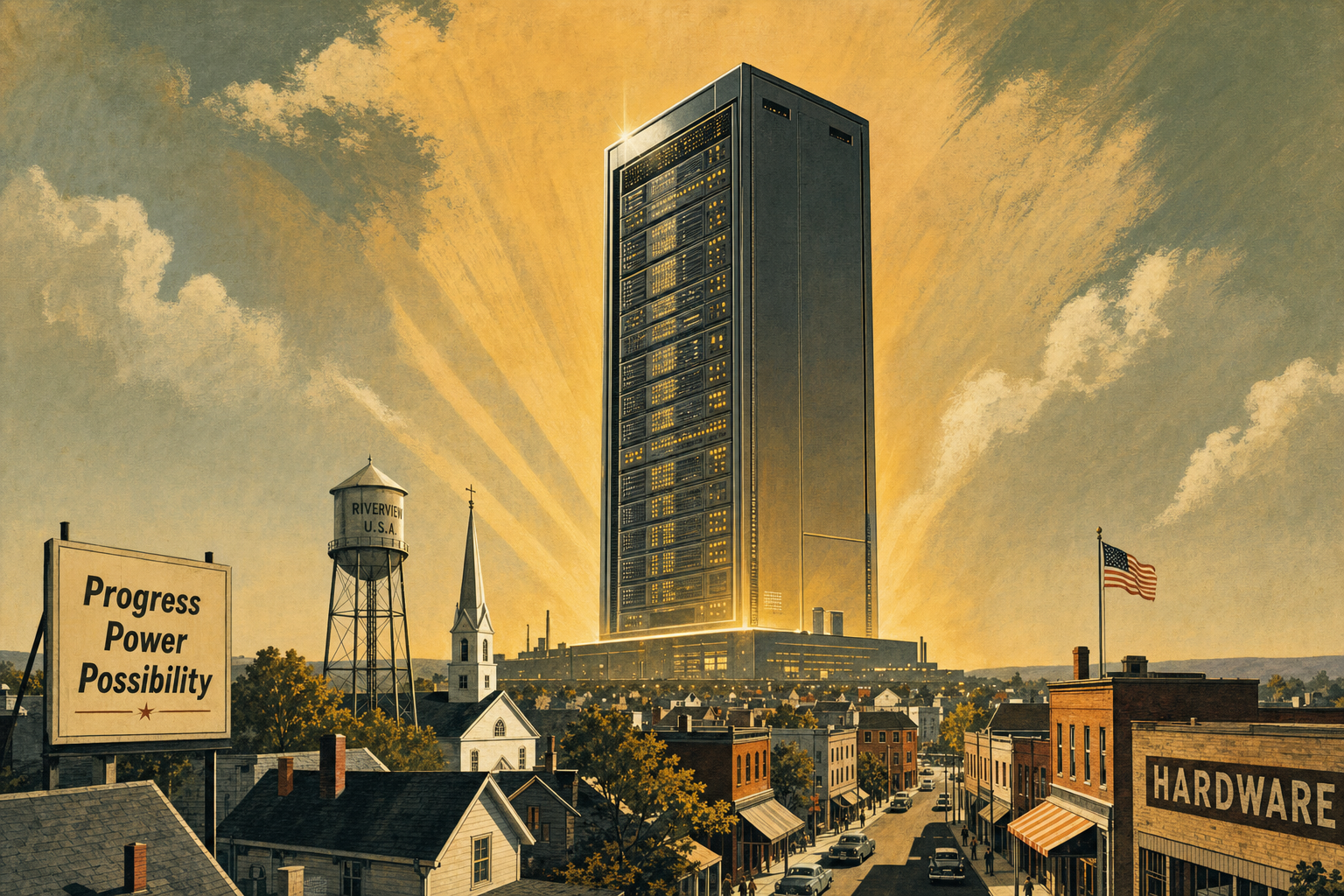
President Donald Trump on Friday publicly defended the expansion of artificial intelligence (AI) data centers across the United States, emphasizing their potential to deliver substantial economic benefits to local communities. Speaking with reporters at Joint Base Andrews, President Trump addressed questions regarding opposition to these facilities by some Republican candidates ahead of upcoming midterm elections. He framed the issue as straightforward, contingent primarily on appropriate site selection.
"If I ran a community, if I was a mayor or if I was a governor in the state, I would want to have the data centers because they bring tremendous income. They’re clean. They produce their own energy. The new ones are producing their own energy. I…" — President Donald Trump
"The data center subject to me is a pretty simple one. If you pick the right location — and it’s got to be — not every location’s perfect for it," President Trump stated. He elaborated that strategically located data centers could translate into significant employment opportunities and increased tax revenue for surrounding areas. "But if you pick the right location, what it means for a community is jobs and lots of money and lower taxes," he added. These comments echoed remarks he made earlier in the week at the White House, where he expressed support for attracting major AI facilities if he were a mayor or governor.
A significant point of contention surrounding data centers is their substantial electricity consumption. President Trump addressed this concern directly, asserting that his administration mandates developers to construct their own electricity-generating facilities rather than relying entirely on existing power grids. "And the data centers now are mandated by me that they build their own electricity, so they’re not taking it from the grid," he clarified. President Trump further argued that this policy could yield broader benefits, potentially reducing overall electricity costs if data centers generate surplus power. He suggested, "They’re going to build their own electric producing facility. And, that electricity that they have left over is going to the grid, it’s going to lower the cost of electricity."
The rapid proliferation of data centers has become an increasingly contentious issue in communities nationwide amidst the booming AI industry. Local resistance often stems from concerns about environmental impact, strain on infrastructure, and the character of the jobs created. A Gallup survey conducted from March 2 to March 18 illustrated widespread public apprehension, revealing that 48% of Americans strongly opposed the construction of AI data centers in their communities, with another 23% expressing somewhat opposed views. Conversely, 20% somewhat favored such projects, and only 7% strongly favored them.
Despite this public sentiment, President Trump's remarks position him firmly in favor of continued data center development, provided specific conditions are met: suitable locations are chosen, and developers ensure energy independence. He cited the generation of jobs, income, and potentially lower taxes as key advantages. When asked if Republican candidates should align with his stance, President Trump refrained from issuing a directive, stating he wants Republicans "to do what they want." Nevertheless, he reiterated his personal endorsement, emphasizing that as a local leader, he would welcome such facilities due to their "tremendous income" and "clean" operations. His support underscores a growing debate within conservative circles regarding balancing economic opportunity with local community concerns and environmental impacts. The President's policy direction, particularly the mandate for self-generated power, seeks to mitigate some of the most prominent criticisms leveled against these high-tech facilities, potentially reshaping how future AI infrastructure is integrated into American communities.

