

Breaking
Sponsor Advertisement
President Trump Calls White House DoorDash Event 'Tacky'
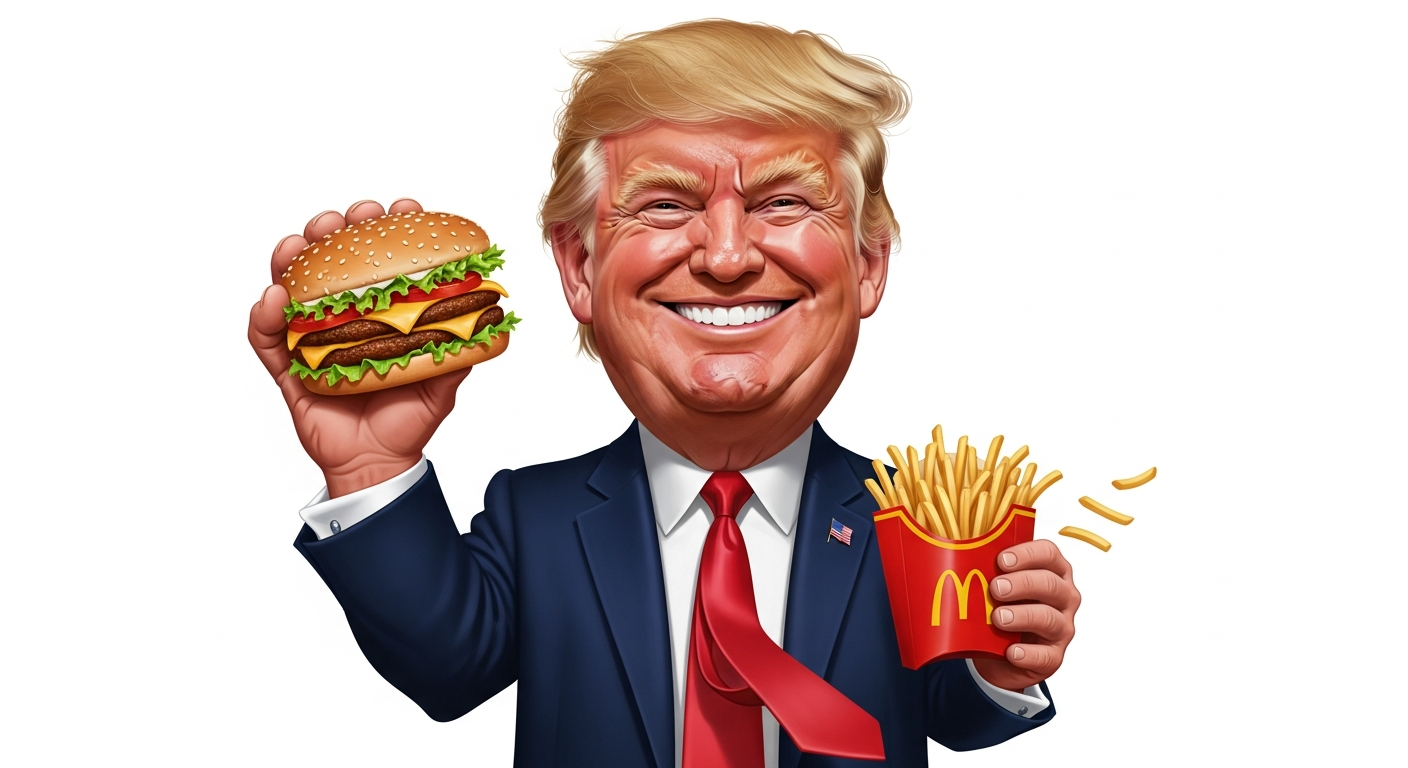
AI-generated image for: President Trump Calls White House DoorDash Event 'Tacky'

President Trump Calls White House DoorDash Event 'Tacky'

President Trump acknowledged a recent White House DoorDash delivery of McDonald's, intended to promote his "No Tax on Tips" policy, was "a little tacky" during a Nevada roundtable event. He nevertheless emphasized the policy's importance for service workers and the upcoming midterm elections.
Jump to The Flipside Perspectives

President Donald Trump acknowledged a recent White House publicity stunt, involving a DoorDash delivery of McDonald’s, as “tacky” during a roundtable event in Las Vegas, Nevada, on Thursday. The admission came as President Trump promoted his administration’s "No Tax on Tips" policy, a central component of his economic agenda aimed at providing tax relief for service workers across the nation.

"To be honest, it was a little tacky. You know, they come up with these crazy ideas… They’re a little embarrassing." — President Donald Trump

The event in Las Vegas was specifically designed to highlight the "No Tax on Tips" proposal, which seeks to exempt the first $25,000 of tipped income from federal taxation. This policy was first introduced during the 2024 presidential campaign and holds particular significance in Nevada, a state where a substantial portion of the electorate works in the hospitality industry. President Trump underscored this connection, stating that Nevada was the "birthplace" of the idea, claiming a local waitress originally inspired the proposal.

The "tacky" remark referred to a viral moment earlier in the week, when a DoorDash driver, affectionately nicknamed "DoorDash grandma," delivered McDonald’s directly to the White House. This event was orchestrated as a visual demonstration to draw attention to the administration's initiative to reduce the tax burden on service workers and underscore the economic benefits of the proposed tax relief.

Addressing the audience, President Trump offered a rare moment of self-criticism regarding the promotional tactic. "To be honest, it was a little tacky," he told the crowd. He elaborated on the nature of such political maneuvers, adding, "You know, they come up with these crazy ideas… They’re a little embarrassing." Despite the candid assessment of the stunt's aesthetic, the White House continues to push the underlying policy as a key part of its strategy to support working-class families and stimulate economic growth.

The "No Tax on Tips" policy is positioned by the administration as a direct benefit to millions of Americans who rely on gratuities as a significant portion of their income. By allowing these workers to keep a larger share of their earnings, the White House contends that the policy will not only improve individual financial stability but also inject more money into local economies, fostering broader prosperity. The timing of the renewed push for the policy coincides with the upcoming tax filing season, aiming to keep economic relief at the forefront of public discourse.

However, the administration's efforts to focus on its economic agenda have faced challenges from a complex and evolving political landscape. Rising fuel prices, partly attributed to the ongoing conflict in Iran, have been a significant concern for consumers and businesses alike. These price pressures have complicated the White House’s messaging on economic stability and relief. Additionally, President Trump's public disagreement with Pope Leo XIV has garnered considerable media attention, further diverting focus from domestic policy initiatives.

During the Las Vegas event, President Trump addressed these broader economic concerns, dismissing current price pressures as "fake inflation." He expressed optimism about the economic outlook, predicting an imminent improvement in conditions. "I think you’re going to be pleasantly surprised," he stated, encouraging voters to support Republican candidates in the upcoming midterm elections. His remarks aimed to reassure the public that current economic headwinds are temporary and that his administration’s policies are designed to deliver long-term benefits.

President Trump also used the platform to advocate for other tax benefits, specifically targeting seniors, and reiterated his criticisms of policies enacted during the previous administration. "I believe in rewarding you for the great work you’ve done," President Trump said, drawing a contrast between his agenda and that of former President Joe Biden. At one point, discussing senior-focused tax deductions, President Trump lightened the mood with a joke about his own age, noting, "Seniors are loving me. Of course, I’m not a senior," as reported by the Daily Mail.

The Las Vegas roundtable event underscores President Trump's consistent strategy to center working-class tax relief as a core tenet of his political message, particularly as the country approaches the 2026 midterm elections. While the "No Tax on Tips" policy remains a key initiative, President Trump's acknowledgment of the DoorDash stunt as "tacky" suggests an awareness within the administration that certain promotional tactics might sometimes miss their intended mark or be perceived differently by the public. This blend of policy promotion and candid self-reflection highlights the dynamic nature of political communication in the current environment. The administration continues to balance its policy objectives with the realities of public perception and ongoing national and international events.

Advertisement

The Flipside: Different Perspectives

Progressive View

While the "No Tax on Tips" policy aims to provide financial relief to service workers, a progressive perspective would examine its broader impact and systemic context. While any increase in take-home pay for low-wage workers is welcome, the policy might be viewed as a piecemeal solution that fails to address underlying issues of economic inequality and wage stagnation. Progressives might argue that focusing solely on tip income sidesteps the need for a living minimum wage, robust collective bargaining rights, or comprehensive social safety nets that provide more stable and equitable economic security for all workers. The White House's use of a publicity stunt, even if acknowledged as "tacky," could be seen as a distraction from more pressing economic challenges, such as rising fuel prices and persistent inflation, which disproportionately affect working-class families. Rather than dismissing inflation as "fake," a progressive analysis would emphasize the need for systemic solutions to corporate profiteering, supply chain vulnerabilities, and the high cost of essential goods and services. While individual tax relief is beneficial, the focus on tips might not address the fundamental power imbalances between employers and employees, nor does it necessarily contribute to broader economic equity or collective well-being. A more comprehensive approach, from this viewpoint, would involve strengthening worker protections, investing in public services, and ensuring that the tax system is progressive, with higher earners and corporations contributing their fair share.

Conservative View

The "No Tax on Tips" policy championed by President Trump directly aligns with conservative principles of reducing the tax burden on individuals and promoting free market principles by allowing workers to retain more of their earned income. This initiative empowers service workers, particularly in industries like hospitality, by increasing their take-home pay without relying on government handouts. It reflects a belief in individual liberty and personal responsibility, as it allows workers to make their own financial decisions with their earnings, rather than having a larger portion redistributed through federal taxation. Furthermore, the policy aims to stimulate local economies by boosting consumer spending and incentivizing employment in the service sector. By reducing the cost of labor through tax relief, businesses might be encouraged to hire more, fostering job growth. This approach stands in contrast to progressive policies often advocating for increased government spending or wealth redistribution, which conservatives argue can stifle economic growth and diminish individual initiative. The focus on tax cuts as a primary economic lever underscores a commitment to limited government intervention and the power of free markets to drive prosperity. President Trump's emphasis on this policy in Nevada, a state with a significant hospitality workforce, demonstrates a strategic alignment with constituents who value financial independence and less government interference in their earnings.

Common Ground

Despite differing approaches, both conservative and progressive viewpoints share a fundamental interest in improving the economic well-being of working-class Americans, particularly service industry workers. There is common ground in the recognition that individuals who work hard should be able to keep more of their earnings and that policies should aim to alleviate financial burdens. While conservatives favor tax cuts and market-driven solutions, and progressives advocate for more systemic interventions and social protections, both sides can agree on the importance of economic stability for families and local communities. Discussions around tax policy, such as the "No Tax on Tips" proposal, can serve as a starting point for bipartisan collaboration. Both parties could explore how to simplify the tax code, reduce bureaucratic hurdles for small businesses and workers, and ensure that tax benefits are genuinely impactful for low- and middle-income households. Finding practical solutions that empower individuals financially, whether through direct tax relief or by addressing cost-of-living challenges, represents a shared goal. Emphasizing the value of labor and ensuring that hard work translates into a secure livelihood is a common aspiration that can bridge ideological divides, fostering an environment where constructive policy dialogue can occur to benefit all Americans.

What's your view on this story? Share your thoughts and remember to consider multiple perspectives and being respectful when forming and voicing your opinion. "If you resort to personal attacks, you have already lost the debate..."

Advertisement

Contact Us About This Article

Have a question or comment about this article? We'd love to hear from you.

About Fair Side News

At Fair Side News, we believe in presenting news with perspectives from both sides of the political spectrum. Our goal is to help readers understand different viewpoints and find common ground on important issues.