


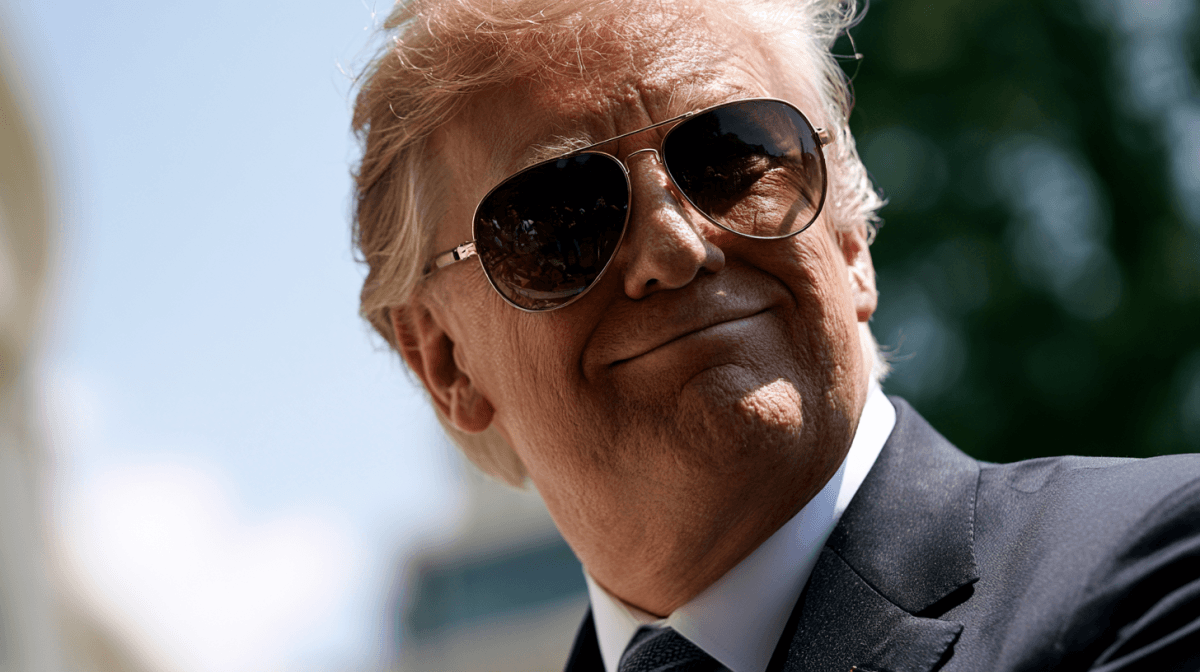
President Donald Trump made extraordinary claims regarding a breakthrough medical treatment during an Oval Office press conference, stating the United States is currently testing a drug capable of bringing people back from the brink of death, and even after they have been declared deceased. The President's remarks, which quickly garnered significant attention online, suggested that the experimental treatment has already shown dramatic early results, including allegedly reviving at least one patient who had effectively passed away.
"We had a person who had their last rites done — they passed away, the kids were crying, etc. and we gave them this medicine. And the person got better." — President Donald Trump, President of the United States
During his address, President Trump provided specific anecdotes to support his assertions. "We know this medicine works because we’ve taken people who had died," President Trump stated. He elaborated on one particular case, saying, "We had a person who had their last rites done — they passed away, the kids were crying, etc. and we gave them this medicine. And the person got better." He concluded by noting the drug's efficacy, "It works. It won’t work for some others, but we learn quickly."
Despite the sensational nature of these claims, President Trump did not identify the drug by name, nor did he specify the illness or condition it purportedly treats. Crucially, no medical evidence, scientific data, FDA documentation, or clinical trial information connected to the treatment was immediately released by the White House following his press conference. This absence of supporting details quickly fueled both widespread fascination and considerable skepticism across various sectors, including the medical community and the public.
Medical experts universally define death through the irreversible cessation of brain activity, heart function, or respiratory function. President Trump's use of phrases such as "people who had died" and "they passed away" was therefore considered particularly explosive and controversial, as it directly challenges established medical and biological understandings. Many observers speculated that President Trump might have been referring to patients who were clinically near death, temporarily unresponsive, or suffering from severe medical crises, rather than individuals who had experienced literal biological death as medically defined. Others drew parallels to ongoing experimental emergency treatments focused on severe trauma recovery, oxygen deprivation, organ failure, and advanced regenerative medicine, areas where significant research is indeed underway.
However, President Trump's phrasing left little room for ambiguity regarding the scale of his assertions. He framed the treatment as a potentially revolutionary medical breakthrough, one that could dramatically alter survival rates for critically ill patients if future testing proves successful. The comments immediately triggered intense debate across social media platforms and news outlets. Supporters lauded President Trump for highlighting what could be one of the most significant medical discoveries in modern history, emphasizing the administration's commitment to innovation. Conversely, critics accused the President of making unsubstantiated claims and exaggerating scientific possibilities without providing any verifiable evidence.
The administration has not yet clarified whether this alleged treatment is part of military medical research, private pharmaceutical development, or existing experimental biotechnology programs within the U.S., as reported by Balkan Web. These remarks come during a period where President Trump's administration has consistently emphasized aggressive investment into emerging medical technologies, artificial intelligence-assisted healthcare, and anti-aging research initiatives. President Trump has frequently spoken in recent months about his desire to extend human lifespan and accelerate advanced medical innovation through partnerships between the federal government and private industry.
As of now, without published trial data or independent scientific verification, President Trump’s latest comments remain impossible to confirm scientifically. No major medical journals or federal health agencies have publicly validated claims involving a drug capable of reviving deceased individuals. Nevertheless, the extraordinary nature of President Trump's statement has guaranteed widespread attention, with both his supporters and critics eagerly awaiting additional details surrounding what may be one of the most shocking health-related claims ever made publicly by a sitting American president.

