

Breaking
Sponsor Advertisement
President Trump Connects Independence Day to Military Sacrifice
Image for: President Trump Connects Independence Day to Military Sacrifice

President Trump Connects Independence Day to Military Sacrifice

President Donald Trump delivered a Memorial Day address at Arlington National Cemetery, emphasizing the profound link between military sacrifice and the nation's 250 years of independence. He underscored that the Fourth of July would not be possible without America's armed forces.
Jump to The Flipside Perspectives

President Donald Trump addressed the nation on Monday from Arlington National Cemetery, using the solemn observance of Memorial Day to underscore the enduring connection between military sacrifice and American independence. The speech, delivered weeks before the United States is set to commemorate its 250th anniversary, highlighted the cost of freedom across generations.

"Today, we are reminded that there could be no Fourth of July without America’s armed forces and there could be no Independence Day without Memorial Day." — President Donald Trump, Memorial Day Address

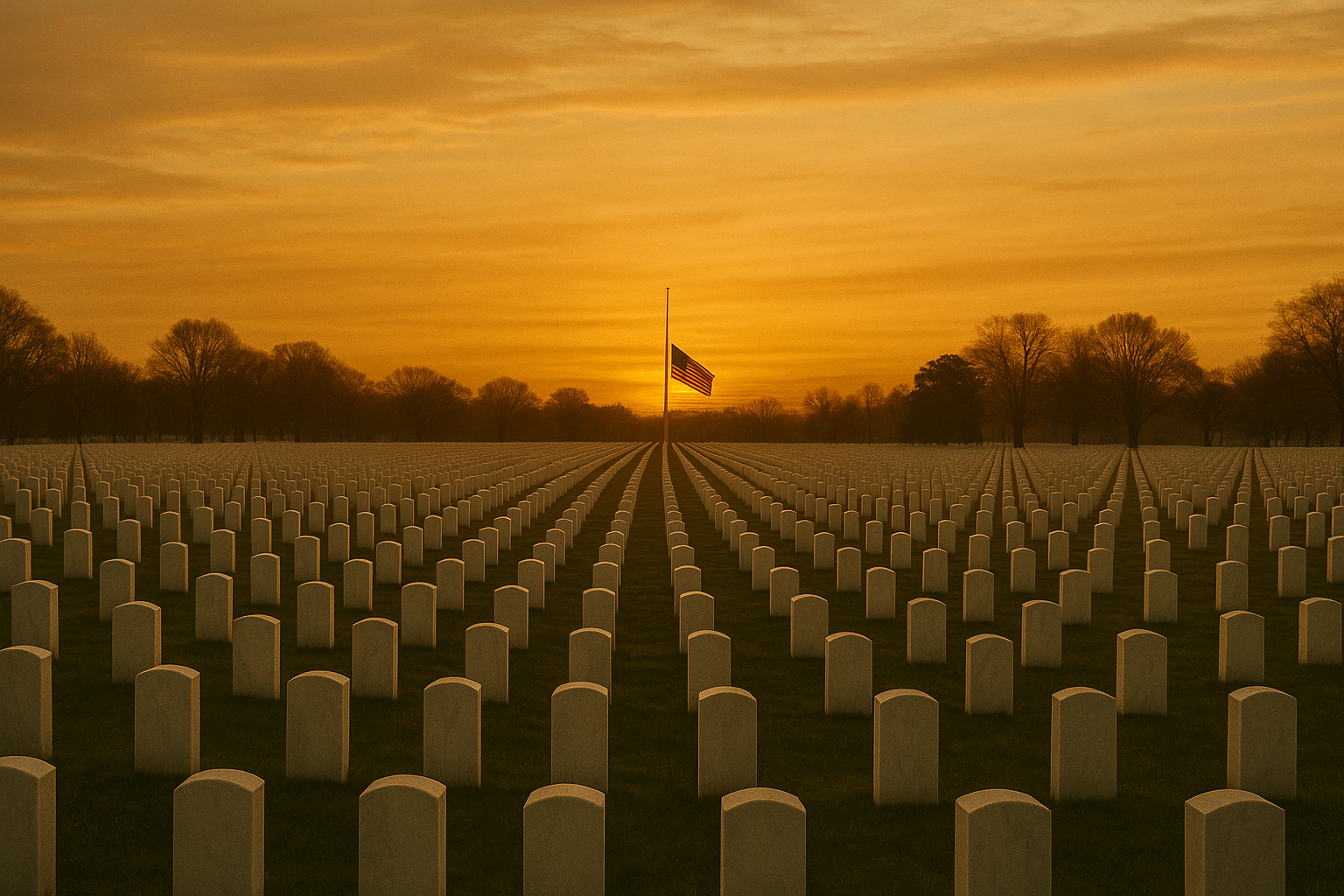
Standing against the backdrop of rows of gravestones, President Trump began by acknowledging the upcoming historic milestone. "Less than six weeks from now, our nation will reach a historic milestone, 250 years of majestic American independence," he stated. However, he quickly pivoted to emphasize that this celebration must be preceded by a reckoning with the sacrifices that have sustained the nation. "But it’s only right that first we remember the immense sacrifice that has been brought to us on this momentous anniversary year," President Trump added.

The President articulated a clear relationship between honoring the fallen and celebrating the nation's birth. He declared, "That’s what it is. It’s a momentous year. Before we hail the Founding, we honor the fallen. Before we celebrate the triumph, we pay the tribute. Before we crown the victory, we count the cost." This framing culminated in what many commentators identified as the defining statement of his address: "Today, we are reminded that there could be no Fourth of July without America’s armed forces and there could be no Independence Day without Memorial Day."

President Trump's address traced the lineage of military sacrifice back to the very origins of the nation, extending beyond the Civil War, which is commonly associated with Memorial Day's genesis. He referenced the spring of 1775, specifically the confrontations at Lexington and Concord in Massachusetts, where colonial militiamen first took up arms against the British Empire. These events, occurring more than a year before the formal Declaration of Independence in 1776, were presented as the initial links in an unbroken chain of service and sacrifice. The President drew a direct line from these early American patriots through every subsequent generation of military personnel to the present day, arguing that their dedication is the fundamental reason for the nation's continued existence and independence.

Memorial Day itself evolved from the Civil War era, when communities across a divided nation began holding observances at the graves of fallen soldiers, a tradition that eventually became a national day of remembrance. President Trump's remarks aimed to integrate this tradition deeply into the broader narrative of American nationhood, positioning the men and women honored at Arlington not as separate figures, but as integral to the very fabric of the American story.

The speech garnered significant attention across social media platforms following its delivery. Commentator Nick Sortor amplified President Trump's core statement on X, echoing the connection between Independence Day and Memorial Day to a wide online audience. The address also drew comparisons to other memorable presidential speeches, such as President Ronald Reagan's address following the Space Shuttle Challenger disaster in 1986, which famously concluded with lines adapted from a wartime poem by John Gillespie Magee Jr. Similarly, President Abraham Lincoln's articulation of the American republic as a nation "dedicated to the proposition that all men are created equal" has served as a touchstone for presidents seeking to define the nation's founding principles. President Trump's Memorial Day address placed the sacrifices of service members within this same foundational tradition, asserting their indispensable role in the nation's 250-year journey.

Advertisement

The Flipside: Different Perspectives

Progressive View

While acknowledging the profound sacrifices made by military personnel, a progressive viewpoint would likely emphasize the broader societal context and implications of such service. Progressives would agree on the importance of honoring those who have served but would also advocate for robust, systemic support for veterans and their families, extending beyond rhetoric. This includes comprehensive healthcare, mental health services, housing assistance, and educational opportunities, recognizing that the cost of service often continues long after active duty. From a progressive lens, the focus on "counting the cost" should also prompt critical reflection on the decision-making processes that lead to military engagements, advocating for diplomatic solutions and international cooperation to prevent conflict whenever possible. Furthermore, progressives might highlight the disproportionate impact of military service on certain socioeconomic groups and communities, calling for greater equity in both opportunities and burdens associated with national service. The narrative of an "unbroken chain" of sacrifice, while patriotic, could also be viewed as an opportunity to examine the evolving nature of national defense in a globalized world and to ensure that national resources are allocated in ways that promote collective well-being and justice for all citizens.

Conservative View

From a conservative perspective, President Trump's Memorial Day address resonated deeply by reaffirming foundational American values of patriotism, sacrifice, and national strength. The emphasis on connecting military service directly to the nation's 250 years of independence aligns with the belief that individual liberty and a free society are not entitlements but are secured and maintained through the unwavering commitment of the armed forces. Conservatives often stress personal responsibility and the duty to one's country, viewing military service as the ultimate expression of these principles. The President's assertion that celebrating the nation's triumph requires first counting its cost reinforces the idea that true freedom is earned and requires vigilance. This viewpoint often champions a strong national defense as a cornerstone of limited government, arguing that a robust military is essential to protect the borders, secure economic interests, and ensure the domestic tranquility necessary for free markets and individual pursuits to flourish. The speech's historical sweep, from Lexington and Concord to the present, underscores a continuous tradition of self-reliance and the willingness to defend national sovereignty, which are core tenets of conservative thought.

Common Ground

Across the political spectrum, there is widespread agreement on the fundamental importance of honoring and respecting the men and women who serve or have served in the United States Armed Forces. Both conservatives and progressives share a deep appreciation for the sacrifices made to protect the nation and its ideals. There is common ground in the belief that those who have served deserve comprehensive support, including access to quality healthcare, mental health services, and resources for successful reintegration into civilian life. Furthermore, both sides acknowledge the historical significance of military service in shaping the nation's past and securing its future. Discussions surrounding national defense, while sometimes differing on specific strategies, generally converge on the need for a strong and capable military. Memorial Day itself serves as a unifying occasion, transcending partisan divides to collectively remember and pay tribute to those who gave their lives in service to the country, fostering a shared sense of national gratitude and remembrance.

What's your view on this story? Share your thoughts and remember to consider multiple perspectives and being respectful when forming and voicing your opinion. "If you resort to personal attacks, you have already lost the debate..."

Advertisement

Contact Us About This Article

Have a question or comment about this article? We'd love to hear from you.

About Fair Side News

At Fair Side News, we believe in presenting news with perspectives from both sides of the political spectrum. Our goal is to help readers understand different viewpoints and find common ground on important issues.