


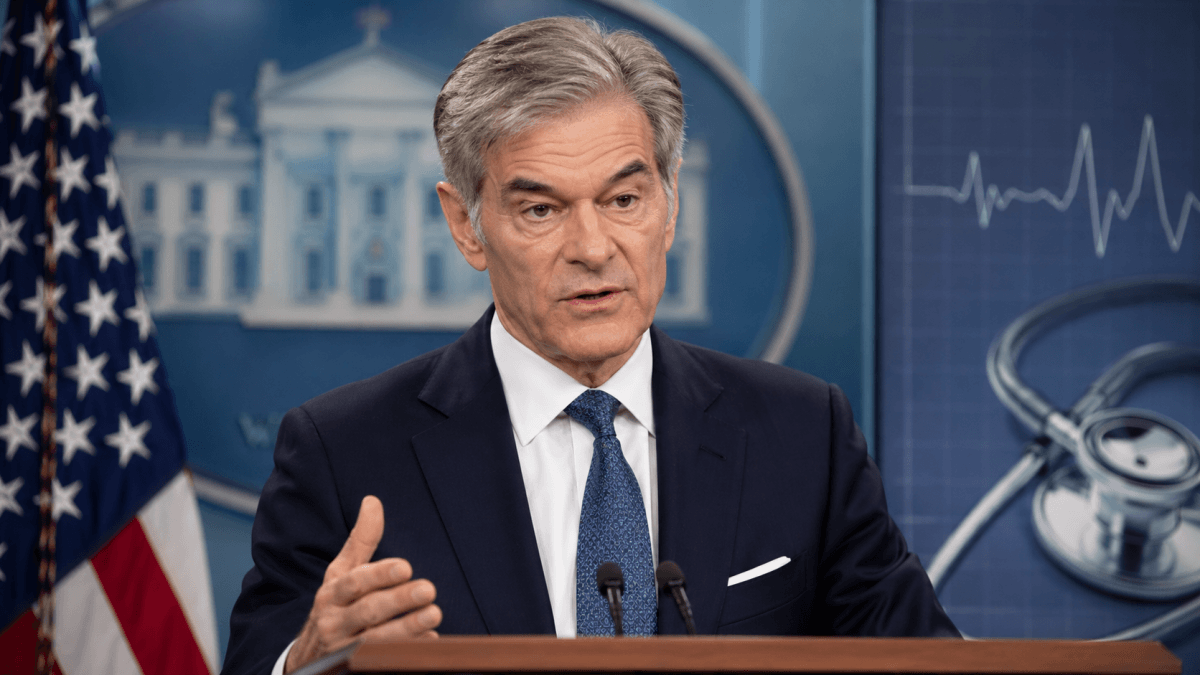
President Donald Trump recently underwent a comprehensive physical examination at Walter Reed National Military Medical Center, with the White House releasing a detailed report on May 30 confirming his "excellent health." The evaluation, his third in roughly 13 months, was followed by a White House press briefing where Centers for Medicare & Medicaid Services Administrator Dr. Mehmet Oz addressed questions regarding the frequency of the President’s medical assessments.
"I think he likes the results. He does really well. He aces the test every single day. I do actually believe that he is curious to make sure everything is going in the right direction." — Dr. Mehmet Oz, Centers for Medicare & Medicaid Services Administrator
During the briefing on Tuesday, a reporter directly asked Dr. Oz why President Trump, despite repeated assurances of good health, continues to undergo frequent check-ups. Dr. Oz, a physician himself, responded without hesitation, stating, "I think he likes the results. He does really well. He aces the test every single day. I do actually believe that he is curious to make sure everything is going in the right direction." He further characterized President Trump as a highly meticulous individual, remarking, "He’s a very meticulous person in so many ways that are often under appreciated. But for him to want to know all the numbers and keep on top of him, it’s the same reason he calls people at you know, odd hours because something’s on his mind. He wants to deal with it."
The three-page medical report, prepared by the President's physician, Navy Captain Sean P. Barbabella, delivered a broad positive verdict on the 79-year-old President's condition. It specifically noted that President Trump "remains in excellent health, demonstrating strong cardiac, pulmonary, neurological, and overall physical function."
Among the most notable findings in the report were those related to President Trump's cardiovascular system. An AI-enhanced electrocardiogram analysis estimated his cardiac age at approximately 14 years below his actual age, suggesting the health of his heart is comparable to that of a 65-year-old. Cardiac age is a recognized clinical benchmark derived from ECG data, used by medical professionals to assess cardiovascular vitality independently of a patient's chronological age. These figures were further supported by additional heart testing, including a coronary CT angiography that revealed zero arterial blockage and no structural abnormalities in the heart or its major surrounding vessels. An echocardiogram also confirmed normal functioning of the President's cardiac chambers and valves, along with a preserved ejection fraction, which measures the heart's efficiency in pumping blood.
The physical examination itself recorded regular heart rate and rhythm, normal heart sounds, and unimpaired circulation to the extremities. President Trump’s recorded vital statistics included a blood pressure reading of 105/71 mmHg, a resting heart rate of 73 beats per minute, and a pulse oximetry level of 98 percent. All laboratory results and additional vital statistics were reported to be within normal ranges.
In terms of cognitive health, President Trump completed the Montreal Cognitive Assessment (MoCA), a 10-minute screening tool used to detect early signs of dementia, Alzheimer’s disease, and similar conditions. He achieved a perfect score of 30 out of 30, consistent with all his previous attempts at the exam. Following the release of the report, President Trump took to Truth Social, stating that the results "were extremely good" and reiterated his perfect score on what he described as an "approved, high difficulty, Cognitive Test," interpreting the result as a sign of "extreme intelligence."
Captain Barbabella's report also included preventative care recommendations. These included guidance on diet, a suggestion to begin taking a low-dose aspirin, a directive to increase physical activity, and encouragement towards continued weight loss. The report cited President Trump's active schedule, which encompasses numerous meetings, public appearances, press interactions, and "frequent victories in golf events," as evidence supporting his overall physical condition.
This May examination follows prior evaluations conducted in April 2025 and October 2025 during the current presidential term. Periodic medical assessments are considered standard practice for sitting presidents, given the significant physical and cognitive demands associated with the office. The White House has maintained its commitment to transparency by consistently releasing formal summaries after each evaluation, ensuring the public remains informed of the President's fitness to serve.

