


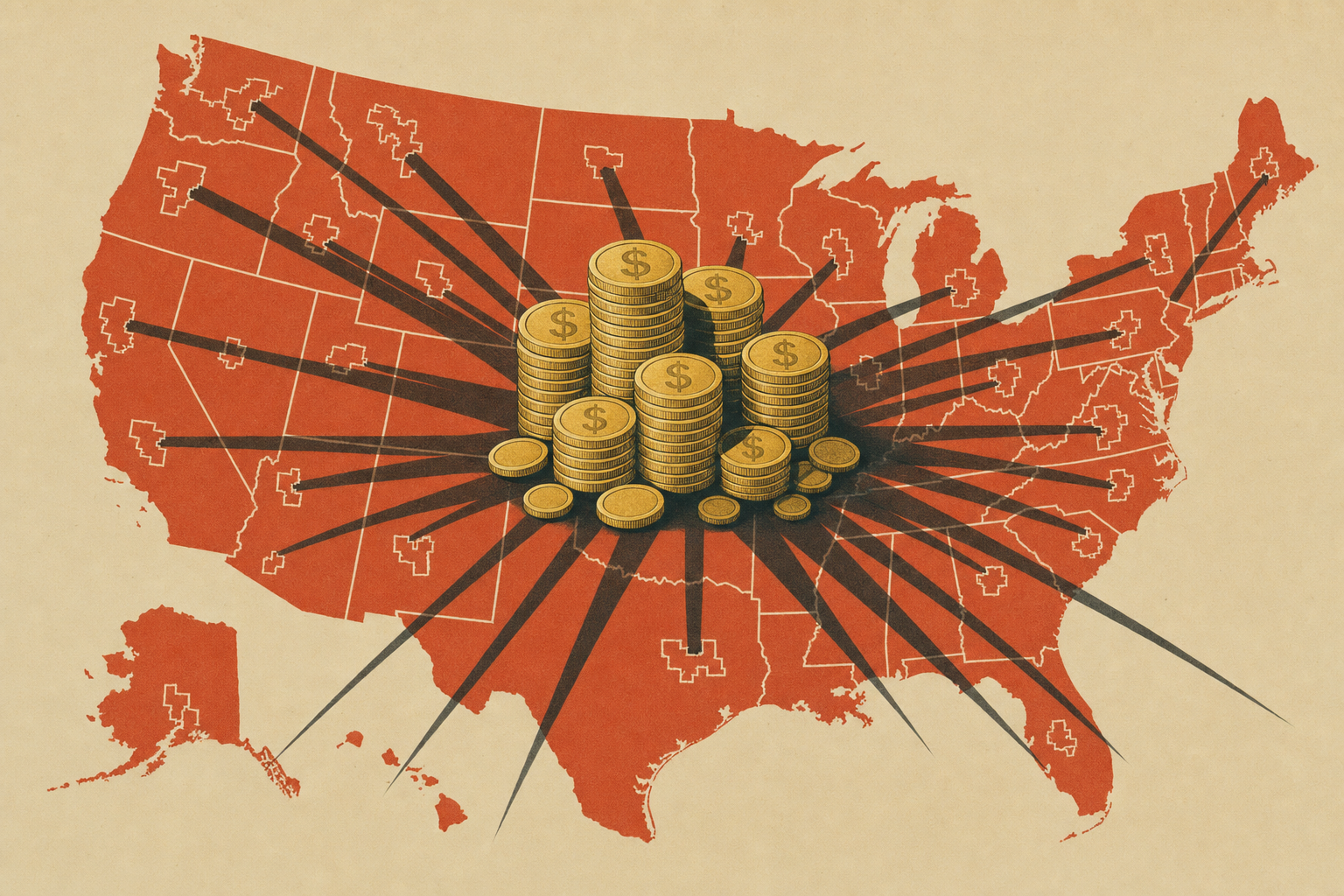
President Donald Trump has announced that his super PAC, MAGA Inc., has accumulated an approximate $800 million political war chest, signaling a significant financial boost for Republicans as they prepare to defend their congressional majorities in the upcoming November midterm elections. President Trump indicated his intention to utilize these substantial funds to support Republican candidates nationwide.
"I could spend it on pretty much anything I want. I’m going to spend it…I’m going to help Republicans" — President Donald Trump.
In an interview with Punchbowl News published last week, President Trump stated, "I could spend it on pretty much anything I want. I’m going to spend it…I’m going to help Republicans." This enormous pool of money positions itself as a powerful asset for the Republican Party, particularly as the president’s party historically faces challenges in midterm elections. With Republicans currently holding control of both chambers of Congress, competitive House and Senate races across the country are garnering increased attention as the November election draws near.
President Trump has already been actively campaigning on behalf of Republican candidates, recently making appearances in Nevada and California. Reflecting on his busy schedule and commitment, President Trump remarked, "I don’t have to be away in Nevada yesterday, in Los Angeles yesterday making speeches. I didn’t have to be supporting all the people. You know I have a busy schedule." His direct involvement, combined with the formidable financial firepower of MAGA Inc., underscores a concerted effort to maintain Republican control in Congress.
The financial strength of President Trump's political operation stands in contrast to reported monetary challenges faced by the Democratic National Committee (DNC). Reports indicate that the DNC secured a $15 million loan this election cycle, using its headquarters as collateral, and is reportedly carrying more debt than it currently possesses in cash. This disparity in financial resources could prove increasingly impactful as both major parties allocate funds to highly contested congressional races.
Beyond direct financial support, Republicans are also preparing for their first midterm convention, scheduled to take place in Dallas next month. According to Axios, GOP leaders plan to use this event to highlight what they describe as the Democratic Party's increasing shift towards its activist and socialist wings. The convention is expected to feature clips of political commentator Hasan Piker, along with Democratic Senate candidates James Talarico of Texas and Abdul El-Sayed of Michigan, in an effort to present their positions as outside the political mainstream. President Trump previewed this line of attack during a recent appearance in Nevada, stating, "Filth, crime, death, destruction, embarrassment. You lose your home, you lose your apartment and that’s where the communists will take us 100%."
The focus on the Democratic Party's left flank is not exclusive to Republicans. Third Way, a centrist advocacy organization, is reportedly preparing a $15 million campaign specifically targeting the Democratic Socialists of America (DSA) and its growing influence within Democratic politics. The organization has characterized the DSA as a "mortal danger" and plans to actively challenge socialist candidates and policies as Democrats deliberate the party's strategic direction heading into the general election. Jim Kessler, Executive Vice President for Policy at Third Way, emphasized the distinction between primary and general election success, telling The National News Desk, "Don’t spike the football people because winning the primaries is one thing. You won it by a whisker, you got to win the general election and you’re not going to win the general election in Michigan if you’re seen as an extremist. You’re going to have to win moderate voters."
This internal and external debate about the Democratic Party's ideological direction comes as some prominent Democrats advocate for a revised approach following the 2024 election. Democratic National Committee Vice Chair David Hogg told CNN last week, "I would say to the moderates in our party you need to figure out how to actually offer something new to voters that isn’t just the same message you gave them in 2024."
Amidst these dynamics, President Trump appears poised to combine his personal campaigning efforts with the substantial financial capabilities of MAGA Inc. as Republicans strive to overcome the historical trend of the president's party losing congressional seats during midterm elections. With hundreds of millions of dollars potentially available and competitive races unfolding nationwide, President Trump has clearly articulated his intent to deploy his political operation to support Republican candidates, reiterating, "I’m going to help Republicans."

