


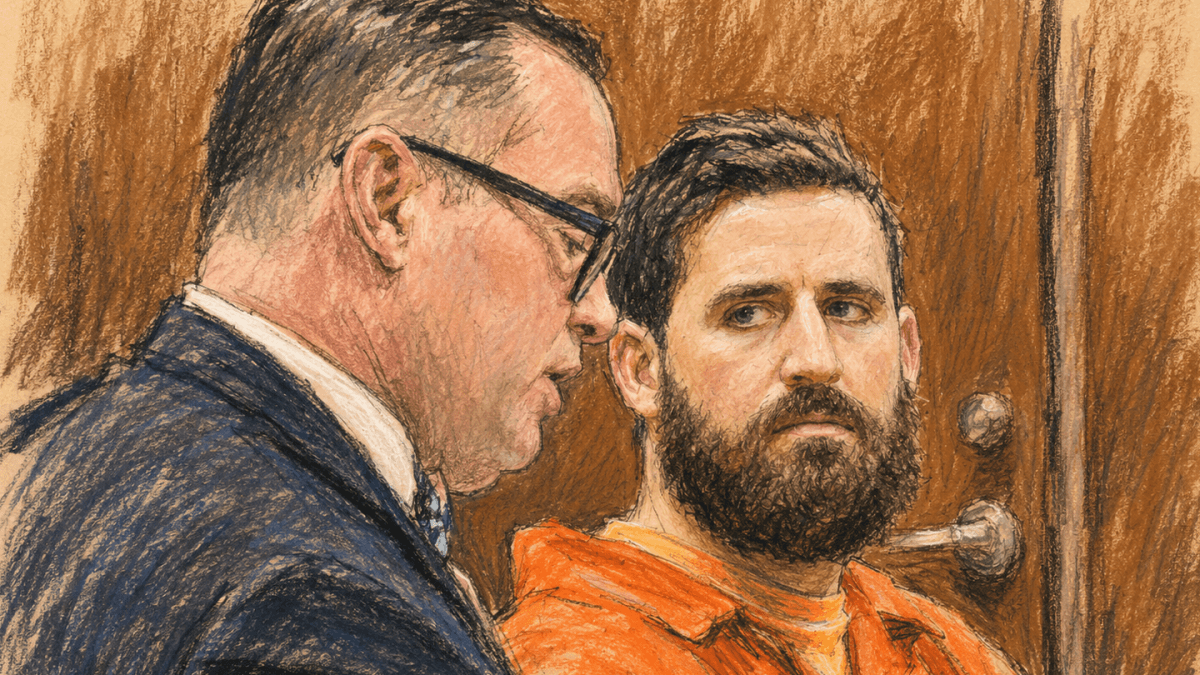
Matthew Hertgen, a Princeton man accused of the gruesome murder and mutilation of his younger brother, was discovered unresponsive and pronounced dead inside his cell at Mercer County Jail on May 8. Authorities are investigating the circumstances surrounding his death, which law enforcement sources indicate is being treated as an apparent suicide. Hertgen’s death marks a somber conclusion to a case that garnered national attention due to its disturbing nature and the affluent background of the family involved.
"sacrificial murder could save" — Gianni Pirelli, Forensic Psychologist (testifying to Matthew Hertgen's beliefs)
The 31-year-old Hertgen had previously attempted suicide shortly after his arrest in February 2025, reportedly trying to hang himself in his jail cell days after being taken into custody. His death comes just over a year after he was accused of one of the most horrifying killings in recent memory, which occurred within the family’s upscale Princeton apartment near Princeton University.
According to prosecutors, Hertgen brutally murdered his 26-year-old brother, Joseph Hertgen, during what forensic experts later described as a severe schizophrenic psychotic break. Investigators alleged that Matthew used a knife and golf clubs to beat and stab his brother to death. The violence reportedly escalated to the point where Matthew tore out one of Joseph’s eyeballs and consumed it. Prosecutors also claimed he killed the family cat and set the animal on fire during the rampage.
Police discovered Joseph’s body in a pool of blood after responding to a 911 call reporting both a fire and a dead body at the luxury apartment on February 22, 2025. The case quickly captivated public attention, not only for the extreme brutality of the crime but also for the seemingly successful and affluent image of the Hertgen family. The brothers grew up in Toms River, New Jersey, in a wealthy household led by technology executive David Hertgen, who is the president and CFO of internet provider WiLine Networks. Joseph Hertgen, a graduate of the University of Michigan with a business administration degree, was remembered by friends and relatives as kindhearted, intelligent, and deeply loved, having worked in finance.
Court testimony revealed Matthew Hertgen had struggled with severe mental illness and schizophrenia for years leading up to the killing. Forensic psychologist Gianni Pirelli testified that Hertgen suffered from intense delusions involving religion, the apocalypse, and spiritual visions. According to Pirelli’s testimony, Hertgen believed at various times that he was Jesus Christ, God, the Anti-Christ, or possessed multiple souls. Pirelli further testified that Hertgen became consumed by the belief that a “sacrificial murder could save” the world, a fixation he developed after delving into themes from Swiss psychiatrist Carl Jung’s work, specifically the "Red Book."
In March 2025, Mercer County Superior Court Judge Robert Lytle ruled Hertgen not guilty by reason of insanity, based on expert conclusions that he was suffering from severe schizophrenia during the commission of the crime. This ruling meant Hertgen avoided a traditional murder conviction and was instead slated for indefinite confinement in a psychiatric institution for treatment.
The investigation into Matthew Hertgen’s death is ongoing, as authorities work to officially determine the cause. His passing closes a chapter on a case that highlighted the complex intersection of severe mental illness, public safety, and the judicial system. The Mercer County Prosecutor’s Office has not yet released an official cause of death.

