

Breaking
Sponsor Advertisement
Seattle Residents Barricade Streets Amid Rising Crime Concerns
Image for: Seattle Residents Barricade Streets Amid Rising Crime Concerns

Seattle Residents Barricade Streets Amid Rising Crime Concerns

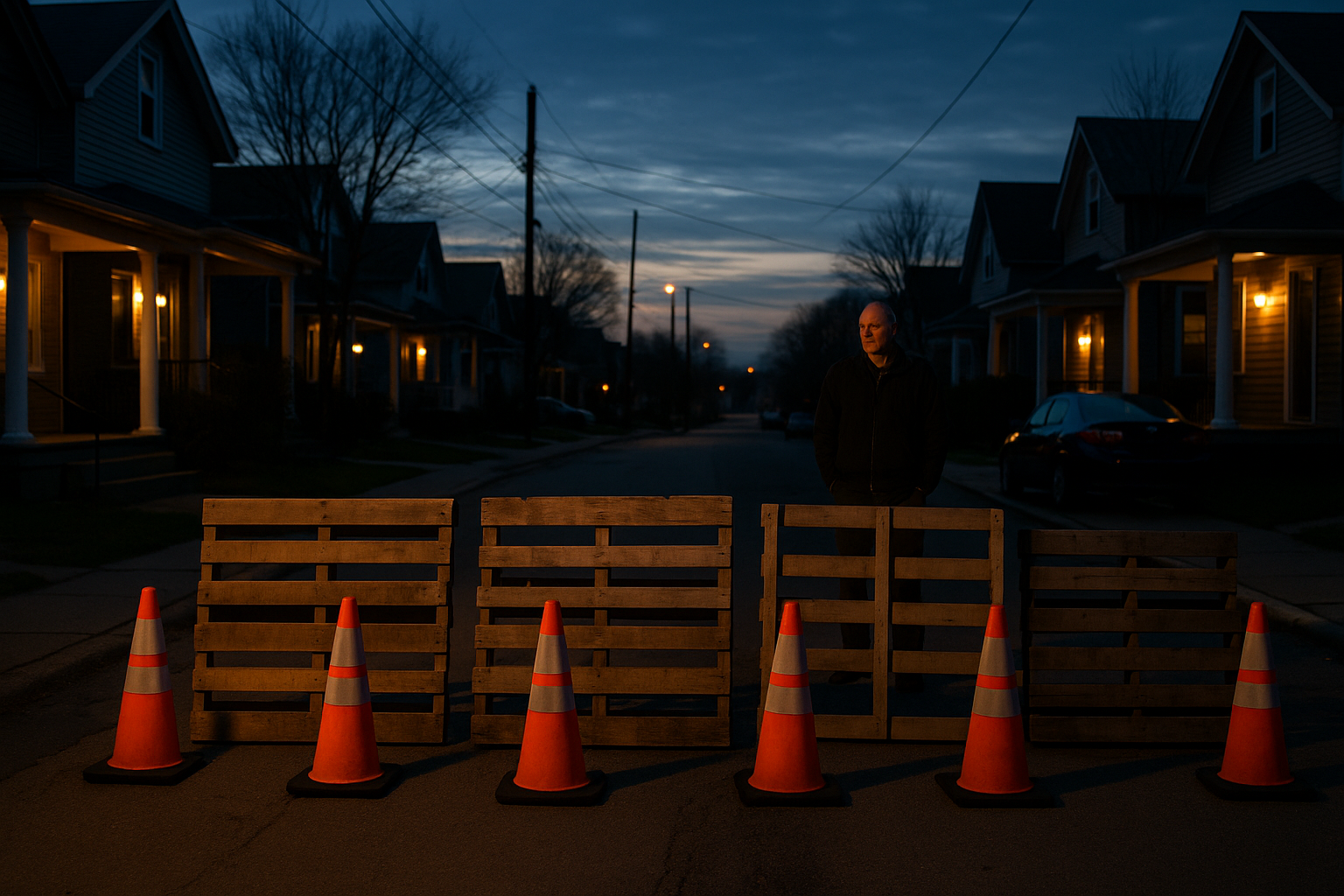
Residents in a Seattle neighborhood have constructed makeshift barricades on residential streets to deter crime and ongoing shootings. This action comes after persistent gunfire and street disorder in the Aurora Avenue corridor raised significant safety concerns among community members.
Jump to The Flipside Perspectives

Residents in Seattle's Aurora Avenue corridor have taken the unusual step of constructing makeshift barricades across residential streets to block traffic they associate with escalating violence and persistent street crime. The actions, which occurred over the Memorial Day weekend, reflect growing frustration among community members who report feeling unsafe in their homes due to repeated gunfire and criminal activity.

"One resident defended the effort, saying it reflects a sense of urgency after ongoing violence near their homes." — Seattle Resident

The situation reached a critical point following multiple reports of gunshots near Aurora Avenue North and North 98th Street in the early morning hours. Seattle police, responding to the incidents, recovered dozens of shell casings from the roadway, according to KING 5. Residents reported that bullets struck nearby buildings and vehicles, underscoring the severity of the incidents and reinforcing concerns that such gunfire has become a recurring feature of daily life in the neighborhood.

Community members describe the Aurora corridor as an area where criminal activity, including prostitution, drug use, and general street disorder, has increasingly spilled over into the surrounding residential blocks. Many residents no longer view these incidents as isolated occurrences but as a consistent pattern that has eroded their sense of security. The pervasive fear has led some to adjust their daily behaviors around the expectation of potential gunfire.

In response to what they perceive as insufficient long-term enforcement, neighbors near North 98th Street and Linden Avenue North spent the Memorial Day weekend placing dirt, gravel, concrete, and other debris to create partial street blockades. These barricades now restrict access to several residential roads, with supporters stating they were built out of desperation to address the ongoing violence near their homes.

However, the barricades have not garnered universal support. Some residents and safety officials have voiced concerns that blocking residential streets could impede emergency response times for police, firefighters, and paramedics. These delays, they argue, could create additional risks during critical, life-threatening situations.

Seattle police have stated that they continue to patrol the Aurora corridor "as time and call load allows," acknowledging the ongoing concerns in the area. However, residents contend that current levels of visible enforcement have not been enough to deter the repeated shootings, citing multiple recent incidents within a relatively small geographic range.

The city's regulations stipulate that permits are required for placing obstructions in public streets. Officials have warned that unauthorized barriers may be subject to removal or fines. Despite these warnings, residents reported that earlier attempts at blockades were damaged or removed, prompting them to rebuild using heavier materials in an effort to make them more durable and resistant to removal.

Beyond the immediate safety concerns, the situation has reignited a broader debate over Seattle’s approach to crime in the Aurora corridor. Some residents are advocating for stronger enforcement of existing ordinances, specifically pointing to the city’s "Stay Out of Areas of Prostitution" ordinance, which was adopted in 2024. They argue that current tools are not being fully utilized to deter repeat offenders, as reported by LifeZette. City officials, on the other hand, have publicly stated their commitment to a combination of increased patrols and the implementation of long-term community strategies aimed at addressing the underlying causes of crime.

Residents, however, maintain that these official efforts have not yet translated into tangible improvements on the ground, where gunfire continues to disrupt daily life. The dispute highlights a widening gap between community members who are seeking immediate enforcement action to restore safety and city leaders who are focused on longer-term reform strategies. Consequently, neighborhoods along Aurora Avenue remain caught between ongoing violence and competing policy approaches that have yet to yield clear results.

Advertisement

The Flipside: Different Perspectives

Progressive View

Progressives would view the Seattle residents' actions as a desperate symptom of deeper systemic failures, rather than solely a policing problem. While acknowledging the residents' legitimate fear and frustration, this situation highlights the urgent need for comprehensive, equitable solutions that address the root causes of crime, such as poverty, lack of affordable housing, mental health crises, and substance abuse. The concentration of criminal activity in the Aurora corridor points to areas of concentrated disadvantage that require significant investment in social services, job training, and community support. Relying solely on increased enforcement, without addressing these underlying issues, often leads to cycles of incarceration that disproportionately affect marginalized communities and do little to prevent future crime. Furthermore, the creation of physical barricades, while understandable from a safety perspective, could inadvertently create barriers to essential services, exacerbate existing inequities by isolating certain areas, and potentially hinder the very emergency responses they seek to improve. Progressive approaches emphasize community-led initiatives, restorative justice practices, and a holistic public health model for safety that moves beyond punitive measures to create truly safe and thriving neighborhoods for all residents.

Conservative View

From a conservative perspective, the actions of Seattle residents to barricade their streets underscore a fundamental failure of local government to fulfill its primary duty: ensuring public safety and maintaining law and order. The principle of individual liberty is paramount, but it relies on a secure environment where citizens can live without fear of violence. When government fails to protect its citizens, as evidenced by persistent shootings and crime, individuals are often left with no choice but to take measures into their own hands, even if those measures are unconventional and potentially problematic. This situation highlights the consequences of policies that may prioritize social programs and "long-term reform strategies" over immediate, robust law enforcement. Conservatives would argue that a limited government's core function is to enforce laws and deter criminal behavior through visible police presence and swift prosecution. The residents' call for stronger enforcement of existing ordinances, like the "Stay Out of Areas of Prostitution" law, reflects a desire for accountability and the utilization of available tools to address crime directly, rather than focusing solely on root causes that may take years to yield results. The erosion of public safety also impacts property values and the ability of free markets to thrive, as businesses and residents may flee unsafe areas, further compounding urban decay.

Common Ground

Despite differing approaches, there is significant common ground regarding the fundamental desire for safe communities in Seattle's Aurora corridor. All residents, regardless of political leaning, share the goal of reducing crime, eliminating gun violence, and ensuring that neighborhoods are places where people can live without fear. There is a shared frustration with the perceived ineffectiveness of current strategies and a desire for accountability from city leadership. Both sides can agree on the importance of data-driven solutions to understand specific crime patterns and allocate resources effectively. Community engagement is another area of consensus; residents clearly want to be heard and involved in finding solutions. Practical, bipartisan approaches could include increased, well-resourced community policing that builds trust and gathers intelligence, alongside targeted investments in infrastructure and social programs that demonstrably reduce opportunities for crime. A balanced strategy that combines immediate, visible enforcement with evidence-based, long-term interventions addressing root causes, regularly evaluated for effectiveness, could offer a path forward to restore safety and rebuild trust in the affected neighborhoods.

What's your view on this story? Share your thoughts and remember to consider multiple perspectives and being respectful when forming and voicing your opinion. "If you resort to personal attacks, you have already lost the debate..."

Advertisement

Contact Us About This Article

Have a question or comment about this article? We'd love to hear from you.

About Fair Side News

At Fair Side News, we believe in presenting news with perspectives from both sides of the political spectrum. Our goal is to help readers understand different viewpoints and find common ground on important issues.