

Breaking
Sponsor Advertisement
Senate Panel Votes to Hold Fauci in Contempt
Image for: Senate Panel Votes to Hold Fauci in Contempt

Senate Panel Votes to Hold Fauci in Contempt

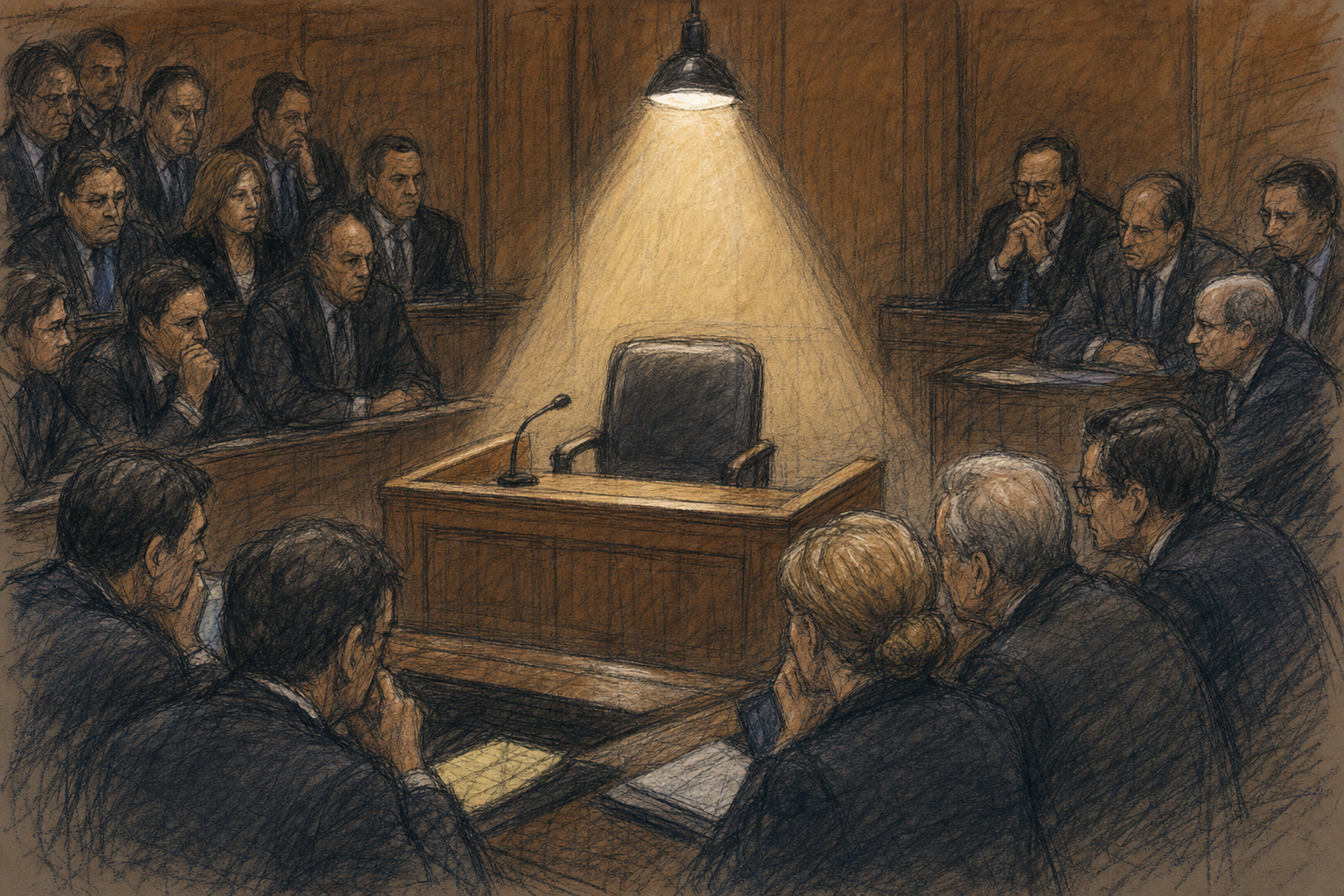
A Senate committee has voted along party lines to recommend holding Dr. Anthony Fauci in contempt of Congress following his invocation of the Fifth Amendment. This action by the committee could lead to a criminal contempt referral to the Department of Justice.
Jump to The Flipside Perspectives

A Senate committee on Thursday voted to recommend holding Dr. Anthony Fauci in contempt of Congress, marking a significant development in a years-long effort by some lawmakers to scrutinize his role in the nation's COVID-19 pandemic response. The vote by the committee, which fell along party lines, followed Fauci's recent appearance before the panel where he invoked his Fifth Amendment right against self-incrimination 111 times.

"If we can’t put him in prison, let’s put him in court every day for the rest of his life, where he has to be punished and listened to the death that he caused." — Sen. Tommy Tuberville, R-Ala.

The contempt pursuit has been prominently led by Sen. Rand Paul, R-Ky., who has been a vocal critic of Fauci's handling of the pandemic and his leadership at the National Institute of Allergy and Infectious Diseases (NIAID). Senator Paul opened Thursday’s vote by dismissing any justification for Fauci’s silence, noting that Fauci had already secured a pardon from President Joe Biden before leaving office. "All he had to do was tell the truth," Paul stated.

Senator Paul framed the investigation as crucial for future public health preparedness, asserting that the lessons learned from the COVID-19 response must inform legislative reforms. "There will be another pandemic. The time to determine which legislative reforms are necessary to make sure the mistakes of the past are not repeated is now, not later," Paul emphasized.

However, not all members of the committee agreed with the Republicans' approach. Sen. Gary Peters, D-Mich., accused the Republican majority of conducting a biased investigation designed to achieve a predetermined outcome. "This investigation has been one-sided from the beginning," Peters said. He further alleged that the minority party had been excluded from witness interviews and denied full access to committee records, with information selectively released to support conclusions reached by the chairman years prior. Senator Paul has consistently denied these claims, attributing the lack of Democratic engagement to the Democrats themselves for declining to participate in the probe. He pointed to a committee-maintained website containing all evidence gathered in the Fauci investigation, stating that no Democrat had accessed it to review the materials.

Fauci's extensive career as the head of NIAID concluded with a preemptive pardon from President Joe Biden, issued in January 2025. This pardon served to close the door on potential federal charges against him. Despite this legal protection, the backlash to his repeated invocation of the Fifth Amendment has been widespread. Public figures outside of Congress, including podcast host Charlamagne Tha God, NFL quarterback Aaron Rodgers, and Philadelphia Eagles defensive coordinator Vic Fangio, publicly criticized Fauci's actions.

It is important to note that a presidential pardon's authority is limited to federal offenses and does not extend to state-level prosecutions. This limitation has opened avenues for accountability at the state level, with Florida already initiating its own investigation into Fauci's conduct, and other states reportedly exploring similar actions. Sen. Tommy Tuberville, R-Ala., indicated after the hearing that accountability does not solely hinge on a prison sentence. "If we can’t put him in prison, let’s put him in court every day for the rest of his life, where he has to be punished and listened to the death that he caused," Tuberville declared.

The committee's contempt vote does not automatically lead to prosecution. Senate Republicans are currently navigating the complex legal and procedural questions associated with a criminal contempt referral. Senator Paul told Fox News Digital that he anticipates sufficient Senate votes to approve the referral, after which he intends to send the matter directly to the Department of Justice.

Adding to the procedural discussions, Sen. Josh Hawley, R-Mo., a former state attorney general, revealed that his office is actively drafting a memorandum for Acting Attorney General Todd Blanche. "My team is working right now on a memo to Blanche explaining why we think that he can be prosecuted for contempt of Congress," Hawley informed Fox News Digital. Senator Hawley highlighted what he perceives as a legal inconsistency in Fauci's position, arguing that a presidential pardon and a Fifth Amendment claim cannot legitimately coexist. "He’s not entitled to immunity, taking the Fifth, when he already has a pardon. It’s one or the other," Hawley asserted.

Under standard Senate procedure, a committee's contempt finding would typically be sent to the full chamber for a vote. However, Senator Paul has proposed an alternative path. His plan involves Vice President JD Vance, acting in his constitutional role as president of the Senate, certifying the committee’s action without requiring a full Senate vote. From there, Vance would forward the referral directly to the U.S. Attorney for the District of Columbia, potentially setting the stage for a criminal case that bypasses the traditional legislative approval process. The ultimate outcome now depends on the decisions of prosecutors and the specific procedural route that Republicans choose to pursue through the Senate and the Justice Department.

Advertisement

The Flipside: Different Perspectives

Progressive View

From a progressive perspective, the contempt vote against Dr. Anthony Fauci appears to be a politically motivated maneuver rather than a genuine pursuit of justice or truth. Democrats on the committee have accused Republicans of conducting a one-sided investigation, selectively releasing information, and excluding minority members from crucial processes, suggesting a predetermined outcome. While accountability for public officials is broadly supported, the method and context of this action raise concerns about due process and the politicization of congressional oversight. The focus on Fauci, a career public servant, is seen by some as an attempt to scapegoat an individual for a complex, global pandemic, diverting attention from systemic issues and the need for robust public health infrastructure.

Progressives emphasize that Dr. Fauci's legal rights, including the Fifth Amendment, must be respected, regardless of political pressures. They argue that the repeated focus on Fauci distracts from the collective effort required to address future health challenges, preferring a focus on strengthening public health systems, promoting equitable access to healthcare, and addressing the social determinants of health. The attempt to bypass traditional Senate procedures for a contempt referral is also viewed with skepticism, suggesting a desire to achieve a political victory rather than follow established legal and legislative norms.

Conservative View

The contempt vote against Dr. Anthony Fauci underscores a deep-seated conservative demand for accountability and transparency from government officials. For years, Senator Rand Paul and others have sought answers regarding Fauci's role in directing the nation's COVID-19 response, particularly concerning origins of the virus, gain-of-function research, and the efficacy of various public health mandates. The invocation of the Fifth Amendment 111 times, especially after receiving a presidential pardon, is seen by many conservatives as an evasion of responsibility and a direct affront to the public's right to know. This perspective emphasizes that a pardon should not shield officials from testifying truthfully before Congress, as such silence undermines legislative oversight.

Conservatives view this action as a critical step in reining in the power of unelected bureaucrats and ensuring that those in positions of authority are held liable for their decisions, particularly when those decisions have profound impacts on individual liberties and economic stability. The push for a criminal contempt referral is not merely about retribution but about establishing a precedent that government officials are not above the law. Furthermore, this effort is framed as essential for preparing for future health crises, ensuring that any legislative reforms are based on a transparent and honest assessment of past mistakes, rather than allowing unaccountable actions to persist.

Common Ground

Despite the partisan disagreements surrounding the contempt vote against Dr. Anthony Fauci, both conservatives and progressives can find common ground on several fundamental principles. There is a shared interest in ensuring transparency and accountability from government officials, particularly those involved in critical public health decisions that affect all Americans. Both sides generally agree that lessons must be learned from the COVID-19 pandemic to better prepare for future health crises. This includes a consensus on the need for effective, science-based public health strategies and clear communication with the public.

Furthermore, there is bipartisan support for robust congressional oversight to prevent abuses of power and ensure that government agencies operate efficiently and ethically. While the methods and targets of such oversight may differ, the principle that Congress should scrutinize the executive branch remains a common value. A constructive path forward could involve bipartisan discussions on how to improve government responsiveness during emergencies, protect civil liberties during public health mandates, and ensure that public health research is conducted with the utmost integrity and transparency, regardless of the individual officials involved.

What's your view on this story? Share your thoughts and remember to consider multiple perspectives and being respectful when forming and voicing your opinion. "If you resort to personal attacks, you have already lost the debate..."

Advertisement

Contact Us About This Article

Have a question or comment about this article? We'd love to hear from you.

About Fair Side News

At Fair Side News, we believe in presenting news with perspectives from both sides of the political spectrum. Our goal is to help readers understand different viewpoints and find common ground on important issues.