

Breaking
Sponsor Advertisement
Senate Passes Temporary Funding, Punts Key Policy Fights
Image for: Senate Passes Temporary Funding, Punts Key Policy Fights

Senate Passes Temporary Funding, Punts Key Policy Fights

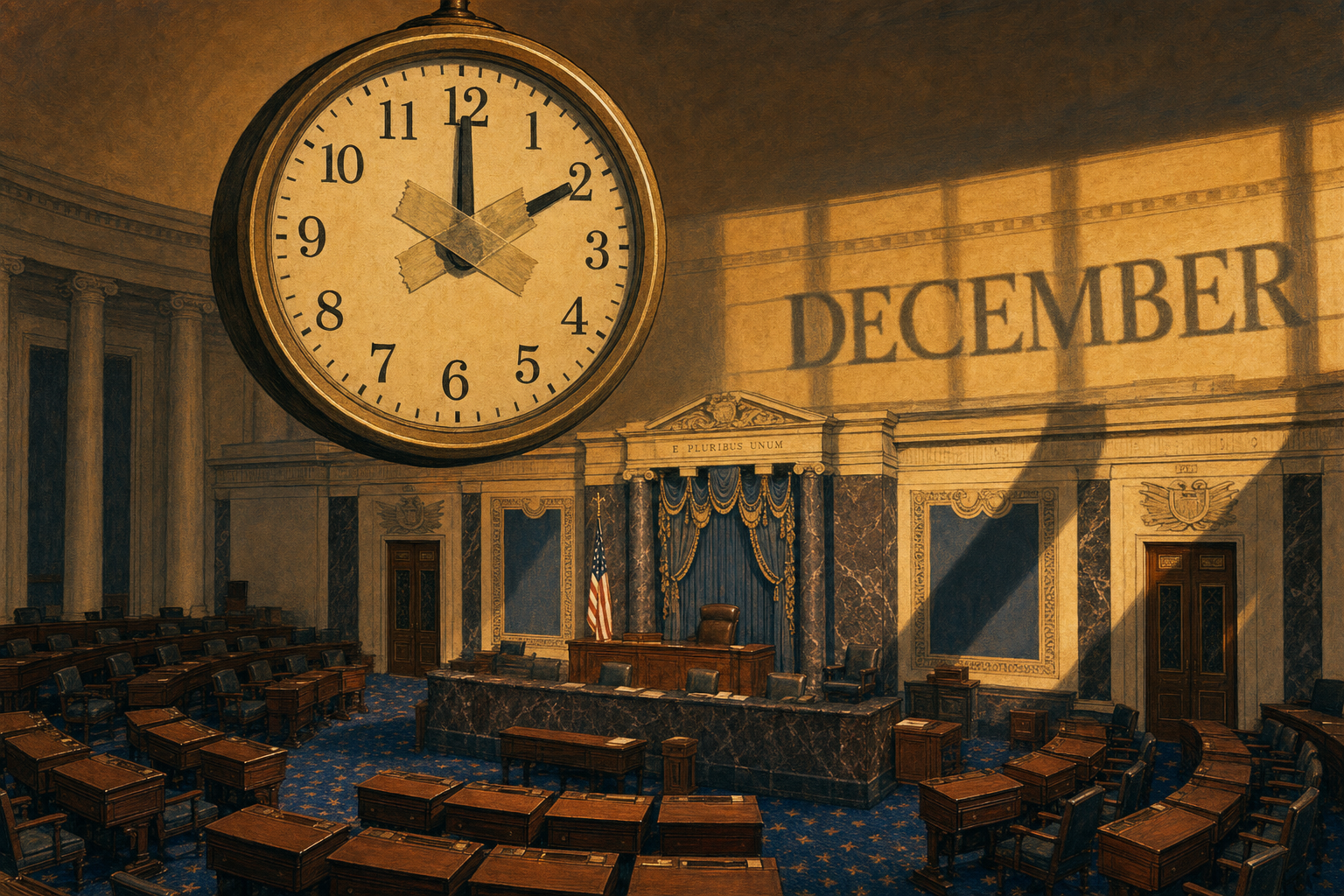
The Senate overwhelmingly approved a stopgap federal funding bill Saturday, averting an immediate government shutdown and extending current appropriations past the fall midterm elections. This bipartisan agreement sets the stage for further negotiations in December on contentious policy issues.
Jump to The Flipside Perspectives

Washington, D.C. — The United States Senate passed federal funding legislation on Saturday with a decisive 90-6 vote, providing temporary financing for government operations and sending lawmakers home for their August recess. This bipartisan agreement, reached swiftly on Saturday morning, prevents a government shutdown and extends current funding well beyond the upcoming midterm elections, though it leaves several significant policy disputes unresolved until December.

"I think they politicize the grants process, and I don’t want that to occur." — Senator Susan Collins, R-Maine

The measure, known as a continuing resolution, must now be reconciled with a version previously passed by the House of Representatives. While both chambers have approved stopgap funding, their bills differ in duration and contain distinct provisions. The House bill would extend funding through December 4, while the Senate’s version stretches an additional week to December 11. The October 1 deadline, when current government funding expires, now looms for the House to act on the Senate's terms or risk a shutdown.

A key point of contention embedded within the Senate bill targets a priority of the President Trump administration: a plan to grant political appointees greater influence over federal grant approvals. The Senate bill includes language that freezes this policy for the duration of the stopgap funding, effectively postponing a definitive resolution until December. This move highlights a division within the Republican party. Senator John Kennedy (R-La.) has indicated he will oppose any efforts to make these grant restrictions permanent. Conversely, Senate Appropriations Chair Susan Collins (R-Maine) expressed her intent to continue fighting the administration’s plan, stating, "I think they politicize the grants process, and I don’t want that to occur." Democrats, including Senator Patty Murray (D-Wash.), the top Democrat on the Appropriations Committee, have found an ally in Senator Collins on this particular issue, also signaling their readiness to push back against the grant-approval proposal.

Another policy skirmish involved hemp regulation. An attempt by Senator Ted Budd (R-N.C.) to attach an amendment that would allow a federal ban on intoxicating hemp products to take effect in November was voted down. Instead, Senate leaders sided with the administration, incorporating language that delays the ban’s implementation date.

Perhaps the most contentious issue within the bill revolves around immigration enforcement funding. The Senate bill specifically excludes Immigration and Customs Enforcement (ICE) and Customs and Border Protection (CBP) from receiving any additional money under the temporary measure. This decision was justified by pointing to the approximately $70 billion Congress had already directed toward these agencies earlier in the year. This exclusion has already drawn sharp criticism from some House Republicans. Representative John Rutherford (R-Fla.) described the funding freeze as something that "could be a dealbreaker" once the bill reaches the House floor. Representative Jeff Van Drew (R-N.J.) echoed concerns, particularly regarding the grant-approval restrictions, stating, "I do not like the Senate language. It’s one I would want to know what the president thinks.”

The President Trump administration wasted no time in publicly endorsing the Senate’s version of the funding bill. A formal Statement of Administration Policy backed the Senate bill, a courtesy not extended to the House version, which lacked certain funding increases and policy provisions the administration had sought. The administration's statement urged, "Every Member of Congress should support passage of this [continuing resolution] to keep the Government open as discussions on full year appropriations continue."

House Democrats offered cautious praise for the Senate's approach. Representative Rosa DeLauro (D-Conn.), the ranking Democrat on the House Appropriations Committee, specifically highlighted the provisions blocking the grant-approval overhaul and protecting immigration agencies from extra stopgap funding as reasons to favor the Senate's bill. However, she also stressed the need for full-year funding, noting, "This bill is a clear improvement over the House Republican continuing resolution, but we are still nearly two months away from the end of the fiscal year and should be working together to pass full-year funding bills."

With the Senate adjourned until September, the onus is now on House leaders to decide their next move. They must choose between accepting the Senate’s terms, advocating for their own December 4 deadline, or risking a government shutdown — an outcome neither party desires as the election season approaches. Whatever temporary compromise emerges, December is set to be the true battleground, where Congress will face the challenge of settling the grant-approval dispute, determining immigration enforcement funding levels, and negotiating full-year spending bills simultaneously.

Advertisement

The Flipside: Different Perspectives

Progressive View

Progressives generally welcome the Senate's bipartisan agreement to pass a temporary funding bill, particularly the provisions that address concerns about executive overreach and prioritize social welfare. The freeze on the President Trump administration's plan to give political appointees more control over federal grants is seen as a crucial check on potential politicization of funding decisions. Progressives, like Senator Murray, argue that such policies could undermine the integrity of the grant process, leading to funds being allocated based on political favoritism rather than merit or community need. Ensuring that grants are distributed fairly and transparently is a core progressive value, aimed at promoting equity and preventing corruption.

The exclusion of additional funding for ICE and CBP in the temporary measure is also largely supported by progressives. They often advocate for reevaluating the allocation of resources to immigration enforcement agencies, arguing that current funding levels are already substantial and that a focus on humane treatment and comprehensive immigration reform is more critical than increased enforcement. Representative DeLauro's cautious praise for the Senate bill, highlighting the protection of immigration agencies from extra stopgap funding, reflects this sentiment. While acknowledging the need for a full-year budget, progressives see these temporary provisions as steps toward more just and equitable governance, even as they push for systemic changes to address underlying societal issues.

Conservative View

Conservatives generally view the Senate's passage of a temporary funding bill with mixed feelings, often prioritizing fiscal responsibility and limited government spending. While avoiding a shutdown is a pragmatic necessity, the short-term nature of the continuing resolution (CR) is seen as a failure to enact full-year appropriations, which would provide greater certainty and allow for more strategic budgeting. The exclusion of additional funding for ICE and CBP is a significant concern for many conservatives, who advocate for robust border security and effective immigration enforcement as essential components of national sovereignty and public safety. They argue that underfunding these critical agencies, even temporarily, sends the wrong signal and potentially hampers their ability to execute their mission effectively.

Furthermore, the Senate's freeze on the President Trump administration's plan to give political appointees more say over federal grants is viewed by some as an overreach by Congress into executive branch authority. Conservatives typically support the President's ability to implement policies that align with his administration's priorities, particularly when aimed at streamlining government processes or ensuring accountability in federal spending. The pushback from some Republicans, like Senator Kennedy, against making such restrictions permanent reflects a desire to uphold executive discretion. The delay in implementing a ban on intoxicating hemp products, aligning with the administration's stance, might be seen as a positive step towards regulatory clarity, though Senator Budd's attempt shows a desire among some to act faster on public safety concerns.

Common Ground

Despite significant policy differences, lawmakers from both sides of the aisle found common ground in the immediate need to prevent a government shutdown. The overwhelming bipartisan vote in the Senate demonstrates a shared commitment to maintaining government operations and avoiding the economic and social disruptions that a shutdown would entail, especially heading into an election season. There is also a mutual desire for stability, even if only temporary, allowing Congress to recess and return to tackle the more complex full-year appropriations process.

Both conservatives and progressives acknowledge that the current continuing resolution is a temporary fix and that a more comprehensive, long-term budget solution is necessary. The upcoming December deadline presents a shared challenge and an opportunity for both parties to engage in serious negotiations on full-year spending bills. While their approaches differ, there is an underlying agreement that responsible governance requires functional funding mechanisms. The need to balance executive authority with congressional oversight, as seen in the grant-approval debate, is a recurring theme that both sides engage with, albeit from different perspectives, recognizing the importance of defining the roles of each branch in federal policy.

What's your view on this story? Share your thoughts and remember to consider multiple perspectives and being respectful when forming and voicing your opinion. "If you resort to personal attacks, you have already lost the debate..."

Advertisement

Contact Us About This Article

Have a question or comment about this article? We'd love to hear from you.

About Fair Side News

At Fair Side News, we believe in presenting news with perspectives from both sides of the political spectrum. Our goal is to help readers understand different viewpoints and find common ground on important issues.