


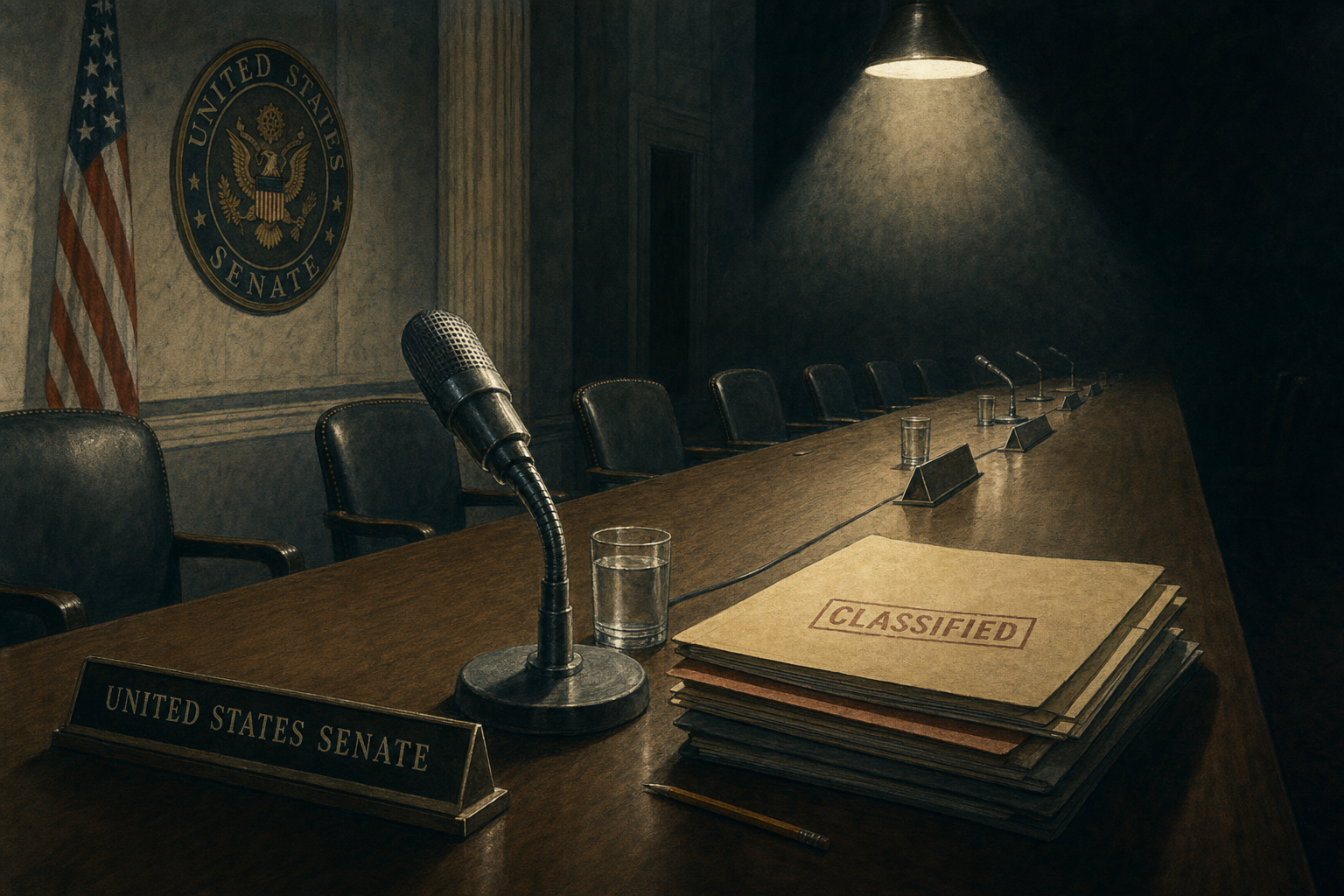
Washington D.C. — A Senate Appropriations Committee hearing this week became a tense forum for debate over the United States' ongoing military engagement with Iran, as Louisiana Republican Senator John Kennedy challenged Secretary of War Pete Hegseth and Joint Chiefs Chairman General Dan Caine regarding the conflict's mounting human and financial toll. The hearing, held against a backdrop of rising casualties and a significant White House request for emergency funding, underscored deep congressional concerns about the war's trajectory.
"We need smart answers and some straight talk." — Senator John Kennedy, (R-LA)
The Biden administration is seeking an additional $67 billion in emergency funding to support operations in Iran, which would add to the $37 billion already spent since fighting began on February 28. Senator Kennedy initiated his questioning by directly addressing the strategic threat posed by Iran's potential nuclear ambitions. He pressed Secretary Hegseth on whether Tehran would resume its nuclear weapons program if American forces were to withdraw.
Secretary Hegseth responded by referencing past military actions. "Part of the reason that President Trump had to have the courage to do what he did after Midnight Hammer was that they didn’t give up their ambitions even though their nuclear sites had been obliterated," Hegseth stated, alluding to the June 2025 strikes intended to cripple Iran’s nuclear infrastructure. However, this explanation did not satisfy Senator Kennedy, who interjected, "Gosh, we need straight answers," demanding greater clarity.
The urgency of the senator's questioning was magnified by recent developments. Three more American troops died in combat over the weekend, raising the U.S. death toll to 17 since the conflict began. A brief ceasefire collapsed two weeks ago, prompting President Trump to order a resumption of strikes. Domestically, the war's financial repercussions are becoming increasingly evident, with crude oil prices topping $90 a barrel on Tuesday and national average gasoline prices exceeding $4 per gallon, creating inflationary pressures that have GOP lawmakers concerned as November's midterm elections approach.
Senator Kennedy then turned his attention to General Caine, proposing a hypothetical scenario floated by some of his Senate colleagues: the complete withdrawal of U.S. forces from Iran, an end to the blockade, and the repatriation of all American service members. "Some of my colleagues, General, want America to just stop in Iran, end the blockade, bring all of our warriors home. What would be the consequence of that in your estimation?" Kennedy inquired, specifically asking if Iran might then impose tolls on the Strait of Hormuz.
General Caine initially demurred, stating, "I don’t know, Sir. That’s a hypothetical." Senator Kennedy rejected this response, emphasizing the gravity of the situation. "It’s not hypothetical, we’ve got a blockade to stop ’em. General, I want you to look me in the eye, I’m not trying to get you in trouble – I know your advice to the President is private, but this is serious as four heart attacks and a stroke," he pressed. Despite the senator's insistence, Caine maintained his position that the question was hypothetical. Kennedy ultimately relented, albeit with a firm closing remark: "I appreciate your discretion but we’re down to it, we need some hard answers and some straight talk."
A more candid assessment from General Caine emerged later when another senator continued the line of questioning. Caine conceded that military airpower alone has limitations and that victory requires a multifaceted approach. "As you look across the totality of history, airpower’s got limits, and we always have to be mindful of those," the general testified. He elaborated, "I think where America’s area of exclusivity is, is when we bring the totality of the diplomatic, informational, economic and pair that with the military. And there’s a lot of that work going on." He did not, however, indicate whether ground troops might be deployed.
Democrats on the committee utilized their time to criticize the Department of War's management of previously allocated funds. Washington Senator Patty Murray, the ranking Democrat, expressed her party's reluctance to approve further funding without greater transparency. "As a US senator, this administration’s refusal to explain what it is doing, or how this war is protecting Americans; its refusal to seek authorization from Congress, and its expectation that Americans will just pay for it all without any explanation or transparency is disrespectful," Senator Murray stated.
Behind the scenes, House GOP leaders are reportedly exploring the use of budget reconciliation to pass the Pentagon's funding request, a procedural tactic that would allow it to clear Congress with a simple majority vote, bypassing the Senate’s 60-vote filibuster threshold. This strategy is already encountering resistance from within Republican ranks in the Senate.
The hearing itself was marked by several disruptions from protesters. Secretary Hegseth's opening testimony was interrupted three times. One individual shouted, "Your hands are bloody," before being escorted out by Capitol Police. Another protester yelled, "Stop bombing our children in Iran and Palestine – this is illegal," while holding a sign reading "NO WAR ON IRAN." Following the third outburst, Committee Chair Senator Susan Collins intervened, declaring, "We will have order in the hearing room," to restore calm to the proceedings.

