


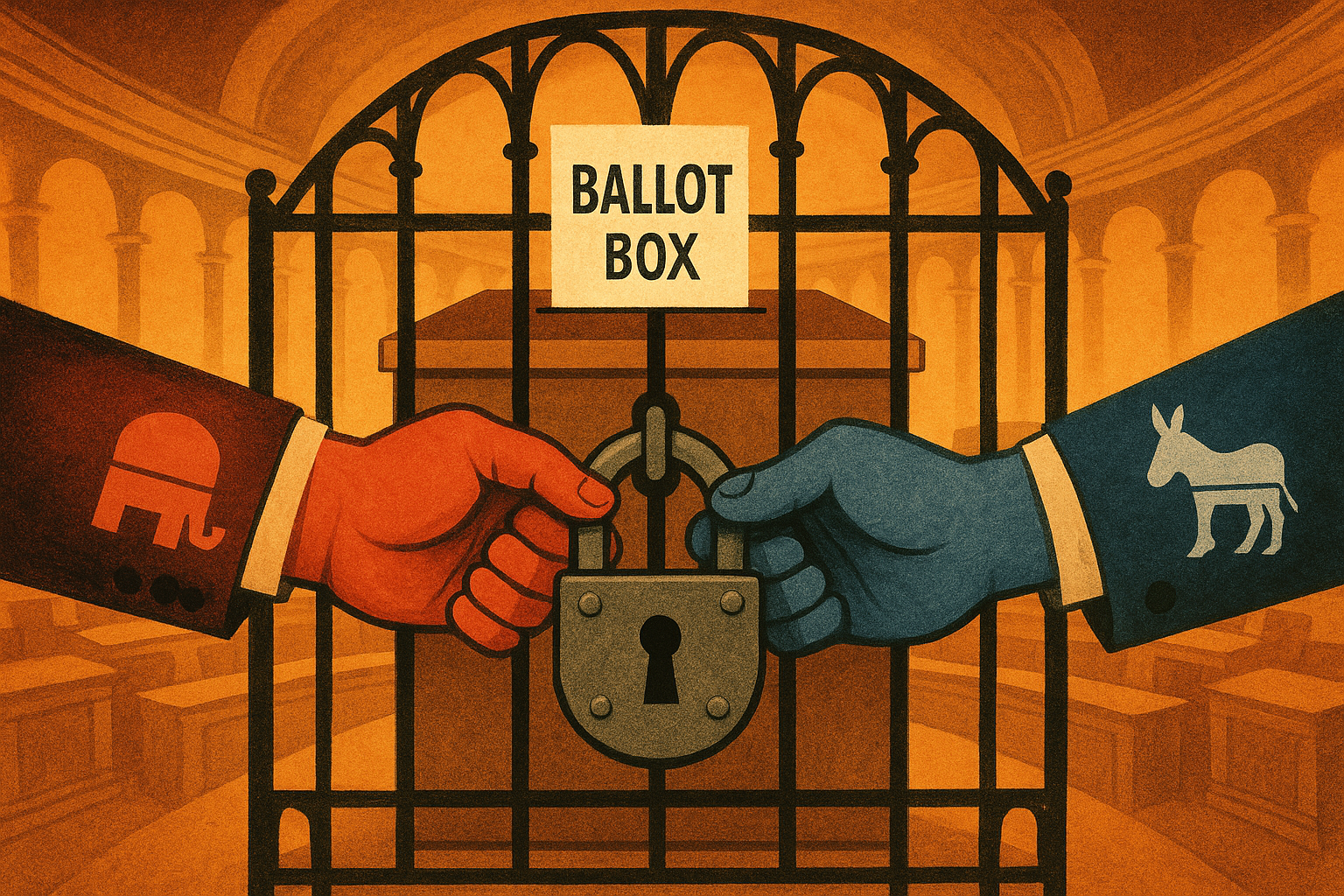
On Wednesday, an effort to attach election-security provisions from the Safeguard American Voter Eligibility (SAVE) Act to a nearly $70 billion budget reconciliation package centered on immigration enforcement and border security funding failed in the Senate. Four Republican senators joined all Senate Democrats in opposing the amendment, marking another procedural hurdle for legislation strongly advocated by President Donald Trump.
The amendment, introduced by Senator Lindsey Graham of South Carolina, aimed to incorporate key elements of the SAVE Act. These provisions included requirements for individuals to provide proof of U.S. citizenship when registering to vote in federal elections, alongside other election-security measures such as voter identification requirements. Supporters of the amendment argued these measures are crucial for strengthening public confidence in election integrity and preventing ineligible individuals from registering to vote. They contend that requiring documentary proof of citizenship would solidify the legitimacy of electoral outcomes.
The vote on the amendment was unable to secure sufficient support to overcome Senate procedural hurdles. The four Republican senators who voted against the measure were Thom Tillis of North Carolina, Lisa Murkowski of Alaska, Susan Collins of Maine, and Mitch McConnell of Kentucky. Their opposition, combined with that of all Senate Democrats, effectively blocked the amendment from being added to the larger immigration funding package. The specific nature of the vote required a supermajority for an amendment to be successfully added during the reconciliation process, which the proponents failed to achieve.
This vote represents the second instance in recent months where this specific group of Republican senators has opposed efforts to advance SAVE Act language through the budget reconciliation process. Earlier this year, the same quartet voted against similar provisions during a debate on a budget resolution. The strategy of using budget reconciliation is a significant procedural maneuver in the Senate. Under typical Senate rules, most legislation requires 60 votes to end debate and proceed to a final vote. However, budget reconciliation allows certain fiscal measures to pass with a simple majority vote, circumventing the filibuster. Republicans have increasingly explored reconciliation as a vehicle for policy priorities that might otherwise fail to meet the 60-vote threshold in the Senate, particularly for issues they deem fiscally relevant.
The House of Representatives has previously passed versions of the SAVE Act with substantial Republican support, indicating broad backing for its principles within the party. However, the legislation has consistently faced strong opposition from Democrats in the Senate. Democrats contend that existing federal law already prohibits noncitizens from voting in federal elections. They further argue that imposing additional documentation requirements, such as proof of citizenship for voter registration, could inadvertently create significant barriers for eligible citizens, particularly those in marginalized communities, to exercise their right to vote. Critics also point to potential for increased bureaucracy and the disproportionate impact on populations with limited access to specific forms of identification.
The four Republican senators who voted against the amendment have previously articulated concerns regarding the appropriate application of reconciliation procedures. They have questioned whether certain policy provisions, like those in the SAVE Act, truly satisfy the specific budget rules governing reconciliation, which typically limit its use to measures directly affecting federal spending or revenue. Senators Collins and Murkowski are known for occasionally diverging from their party's stance on high-profile votes, often citing adherence to traditional Senate procedures or specific state interests. Senators McConnell and Tillis have also previously voiced reservations about expanding the use of reconciliation beyond matters directly tied to federal spending and revenue, fearing it could undermine regular order and the Senate's deliberative role.
President Donald Trump has repeatedly and publicly advocated for the passage of the SAVE Act. He has urged Congress to enact the legislation, frequently encouraging lawmakers to attach its provisions to larger, must-pass legislative packages whenever strategically possible, emphasizing its importance for national election security. Wednesday’s vote, however, signifies a setback for this strategy, leaving the SAVE Act to contend with the same procedural obstacles that have prevented its standalone advancement in the Senate. The outcome underscores the challenges in passing contentious legislation in a closely divided Congress, even when utilizing procedural tools designed to simplify passage. The immigration funding package, which the SAVE Act amendment sought to join, continues its path through Congress with its original scope focused on border security and enforcement. The implications for future attempts to pass election integrity legislation remain uncertain as lawmakers grapple with differing priorities and procedural limitations.

