

Breaking
Sponsor Advertisement
SPLC Accused of Funding KKK Members in Federal Indictment
Image for: SPLC Accused of Funding KKK Members in Federal Indictment

SPLC Accused of Funding KKK Members in Federal Indictment

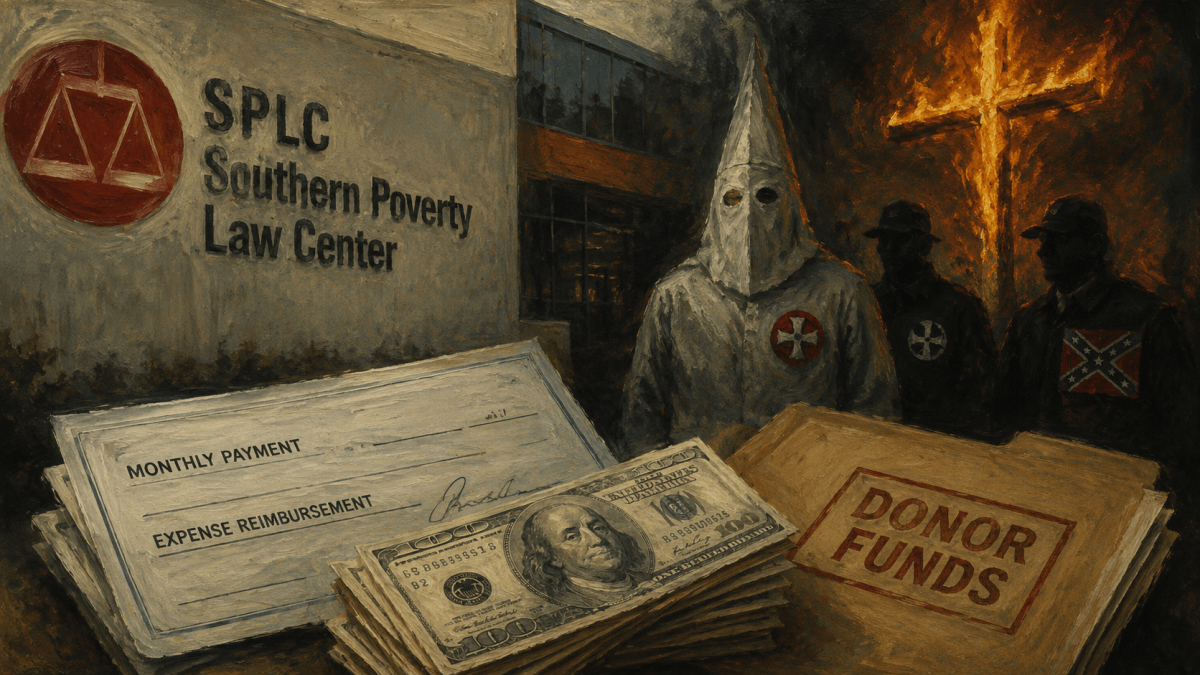
Federal prosecutors have alleged that the Southern Poverty Law Center (SPLC) used donor funds to support individuals affiliated with extremist groups, including the Ku Klux Klan, by providing monthly payments and expense reimbursements.
Jump to The Flipside Perspectives

Federal prosecutors have leveled significant allegations against the Southern Poverty Law Center (SPLC), a prominent organization known for tracking hate groups, asserting that it utilized donor funds to financially support individuals associated with the Ku Klux Klan (KKK) and other extremist movements. These claims are detailed in a superseding federal indictment returned by a grand jury in Alabama. The indictment suggests that the SPLC, while publicly presenting itself as an entity dedicated to combating hate, allegedly entered into financial arrangements that sustained individuals within extremist organizations.

"To that end, [SPLC] was doing the exact opposite of what it told its donors it was doing – not dismantling extremism but funding it." — Todd Blanche, Acting Attorney General

According to court filings, two individuals identified as F-31 and F-32 reportedly contacted the SPLC in 2010, seeking assistance to leave the KKK. Prosecutors contend that, rather than facilitating their departure, an SPLC employee encouraged them to maintain their involvement within the group. This alleged encouragement was followed by a financial arrangement that included consistent monthly payments and reimbursements for expenses. Court documents further claim these payments covered costs directly linked to Klan-related activities, such as wood, fuel, and other materials purportedly used in cross-burning events.

The indictment extends these allegations, asserting that donor contributions were also used to reimburse expenses related to the production of Klan garments and activities aimed at recruiting new members into extremist organizations, as reported by American Faith. Prosecutors characterize this as an alleged informant structure, where individuals embedded within extremist groups received financial support over several years. Authorities claim this arrangement allowed these individuals to remain active within their respective organizations while purportedly supplying information to the SPLC under what the indictment describes as a concealed operational system.

Further details in the superseding indictment allege that the SPLC routed these payments through intermediary entities. Businesses such as Rare Books Warehouse were reportedly used to obscure the original source of the donor funds. Recipients of these payments were allegedly instructed to falsely characterize their income as stemming from research or writing work if questioned, a description prosecutors state was intended to conceal the underlying financial structure, according to The Signal.

Beyond the KKK-related accusations, the indictment references additional individuals linked to white nationalist and other extremist movements. One individual, identified as F-30 in court documents, is described as holding leadership roles in multiple extremist organizations, including groups associated with the Aryan Nations and the National Socialist movement. Prosecutors allege that this individual also received financial support from SPLC-linked channels while actively participating in extremist rallies and recruitment activities. Authorities contend that this broader informant system allowed participants to remain embedded in extremist circles while being compensated, blurring the lines between monitoring extremist activity and potentially sustaining those involved in such movements.

The Southern Poverty Law Center has formally pleaded not guilty to the charges and steadfastly denies any wrongdoing. Attorney Abbe Lowell, representing the organization, has publicly stated that the allegations misrepresent the SPLC’s operational practices. Lowell defended the organization's informant program as a legitimate and lawful tool employed to prevent violence and gather crucial intelligence on extremist groups. In a statement to Fox News Digital, Lowell asserted, "The SPLC did not lie to its donors, it did not mislead banks it did business with, and its informant program prevented violence and saved lives." He also criticized federal officials for their handling of the indictment and the release of associated court documents.

In contrast, Acting Attorney General Todd Blanche has taken a firm stance, alleging that the SPLC deployed donor funds in a manner inconsistent with its publicly stated mission. "To that end, [SPLC] was doing the exact opposite of what it told its donors it was doing – not dismantling extremism but funding it," Blanche stated. The SPLC is currently facing 11 federal charges, which include allegations of wire fraud, bank fraud, and conspiracy to commit money laundering. A hearing in the case is scheduled for June 16, as both legal teams prepare for the upcoming proceedings.

Advertisement

The Flipside: Different Perspectives

Progressive View

The allegations against the Southern Poverty Law Center, if substantiated, present a deeply troubling situation for progressives who are committed to social justice, equity, and the dismantling of systemic hate. The SPLC has long been a vital voice in exposing and combating white supremacy and other forms of extremism, making these accusations particularly jarring. While the organization's stated mission is unequivocally aligned with progressive values, any alleged actions that involve financially supporting individuals within hate groups, even under the guise of intelligence gathering, demand thorough investigation and accountability. The intent behind informant programs is often complex, aiming to prevent violence or gain critical insights, but the ethical line between monitoring and sustaining can be perilously thin.

Progressives emphasize the importance of ensuring that methods used to achieve social good do not inadvertently perpetuate harm or undermine the very principles they seek to uphold. The alleged misuse of donor funds and the potential for deception are serious matters that could erode public trust in organizations dedicated to fighting injustice. It is crucial to allow the legal process to unfold, ensuring due process for the SPLC, while simultaneously affirming that all organizations, regardless of their historical contributions, must operate with the highest levels of integrity and transparency. The fight against hate groups remains paramount, but the means must always align with the ends.

Conservative View

The allegations against the Southern Poverty Law Center raise serious concerns for conservatives who prioritize transparency, accountability, and the integrity of non-profit organizations. The core principle of limited government often extends to a demand for responsible stewardship in civil society, where organizations are expected to adhere strictly to their stated missions and donor intentions. If proven true, the claims that the SPLC allegedly funded individuals to remain within extremist groups, rather than helping them exit, represent a profound betrayal of public trust and donor expectations. This situation underscores the importance of rigorous oversight for all organizations, particularly those that wield significant influence and financial resources while operating under a tax-exempt status.

Conservatives often emphasize individual liberty and personal responsibility. The idea that an organization could allegedly facilitate individuals' continued involvement in hate groups, even for intelligence gathering, could be seen as undermining efforts to encourage individuals to disengage from such movements. Furthermore, the alleged use of shell companies and instructions to misrepresent income could be viewed as a deliberate attempt to evade transparency, which is antithetical to free-market principles that thrive on open and honest dealings. This case highlights a call for strict adherence to the rule of law and for organizations to be held fully accountable for their actions, regardless of their perceived social mission or ideological leanings.

Common Ground

Despite differing ideological perspectives, there are clear areas of common ground regarding the federal allegations against the Southern Poverty Law Center. Both conservatives and progressives can agree on the fundamental importance of upholding the rule of law and ensuring accountability for all organizations operating within the United States. No entity, regardless of its mission or perceived social benefit, should be above legal scrutiny if allegations of fraud, money laundering, or other illicit activities arise.

There is also a shared interest in ensuring transparency and integrity within the non-profit sector. Donors from across the political spectrum expect their contributions to be used for the stated purposes of an organization. Allegations of misdirection of funds or deceptive practices, such as those involving intermediary entities and false income descriptions, would be concerning to anyone who values ethical conduct and responsible stewardship. Furthermore, both sides can agree on the societal imperative to combat violent extremism and hate groups. While approaches may differ, the goal of a society free from the threats posed by organizations like the KKK is broadly shared. The legal proceedings in this case will be watched closely, as they will test the principles of accountability and transparency that are valued by a wide array of Americans.

What's your view on this story? Share your thoughts and remember to consider multiple perspectives and being respectful when forming and voicing your opinion. "If you resort to personal attacks, you have already lost the debate..."

Advertisement

Contact Us About This Article

Have a question or comment about this article? We'd love to hear from you.

About Fair Side News

At Fair Side News, we believe in presenting news with perspectives from both sides of the political spectrum. Our goal is to help readers understand different viewpoints and find common ground on important issues.