

Breaking
Sponsor Advertisement
Supreme Court Justices Clash Over Redistricting Timeline Enforcement
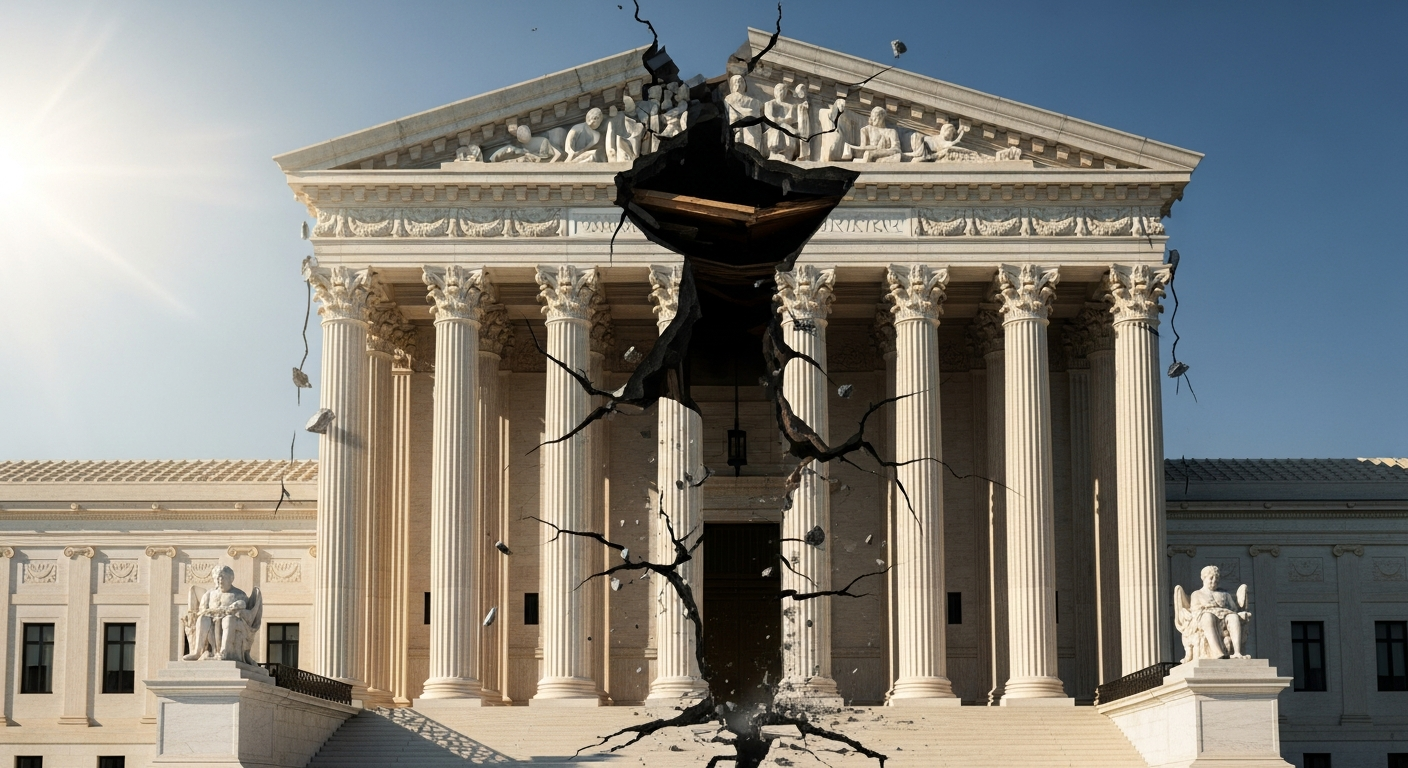
AI-generated image for: Supreme Court Justices Clash Over Redistricting Timeline Enforcement

Supreme Court Justices Clash Over Redistricting Timeline Enforcement

A rare Supreme Court split emerged this week as justices disagreed on accelerating the enforcement of a Louisiana redistricting ruling. The Court's procedural shift to expedite the timeline drew sharp objections and a forceful rebuttal regarding judicial norms and election administration.
Jump to The Flipside Perspectives

A significant internal disagreement within the Supreme Court became publicly apparent this week as justices debated the speed at which a major redistricting ruling, concerning Louisiana's congressional map, should be implemented. The dispute not only touched upon the outcome of the case itself but also raised questions about the appropriate level of judicial intervention when election preparations are already in progress.

"Calling it “insulting,” he argued that delaying implementation would have forced Louisiana to proceed under a map already declared unconstitutional, calling that outcome untenable given the Court’s own ruling." — Justice Samuel Alito, Supreme Court

At the core of this procedural clash is a recent 6-3 Supreme Court decision that invalidated Louisiana’s congressional map. This ruling cited constitutional concerns related to racial districting, deeming the map unlawful. The decision immediately prompted state officials in Louisiana to begin the complex process of redrawing electoral boundaries, with an eye toward the 2026 election cycle.

However, a subsequent order issued by the Supreme Court further intensified the timeline for these changes. In an unsigned move, the majority of justices opted to shorten the standard 32-day waiting period before a ruling is formally transmitted back to lower courts. This action effectively accelerated the implementation of the decision, enabling Louisiana to proceed more swiftly with its redistricting efforts.

This procedural acceleration drew a strong objection from Justice Ketanji Brown Jackson. In her dissent, Justice Jackson warned that the Court was departing from its usual practice of judicial restraint at a particularly sensitive juncture in the electoral process. She argued that the majority was acting too aggressively, especially given that voting logistics within the state were already in motion. Justice Jackson characterized the decision as a departure from established judicial norms, stating that the Court was "unshackl[ing] itself" from procedural constraints. She framed the expedited timeline as a break from standard practice that could potentially introduce instability into ongoing election administration.

Justice Jackson's criticism prompted a robust response from Justice Samuel Alito, who was joined by Justices Clarence Thomas and Neil Gorsuch. In a separate opinion, Justice Alito directly challenged both Justice Jackson's reasoning and her tone. He firmly rejected the notion that the Court was exceeding its authority or altering procedure without proper justification. Justice Alito labeled Justice Jackson's objections as "insulting" and contended that delaying the implementation of the ruling would have compelled Louisiana to conduct elections under a map that the Court had already declared unconstitutional. He described such an outcome as "untenable" in light of the Court’s own definitive ruling. Justice Alito explicitly stated that Justice Jackson’s objections "level charges that cannot go unanswered," pushing back against her characterization of the majority’s decision.

This public exchange highlighted a deeper philosophical divide among the justices regarding timing and judicial responsibility. It brought to the forefront the question of whether the paramount concern should be procedural consistency and adherence to established norms, or the immediate correction of an unconstitutional electoral map, particularly before upcoming elections proceed further. While the initial ruling on the Louisiana map was unsigned, the subsequent separate opinions from the justices revealed a clear ideological and methodological split concerning how the Supreme Court should manage election-related decisions once a constitutional violation has been identified and adjudicated.

The underlying case and the Supreme Court’s actions continue to have ramifications beyond Louisiana's borders. The decision has placed increased pressure on other states that have pending or contested congressional maps, as courts nationwide are grappling with similar challenges in anticipation of the 2026 midterms. For the time being, Louisiana is deeply engaged in an accelerated redistricting process, with state officials working to finalize revised boundaries under a compressed legal timeline. The Supreme Court's decision to expedite the enforcement of its ruling ensures that this complex issue will remain actively litigated in lower courts, even as political and electoral deadlines draw progressively tighter.

Advertisement

The Flipside: Different Perspectives

Progressive View

Progressives view the Supreme Court's decision to accelerate the Louisiana redistricting timeline with concern, emphasizing the importance of judicial restraint and procedural consistency in election administration. While acknowledging the need to address unconstitutional maps, the expedited timeline risks injecting instability into an already complex and sensitive electoral process. Established procedural norms exist to ensure predictability, allow states adequate time for implementation, and prevent potential disruptions that could disproportionately affect voters, particularly those from marginalized communities. Rushing such a significant change without the standard waiting period could lead to confusion, logistical challenges, or even challenges to the new maps, undermining public confidence in the electoral system. A focus on social justice and collective well-being necessitates a careful, deliberate approach to redistricting, ensuring that changes are implemented smoothly and fairly, without creating unintended barriers to participation or exacerbating existing systemic inequalities.

Conservative View

From a conservative perspective, the Supreme Court's expedited enforcement of the Louisiana redistricting ruling reflects a commitment to upholding the Constitution and ensuring electoral integrity. The immediate correction of an unconstitutional map, particularly one found to involve racial districting concerns, is paramount. Delaying implementation would force a state to operate under an electoral framework already declared unlawful, undermining the rule of law and potentially disenfranchising voters who would be represented by an unfairly drawn map. Judicial responsibility, in this view, includes the swift rectification of constitutional violations, preventing further harm. Adherence to procedural norms, while important, should not supersede the imperative to enforce constitutional mandates promptly, especially when the integrity of elections is at stake. The Court's action prevents the use of a map that infringes upon the constitutional rights of citizens, aligning with principles of limited government intervention that respects individual liberties and fair representation as defined by the highest law of the land.

Common Ground

Despite the clear disagreement on judicial procedure, both conservative and progressive viewpoints share common ground on the fundamental importance of fair and constitutional elections. There is a mutual understanding that electoral maps must adhere to the Constitution and that racial districting concerns, when identified, must be addressed. Both sides also agree on the Supreme Court's ultimate role in interpreting and enforcing constitutional law. Constructive dialogue could focus on striking a balance between the swift correction of constitutional violations and the maintenance of stable, predictable election administration. Exploring mechanisms that allow for timely judicial review without unnecessarily disrupting ongoing electoral processes, or defining clearer guidelines for when expedited timelines are genuinely warranted, could be areas for bipartisan collaboration aimed at ensuring both constitutional fidelity and administrative integrity in future election-related rulings.

What's your view on this story? Share your thoughts and remember to consider multiple perspectives and being respectful when forming and voicing your opinion. "If you resort to personal attacks, you have already lost the debate..."

Advertisement

Contact Us About This Article

Have a question or comment about this article? We'd love to hear from you.

About Fair Side News

At Fair Side News, we believe in presenting news with perspectives from both sides of the political spectrum. Our goal is to help readers understand different viewpoints and find common ground on important issues.