


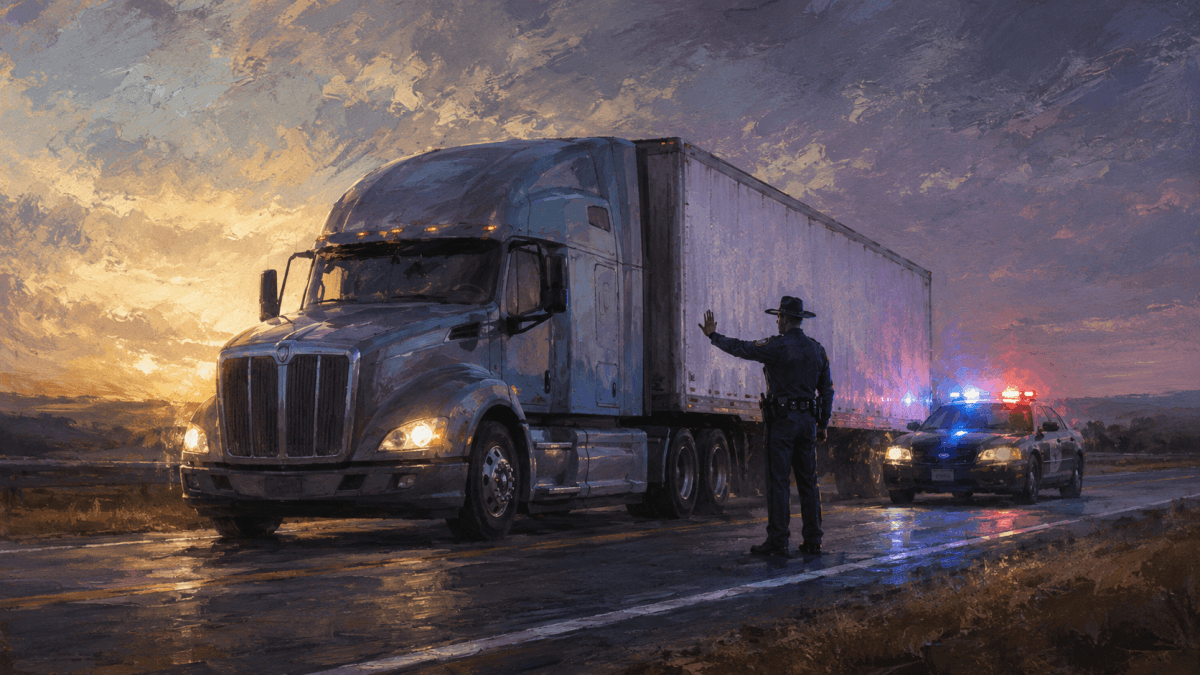
The Supreme Court of the United States on May 26, 2026, refused to consider a lawsuit filed by Florida against California and Washington over their policies that permit individuals without lawful immigration status to obtain commercial driver's licenses (CDLs). The Court's decision effectively ends Florida's bid to challenge these state-level licensing practices, which Florida argued posed significant public safety risks on national highways.
"This Court declines to even hear Florida’s claims, even though it has nowhere else to bring them." — Justice Clarence Thomas, Supreme Court Justice
Florida initiated the legal challenge directly before the Supreme Court, invoking the Court's original jurisdiction, which allows states to sue each other. The lawsuit stemmed from a fatal highway crash in Florida where a tractor-trailer driver, Harjinder Singh, attempted an illegal U-turn, resulting in three fatalities. Authorities later revealed that Singh, who is facing criminal charges and has pleaded not guilty, had previously held commercial driver's licenses issued by both Washington and California. Florida contended that California's and Washington's policies, by issuing CDLs to individuals lacking lawful immigration status and, in some instances, limited English proficiency, endangered interstate trucking safety.
California and Washington strongly opposed the lawsuit, labeling it a "political stunt." They argued that the responsibility for enforcing commercial driver licensing standards rests with federal regulators, not the Supreme Court. Washington Attorney General Nicholas Brown expressed concerns that allowing such a case to proceed would open a precedent for states to sue one another over a vast array of policy disagreements. Brown cited examples in court filings, asking, "Can States bring nuisance claims against each other in this Court alleging that lax vaccination policies or firearm restrictions in one state are causing harm in another?" He urged the justices to dismiss Florida's case, as reported by USA Today.
The Supreme Court provided no explanation for its decision to decline the case, a common practice when denying a petition for certiorari or original jurisdiction. This action leaves the commercial driver's license practices of California and Washington undisturbed and prevents Florida from using the Court's original jurisdiction to compel a review of interstate licensing standards.
However, two justices, Clarence Thomas and Samuel Alito, dissented from the Court's decision. They argued that the Court should have heard the dispute, emphasizing that Florida was left without any other legal avenue to pursue its claims. Justice Thomas, in his dissent, stated, "This Court declines to even hear Florida’s claims, even though it has nowhere else to bring them. Because I would allow Florida to file its complaint, I respectfully dissent."
Justice Thomas further elaborated that federal law imposes stringent requirements for commercial drivers, including the necessity of lawful immigration status and English proficiency. He warned that any failure in enforcing these federal standards creates substantial hazards on American roads. According to Fox News, Thomas wrote, "An illegal alien who cannot read English road signs cannot drive an 80,000-pound tractor-trailer."
Florida Attorney General James Uthmeier underscored that the core of Florida's case was to prevent states from enacting licensing policies that have repercussions extending far beyond their borders. Given the inherently interstate nature of commercial trucking, Uthmeier argued that such policies directly impact national roadway safety. Uthmeier stated in filings, "California’s and Washington’s decisions to endanger their own citizens is reprehensible."
This dispute is part of a broader national debate concerning immigration enforcement and transportation safety standards, as noted by ABC News. Republican officials frequently highlight what they perceive as deficiencies in state compliance and enforcement, while Democratic-led states defend their licensing systems as lawful and properly administered. In response to a series of fatal crashes involving commercial trucks, federal transportation officials have recently moved to tighten restrictions on non-citizens applying for commercial driver’s licenses. This indicates increasing scrutiny of state-level licensing practices. Transportation Secretary Sean Duffy has also advocated for stricter eligibility rules and cautioned states that federal funding could be made contingent on adherence to updated standards, aligning with the administration's stated goal of restoring integrity within the trucking industry.

