

Breaking
Sponsor Advertisement
Texas Appeals Court Slashes Alex Jones Defamation Payout
Image for: Texas Appeals Court Slashes Alex Jones Defamation Payout

Texas Appeals Court Slashes Alex Jones Defamation Payout

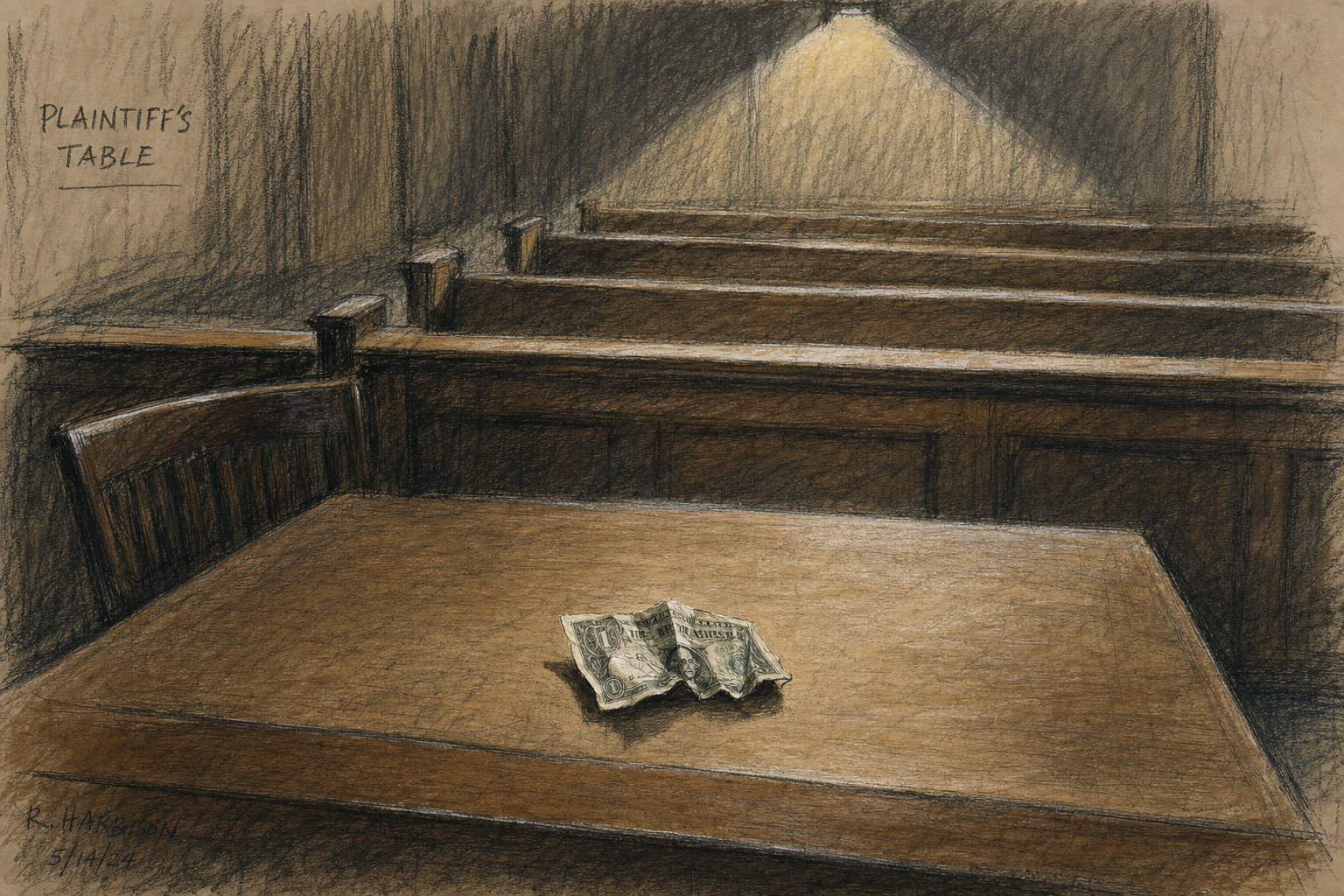
A Texas appeals court has significantly reduced the punitive damages portion of a roughly $50 million judgment against Infowars founder Alex Jones, stemming from his false claims about the Sandy Hook shooting. The court lowered punitive damages to $1.
Jump to The Flipside Perspectives

A Texas appeals court has substantially reduced the punitive damages awarded against Infowars founder Alex Jones and his company, Free Speech Systems, in a defamation case brought by parents of a Sandy Hook Elementary School shooting victim. The Texas Third Court of Appeals issued a unanimous ruling on Friday, cutting the punitive damages from over $45 million to $1.5 million, while leaving the compensatory damages of more than $4.1 million intact. This decision significantly alters one of the major judgments Jones faces for his repeated false claims that the 2012 massacre was a hoax.

The case, known as *Jones v. Heslin*, was initiated by Neil Heslin and Scarlett Lewis, whose six-year-old son, Jesse Lewis, was among the twenty children killed in the tragic shooting in Newtown, Connecticut. Heslin and Lewis sued Jones and Free Speech Systems for defamation and intentional infliction of emotional distress. Their lawsuit alleged that Jones's broadcasts on Infowars, which described the school shooting as a staged event involving crisis actors, caused them immense suffering and harassment.

Jones was found liable by default in the Texas case before a 2022 jury trial was convened solely to determine the amount of damages. During that trial, the jury awarded Heslin and Lewis more than $4.1 million in compensatory damages. Subsequently, the jury added over $45 million in punitive, or exemplary, damages, pushing the overall judgment to approximately $50 million. Punitive damages are intended to punish the defendant for egregious conduct and deter similar actions in the future.

The appeals court's decision to reform the judgment centered on a procedural issue regarding how the trial court handled an amendment to the plaintiffs' petition. After the jury had already returned its verdict, the plaintiffs sought to amend their petition to invoke an exception to Texas’ statutory limits on exemplary damages. This exception is typically applied in cases concerning injury to a disabled person.

The Texas Third Court of Appeals determined that the trial court had abused its discretion by allowing this amendment after the verdict. The appellate court concluded that the necessary findings to invoke such an exception had not been pleaded before trial or submitted to the jury for consideration. As a direct consequence of this procedural error, the court reformed the judgment by reverting to the plaintiffs’ earlier petition. This action compelled the application of Texas’ statutory cap on exemplary damages, which limits such awards to $750,000 per plaintiff in this context.

Under the modified judgment, Jones and Free Speech Systems are now liable for $750,000 in exemplary damages for Neil Heslin and another $750,000 for Scarlett Lewis, totaling $1.5 million in punitive damages. When combined with the original compensatory award of more than $4.1 million, Jones’s total liability in the Texas case now stands at approximately $6 million, before the addition of prejudgment interest and certain attorney’s fees.

It is crucial to note that this Texas ruling is distinct from another, much larger judgment Jones faces in Connecticut. In the Connecticut case, relatives of other Sandy Hook victims, along with an FBI agent who responded to the shooting, also brought claims against Jones and his related entities for defamation and intentional infliction of emotional distress. The Connecticut proceedings resulted in a judgment of approximately $1.25 billion against Jones. Jones attempted to appeal this massive judgment to the U.S. Supreme Court, but the high court ultimately declined to hear his appeal, leaving the Connecticut judgment intact.

Therefore, while the Texas ruling represents a substantial reduction in one of the major judgments against Jones, it does not impact the much larger Connecticut liability. The appellate court's decision in Texas underscores the importance of strict adherence to procedural rules and statutory limits in the awarding of damages, even in cases involving highly egregious conduct and significant public outrage. This outcome highlights the complexities of defamation law and the balance courts must strike between providing justice for victims and ensuring legal processes are followed precisely.

Advertisement

The Flipside: Different Perspectives

Progressive View

Progressives view the Texas appeals court's reduction of punitive damages against Alex Jones with significant concern, arguing it undermines accountability for harmful disinformation. While acknowledging the procedural nature of the ruling, the substantial cut in punitive damages is seen as a setback for victims seeking full justice against those who profit from spreading malicious falsehoods. The original $45 million in punitive damages reflected the jury's assessment of the extreme harm inflicted upon the Sandy Hook families, whose lives were devastated not only by the tragedy but also by years of harassment fueled by Jones's conspiracy theories.

From a progressive standpoint, the case highlights the urgent need for robust legal mechanisms to deter and punish individuals who intentionally inflict emotional distress and spread dangerous misinformation. They argue that the focus on a procedural technicality, rather than the profound and lasting suffering caused, risks sending a message that the legal system is not adequately equipped to address the scale of damage wrought by digital-era disinformation. Progressives emphasize collective well-being and social justice, asserting that protecting vulnerable populations from targeted harassment and ensuring accountability for those who exploit public tragedies is a moral imperative. They believe that while free speech is vital, it comes with a responsibility not to incite harm, and legal remedies should reflect the societal impact of such egregious actions.

Conservative View

From a conservative perspective, the Texas appeals court's decision to reduce the punitive damages against Alex Jones highlights the critical importance of judicial adherence to statutory limits and due process. Conservatives emphasize that while the actions of Alex Jones were reprehensible, the legal system must operate within established rules and not be swayed by public sentiment or the severity of the offense alone. The court's finding that the trial court abused its discretion by allowing a post-verdict amendment to bypass statutory caps reinforces the principle that procedural integrity is paramount.

This ruling underscores a concern for excessive punitive damages, which some conservatives view as potentially arbitrary and a threat to economic liberty, especially for smaller businesses or individuals. They argue that while accountability is necessary, punitive awards should be proportionate and guided by clear legal standards, not open-ended jury discretion. The application of a statutory cap of $750,000 per plaintiff, as prescribed by Texas law, is seen as a proper check on such awards, ensuring fairness and predictability in the legal system. Furthermore, conservatives often champion robust free speech protections, even for controversial or unpopular views, and are wary of judgments that could be perceived as having a chilling effect on speech, provided it stays within legal bounds. This decision, in their view, reinforces the rule of law and the limits of judicial power.

Common Ground

Despite differing perspectives on the outcome, both conservatives and progressives can find common ground in recognizing the importance of a fair and impartial judiciary that upholds the rule of law. There is broad agreement that the legal process, including adherence to established procedures and statutory limits, must be respected to maintain public trust in the justice system. All parties can agree that malicious falsehoods, especially those targeting victims of tragedy, are reprehensible and that those who spread them should be held accountable.

Furthermore, there is a shared understanding of the delicate balance between protecting free speech and ensuring individuals are not subjected to intentional harm through defamation. The goal of deterring future egregious conduct, while ensuring legal remedies are proportionate and procedurally sound, is a value that transcends ideological lines. Both sides would likely agree on the need for clarity in legal standards for defamation and the importance of accurate reporting. The discussion around this case can foster a dialogue on how to best navigate the complexities of speech in the digital age, ensuring justice for victims while upholding the integrity of judicial processes.

What's your view on this story? Share your thoughts and remember to consider multiple perspectives and being respectful when forming and voicing your opinion. "If you resort to personal attacks, you have already lost the debate..."

Advertisement

Contact Us About This Article

Have a question or comment about this article? We'd love to hear from you.

About Fair Side News

At Fair Side News, we believe in presenting news with perspectives from both sides of the political spectrum. Our goal is to help readers understand different viewpoints and find common ground on important issues.