

Breaking
Sponsor Advertisement
Trump Reshapes Childhood Vaccine Schedule Via Executive Order
Image for: Trump Reshapes Childhood Vaccine Schedule Via Executive Order

Trump Reshapes Childhood Vaccine Schedule Via Executive Order

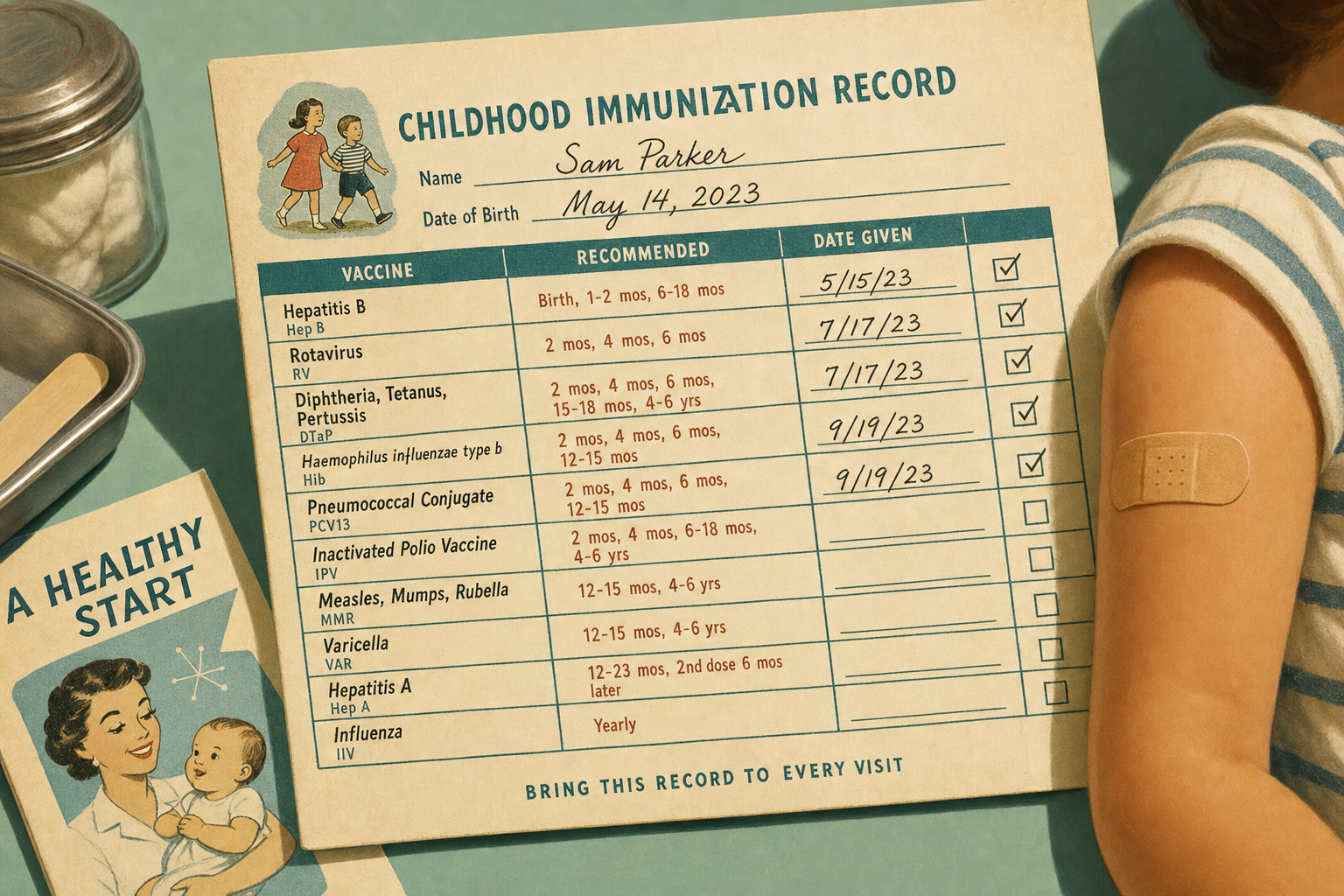
President Donald Trump has issued a sweeping executive order that alters the federal recommended childhood immunization schedule, introducing a slower, staggered approach to vaccine administration.
Jump to The Flipside Perspectives

President Donald Trump signed a comprehensive executive order on Tuesday, significantly altering the federal guidance for childhood immunizations across the United States. The directive introduces a staggered vaccine timeline and a tiered system for vaccine administration, marking a substantial intervention in pediatric health policy that has remained largely consistent for many years.

The executive order shifts federal health policy away from the current practice of administering multiple vaccines during single pediatric visits. Instead, the new framework will phase out doses over an extended schedule, reducing the dosage load per appointment to approximately one-fifth of the previous amount. President Trump articulated the reasoning behind this change during remarks in the Oval Office. "We’re breaking up the vaccines and we’re breaking them up into time periods. Okay, not so complicated and we think we’re going to have a tremendous result from doing that. Very simply, large amounts of vaccine, large amounts of like vats of vaccine are currently pumped into your child’s body and we’re doing 20 percent of that at each visit and we’ll let time elapse between visits so the body can handle this massive amount of fluid being pumped in," President Trump stated. He expressed confidence that this restructured approach would yield considerable benefits for families nationwide, adding, "I think it’s going to make a big difference."

President Trump also connected the policy shift to discussions surrounding autism rates. He cited observations about certain communities that reportedly experience minimal autism diagnoses, suggesting a link to their vaccination practices. "You know, there are some groups that have virtually no problem with autism and they, you know, I have to say this, they’re groups that aren’t big into the world of vaccines. So there’s something wrong when we see record numbers all the time every year for years and years, every year gets higher, higher, higher autism and we think we have a very good recommendation and a lot of good things are happening," President Trump commented.

Under the order's framework, federal officials will categorize childhood vaccines into three distinct tiers. Tier one maintains universal recommendations for core childhood immunizations that are already widely administered. This includes vaccines for measles, mumps, rubella, diphtheria, tetanus, pertussis, polio, Hib, pneumococcal disease, HPV, and chickenpox. These vaccines are expected to continue to be administered universally, albeit under the new staggered timeline.

Tier two introduces narrowed eligibility criteria, directing specific vaccines and antibody treatments toward children identified as higher-risk, rather than the entire pediatric population. This category encompasses RSV monoclonal antibody treatments, along with vaccinations against hepatitis A, hepatitis B, meningococcal B, meningococcal ACWY, and dengue fever. This approach aims to tailor certain medical interventions to specific needs, rather than a blanket application.

Tier three establishes a new consultation requirement, mandating what officials describe as "shared decision-making" between parents and pediatricians before administering several vaccines. The rotavirus, meningococcal disease, influenza, and COVID-19 vaccines are all placed under this newly created consultation tier. President Trump characterized this shared decision-making structure as a direct expansion of parental authority over their children's medical choices, calling it a victory for family rights. This tier emphasizes collaboration between medical professionals and parents in determining the best course of action.

A separate yet related provision within the executive order mandates the separation of the combined Measles, Mumps, and Rubella (MMR) shot into three individual injections, thereby ending its status as a single three-in-one vaccine. President Trump had previously indicated his stance on this specific change months earlier. Last fall, he told reporters, "The MMR, I think, should be taken separately. This is based on what I feel." This change reflects a long-held personal view now formalized into federal policy.

The issuance of Tuesday's order follows months of public pressure from President Trump on Health and Human Services Secretary Robert F. Kennedy Jr. to revise federal vaccine guidelines and to intensify government research into any potential connection between vaccines and autism. This sustained pressure campaign has now culminated in a binding federal policy, converting President Trump’s public demands into an an official directive that health agencies are required to implement.

Implementation of the order will now fall to federal health officials, who are tasked with translating the three-tier framework and the requirement to split the MMR vaccine into updated clinical guidance for pediatricians nationwide. As a result, parents attending future well-child visits should anticipate a noticeably different vaccination timeline compared to the one used for older siblings, as medical practitioners adjust dosing intervals in accordance with the new federal schedule. This executive order represents the most direct intervention by the Trump administration to date into the structure of pediatric immunization policy, altering a schedule that had largely remained consistent for many years.

Advertisement

The Flipside: Different Perspectives

Progressive View

From a progressive perspective, the executive order on childhood vaccinations raises significant concerns regarding public health, equity, and the potential for increased health disparities. The introduction of a staggered immunization timeline and a tiered system for vaccines, particularly the shift towards "shared decision-making" for certain shots, could inadvertently create barriers to essential preventative care. Public health initiatives are designed to protect the collective well-being of all children, especially the most vulnerable, by ensuring widespread immunity and reducing the spread of preventable diseases. Any policy that complicates access or introduces unnecessary delays could weaken herd immunity, putting immunocompromised individuals and infants at higher risk.

Moreover, the order's emphasis on individual parental choice, while seemingly empowering, could exacerbate existing inequities. Families with limited access to healthcare information, transportation, or time off work may struggle to navigate a more complex, multi-visit vaccination schedule or engage effectively in "shared decision-making" consultations. This could lead to lower vaccination rates in underserved communities, widening health gaps and disproportionately affecting those already facing systemic disadvantages. Progressivism advocates for policies that ensure equitable access to health resources for all, recognizing that health outcomes are often shaped by social and economic determinants. Undermining established public health protocols for broad populations, particularly when citing unproven links to conditions like autism, is viewed as a step backward that prioritizes individual skepticism over the collective good and evidence-based medicine, potentially eroding trust in scientific consensus.

Conservative View

The executive order to restructure the childhood vaccine schedule aligns with core conservative principles by emphasizing individual liberty, parental rights, and a more limited, cautious approach to federal intervention in personal health decisions. By moving towards a staggered immunization timeline and mandating shared decision-making for certain vaccines, the administration empowers parents to have greater autonomy over their children's medical care, reflecting a belief that families, not the government, are best equipped to make such critical choices. This shift reduces the perceived "one-size-fits-all" mandate, replacing it with a more individualized approach that respects diverse family values and health considerations. It underscores the idea that parental authority in raising children, including their health choices, is paramount and should not be easily overridden by state directives.

Furthermore, the order's focus on breaking up the combined MMR shot and investigating potential links to autism signals a commitment to transparency and a willingness to question established norms, even in areas often considered settled science. For many conservatives, this reflects a healthy skepticism of large government institutions and a demand for rigorous, ongoing scrutiny, particularly when public health policies touch upon parental authority and potential long-term health impacts. This critical examination of federal health guidelines aligns with the principle of limited government, ensuring that mandates are continually justified and do not overstep their bounds. The move to a tiered system, distinguishing between universally recommended vaccines and those requiring more individualized assessment, also introduces a degree of proportionality and risk-assessment that resonates with a philosophy of personal responsibility and informed consent. This approach seeks to balance public health goals with the fundamental right of parents to guide their children's upbringing and health outcomes, promoting a system where informed choice is prioritized.

Common Ground

Despite differing approaches, both conservative and progressive viewpoints share a fundamental desire for healthy children and robust families. There is common ground in the goal of ensuring that children receive necessary medical care in a way that is safe and effective. Both sides can agree on the importance of clear, accessible information for parents regarding vaccine benefits and potential risks, fostering informed decision-making. The concept of "shared decision-making," while implemented differently, can be a point of agreement if framed as empowering parents with knowledge rather than creating obstacles.

A bipartisan approach could focus on enhancing public education campaigns that provide factual, evidence-based data on vaccine safety and efficacy, addressing parental concerns without politicizing public health. Investments in research to continually improve vaccine safety and understand complex health conditions, free from political influence, would also find broad support. Furthermore, both conservatives and progressives can agree on the need for efficient healthcare systems that minimize burdens on families. Streamlining processes for families, whether through expanded clinic hours or community health initiatives, could ensure that any new vaccine schedules or consultation requirements are manageable for all parents, regardless of their socioeconomic status or political leanings. The ultimate shared objective is the health and well-being of the next generation, and finding practical ways to support parents in making the best health choices for their children is a goal transcending ideological divides.

What's your view on this story? Share your thoughts and remember to consider multiple perspectives and being respectful when forming and voicing your opinion. "If you resort to personal attacks, you have already lost the debate..."

Advertisement

Contact Us About This Article

Have a question or comment about this article? We'd love to hear from you.

About Fair Side News

At Fair Side News, we believe in presenting news with perspectives from both sides of the political spectrum. Our goal is to help readers understand different viewpoints and find common ground on important issues.