


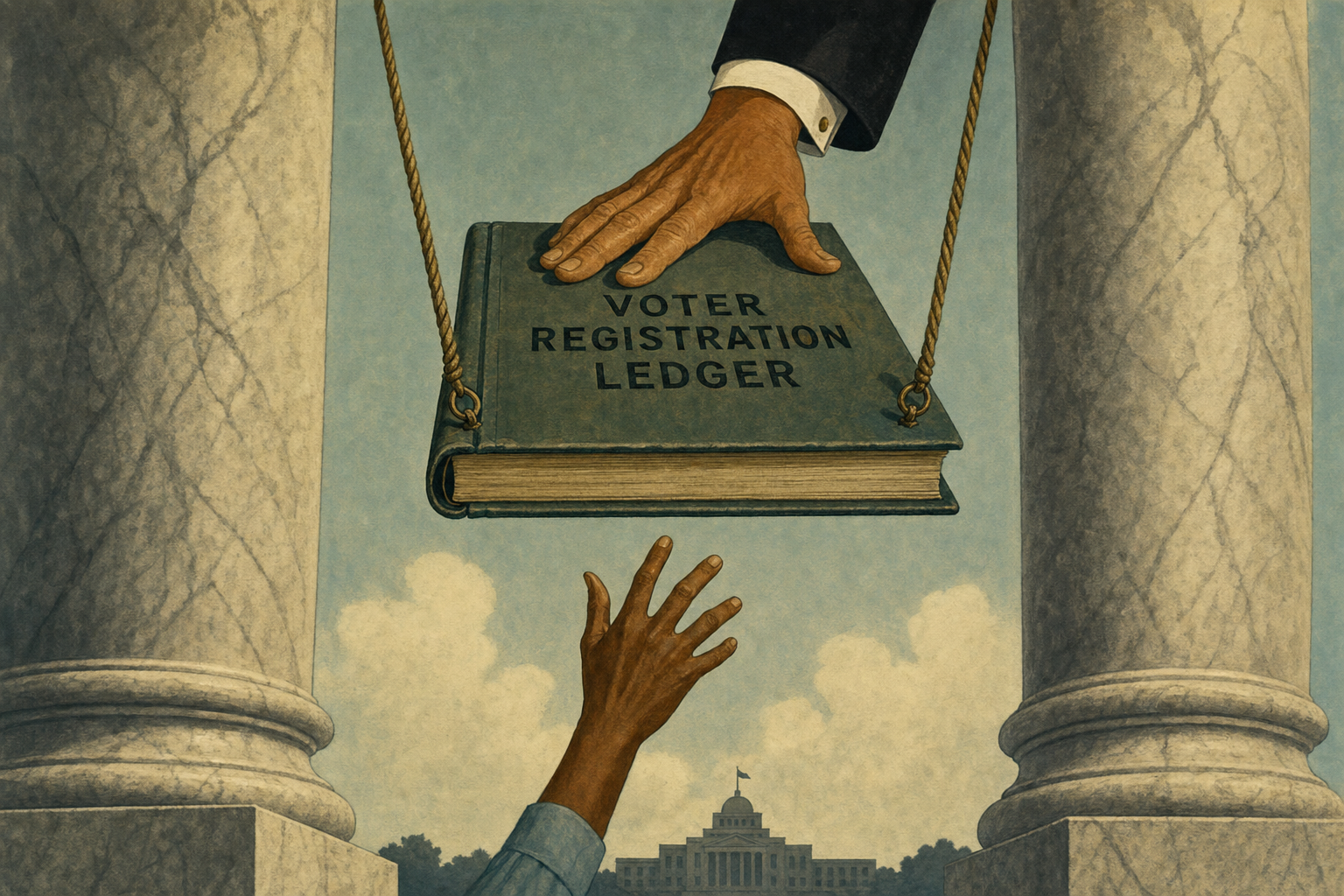
WASHINGTON D.C. – The Trump administration has escalated its legal battle over the "Ensuring Citizenship Verification and Integrity in Federal Elections" executive order, filing an emergency request with the Supreme Court on Wednesday for an immediate intervention. The administration seeks to overturn federal court rulings that have halted key provisions of the order, arguing that continued inaction by the high court will prevent its implementation before the upcoming November federal elections.
"It is critical that the Court act promptly on the pending" request." — D. John Sauer, Solicitor General
Solicitor General D. John Sauer, representing the government, filed a supplemental brief emphasizing the urgency of the situation. "It is critical that the Court act promptly on the pending" request, Sauer wrote, noting that the request had been fully briefed since late July but remained undecided. He warned that U.S. District Judge Indira Talwani’s rulings "will effectively run out the clock on the government’s ability to implement Section 3 of the Executive Order," which he contended would inflict "irreparable harm to the federal government, the public, and election integrity."
The legal dispute stems from President Donald Trump's executive order, signed on March 31, which aims to enhance election integrity through citizenship verification. The order outlines three primary provisions that have drawn legal challenges. One provision mandates the Department of Homeland Security to compile citizenship rolls for all states, to be provided at least 60 days before any federal election. Another directs the Attorney General to prioritize investigations and potential prosecutions of state and local officials who send federal ballots to unauthorized recipients. The third, Section 3, requires states to disclose their mail-ballot recipient lists to the U.S. Postal Service, which would then be prohibited from delivering ballots to individuals not included on its own separately compiled eligibility rolls.
Legal challenges emerged quickly, with twenty-three states, led by California, along with the District of Columbia, filing a lawsuit in a Massachusetts federal court. Judge Talwani, overseeing the case, issued a June 25 order protecting these 23 states and D.C. from the executive order's provisions through Election Day in November. Her reasoning distinguished between speculative future claims and the "direct and immediate dilemma" posed by the order for the current election cycle.
The administration appealed Talwani’s order to the 1st U.S. Circuit Court of Appeals, seeking a pause, but the appellate panel rejected their request. The appeals court noted that neither the administration nor the dozen Alabama-led states supporting it had explicitly defended the legality of the order itself. The appellate judges also dismissed claims that the states lacked standing or that their lawsuit was premature.
Following this setback, the administration directly approached the Supreme Court on July 27. Solicitor General Sauer characterized Talwani’s decision as "extraordinary" and reiterated the argument that the case was premature, given that federal agencies had not yet fully detailed the implementation procedures for the executive order. He also highlighted the time-sensitive nature of the challenge, stating that the freeze "blocks the government’s ability to finalize and implement the President’s proposed policies to promote election integrity for the upcoming federal elections in November." Sauer further emphasized, "Every day that it remains in place irreparably harms the government, as the start of mail-in and absentee voting in some States is now just one month away."
In an August 3 filing, the opposing states countered the administration's request, asserting that lifting the block "would allow the federal government to rush out an unprecedented, legally indefensible voter-verification and ballot-interception program that would, among other things, give the U.S. Postal Service far-reaching new powers and responsibilities." They referenced the 1st Circuit’s findings, which recognized that looming deadlines and balloting requirements created real and immediate injuries for the states.
The situation gained further urgency with Judge Talwani's new ruling on Tuesday in a separate lawsuit filed by the League of Women Voters and allied groups. This latest decision temporarily halts the Postal Service from enforcing Section 3 nationwide. Sauer quickly incorporated this development into Wednesday’s supplemental brief, arguing that this new nationwide injunction "confirms the urgent need for this Court to grant the stay" of Talwani’s earlier ruling and "to explain its rationale for doing so." He concluded by reasserting the administration’s core legal theory: "Courts cannot enjoin implementation of an Executive Order that merely instructs agencies to pursue a proposed policy in a manner that is consistent with laws … unless and until those agencies actually take concrete actions that injure the plaintiffs."
With mail-in and absentee voting scheduled to commence in several states within weeks, the Supreme Court's decision on this emergency request will significantly shape the procedures for the upcoming federal elections.

