


President Donald Trump issued a direct warning to Oman during a White House Cabinet meeting on Wednesday, stating the Gulf nation must align with international expectations or face severe consequences. The remarks, which quickly circulated in international capitals, came as discussions continue over the strategic Strait of Hormuz and ongoing negotiations with Iran.
"Oman will behave just like everybody else or we’ll have to blow them up. They understand that. They’ll be fine." — President Donald Trump, White House Cabinet Meeting.
The President's comments were prompted by a reporter's question concerning a potential short-term arrangement that would grant Iran and Oman joint authority over the Strait of Hormuz. President Trump unequivocally rejected the idea, asserting, "The strait’s gotta be open to everybody. Nobody’s going to control it. We’ll watch over it. But nobody’s going to control it. That’s part of the negotiation that we have.” He then directly addressed Oman, a long-standing American partner in the Middle East, stating, “Oman will behave just like everybody else or we’ll have to blow them up. They understand that. They’ll be fine.”
The context for these statements is a recent report from Iran’s state television, which claimed a draft memorandum of understanding was in the works to give Iran and Oman joint management over the waterway, potentially allowing them to extract tolls from passing ships. Both the White House and the State Department swiftly refuted this report, labeling it a “complete fabrication.” The State Department further amplified President Trump’s warning on social media platform X shortly after the Cabinet meeting concluded.
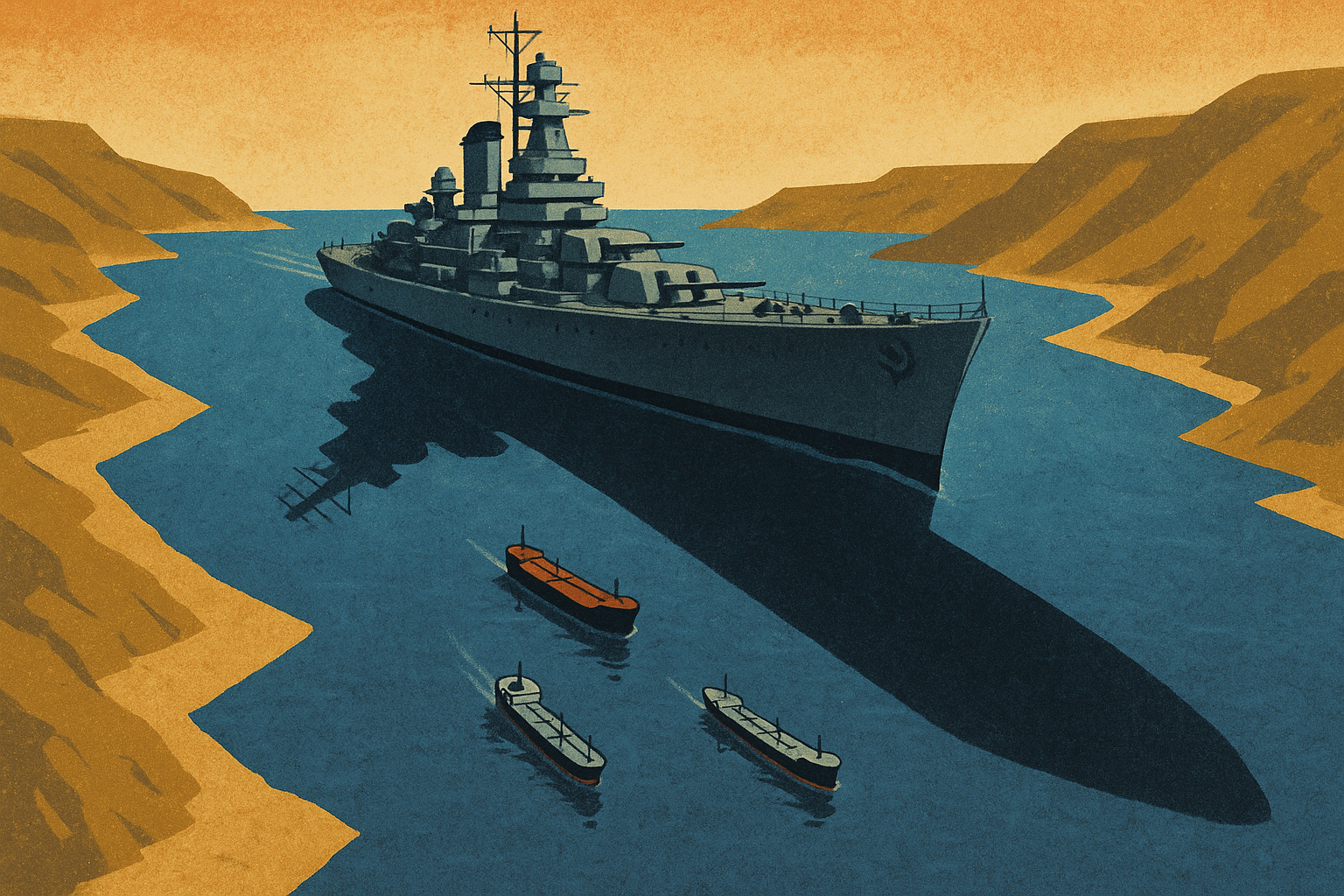
The Strait of Hormuz, a critical choke point for global oil and natural gas shipments, has been effectively closed for nearly 90 days following a military operation launched by the United States. This disruption has led to sharp increases in global energy prices, with economists warning that the effects on consumer prices could persist for months, irrespective of when a resolution is achieved.
Oman's diplomatic role in the region is well-established. The sultanate has historically served as a quiet, reliable back-channel for dialogue between Washington and Tehran, notably facilitating discussions that led to the 2015 Iranian nuclear agreement. Furthermore, Oman has maintained a defense partnership with the U.S. since 1980, with its deep-water Port of Duqm strategically positioned outside the Strait of Hormuz, serving as a key maintenance and repair hub for U.S. Navy vessels.
President Trump's rhetoric was not limited to Oman. Throughout the Cabinet session, he directed strong warnings toward Iran, emphasizing that Tehran has a greater need for a deal than Washington. "Iran is very much intent, they want very much to make a deal,” President Trump stated. “So far, they haven’t gotten there. We’re not satisfied with it, but then we will be. We will be either that, or we’ll have to just finish the job.”
He underscored the potential consequences of Iranian intransigence by gesturing towards Defense Secretary Pete Hegseth. “I think we’ll be doing very well. They are starting to give us the things that they have to give us. If they do, that’s great, and if they won’t then the man on my left is going to finish them off,” President Trump asserted.
President Trump also characterized Iran’s military capabilities as severely diminished, claiming its navy and air force have been destroyed. “The Navy is gone, as I’ve said 1000 times. The Navy is gone, their Air Force is gone, everything’s gone, and they’re negotiating on fumes,” he said. “But we’ll see what happens. Maybe we have to go back and finish it. Maybe we don’t right now.” These assessments, however, contrast with some intelligence reports indicating Tehran has rebuilt a significant portion of its pre-war military capabilities, including ballistic missiles and launch infrastructure.
The President accused Iran of stalling negotiations, suggesting Tehran hopes to outlast his administration until the November midterm elections. Despite the heightened rhetoric, diplomatic efforts are ongoing, with envoys Steve Witkoff and Jared Kushner reportedly active in the process. The United States is demanding a full Iranian commitment to abandon nuclear weapons development and relinquish its stockpile of highly enriched uranium. Conversely, Iran seeks the lifting of the American naval blockade, which has severely impacted its oil exports to China and Southeast Asia. With both sides maintaining firm positions, the Strait of Hormuz remains shut, and a resolution appears distant.

