

Breaking
Fair Side News (formerly BalancedRight News), was created to help readers move b… | ● BREAKING Beyond the Library and the Boardroom: Celebrating the Illustrious, Multi-Talented Life of Anthony Stewart Head | Newsom Proposes 100% Tax on Trump Anti-Weaponization Fund | Senators Block Election Security Amendment in Immigration Bill | SPLC Accused of Funding KKK Members in Federal Indictment | Albanian Protests Erupt Over Kushner-Linked Resort Deal | NIH Researchers Charged in Alleged Monkeypox Smuggling Scheme | Trump Alleges Cheating in California Primary Vote Count | Google Seeks EPA Permit for Mosquito Release in California, Florida | Federal Agents Uncover $45M Cocaine Tunnel Under US-Mexico Border | Missing Los Alamos Lab Worker Found Deceased | Fair Side News (formerly BalancedRight News), was created to help readers move b… | ● BREAKING Beyond the Library and the Boardroom: Celebrating the Illustrious, Multi-Talented Life of Anthony Stewart Head | Newsom Proposes 100% Tax on Trump Anti-Weaponization Fund | Senators Block Election Security Amendment in Immigration Bill | SPLC Accused of Funding KKK Members in Federal Indictment | Albanian Protests Erupt Over Kushner-Linked Resort Deal | NIH Researchers Charged in Alleged Monkeypox Smuggling Scheme | Trump Alleges Cheating in California Primary Vote Count | Google Seeks EPA Permit for Mosquito Release in California, Florida | Federal Agents Uncover $45M Cocaine Tunnel Under US-Mexico Border | Missing Los Alamos Lab Worker Found Deceased |
Sponsor Advertisement
U.S. Tech CEO Charged in Alleged Iran Military Export Scheme
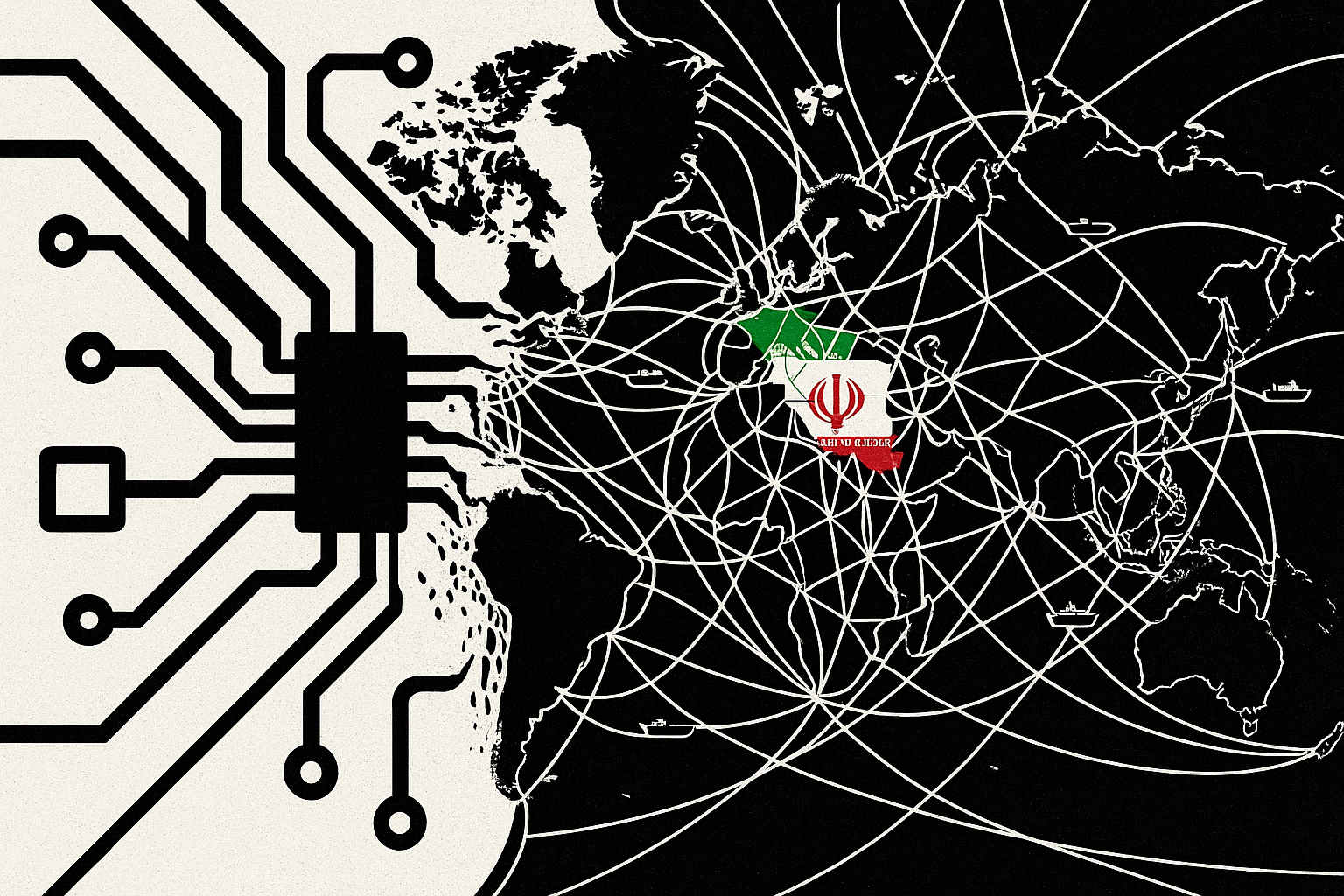
Image for: U.S. Tech CEO Charged in Alleged Iran Military Export Scheme

U.S. Tech CEO Charged in Alleged Iran Military Export Scheme

A dual U.S.-Iranian national and tech executive faces federal charges for allegedly exporting sensitive U.S. technology to Iran, including entities tied to its military and nuclear programs, through a decade-long international network. The Department of Justice asserts the scheme violated U.S.
Jump to The Flipside Perspectives

Jamshid Ghomi, a 63-year-old dual U.S.-Iranian national and technology executive residing in Newport Coast, California, was arrested on federal charges this week for allegedly orchestrating a decade-long scheme to illegally export sensitive American computer networking and encryption equipment to Iran. The Department of Justice (DOJ) announced that Ghomi, who serves as CEO of a Tehran-based technology company, is accused of establishing an intricate international procurement network that routed restricted U.S. technology through multiple intermediary countries before it reached Iran, including entities linked to the country’s military and nuclear programs.

The federal complaint outlines alleged violations of the International Emergency Economic Powers Act (IEEPA) and U.S. sanctions regulations enforced by the Treasury Department’s Office of Foreign Assets Control (OFAC). According to court filings, Ghomi is accused of conspiring to circumvent stringent export restrictions by acquiring controlled networking and encryption equipment without proper authorization. These items were then allegedly routed through third countries to obscure their ultimate destination in Iran.

Investigators describe a highly complex international structure purportedly built around Ghomi’s Tehran-based firm, which sourced U.S.-origin technology for Iranian customers. The alleged scheme utilized freight forwarding hubs in the United Arab Emirates, various front companies, and online payment systems to disguise transactions and conceal the true end-users. Officials estimate that these methods facilitated hundreds of shipments of restricted goods over more than a decade.

The DOJ states that the equipment entered Iran through layered supply chains designed to mask its origin and final destination. Portions of this technology reportedly ended up in organizations connected to Iran’s defense and nuclear infrastructure. Prosecutors, citing information from FOX 11 Los Angeles, allege that some of the supplied technology went to government-connected entities already subject to U.S. sanctions, including agencies involved in military development and nuclear oversight.

The investigation, a joint effort by multiple federal agencies including the FBI, IRS Criminal Investigation, and the Department of Commerce’s Bureau of Industry and Security, focused on alleged breaches of U.S. export control laws. These laws are specifically designed to prevent adversarial governments from accessing sensitive American technology. Authorities describe this case as a component of broader enforcement initiatives targeting global procurement networks that attempt to evade sanctions via third-country intermediaries.

Court filings further allege that Ghomi leveraged commercial platforms and intermediary accounts to facilitate the purchase of U.S. technology, with transactions routed through international payment systems and shipping firms. Investigators claim that communications and invoices associated with these transactions contained coded references and misdirection intended to obscure Iran as the final destination of the goods, according to Trending Politics.

Federal prosecutors also allege that the operation generated millions of dollars in annual revenue, yet only a fraction of this income was reported to U.S. tax authorities. Funds were purportedly moved through international financial networks involving shell companies across multiple jurisdictions before being transferred back into the United States under disguised descriptions, such as consulting payments or foreign transfers. Authorities contend that portions of these proceeds were used to acquire luxury assets in the United States, including a multimillion-dollar estate in Newport Coast. The complaint states that foreign-sourced funds were funneled into construction and real estate accounts over several years, while Ghomi allegedly reported minimal income on tax filings during the same period, also utilizing false income classifications, including claims of foreign inheritance.

In a public statement, federal prosecutors underscored that the case reflects ongoing efforts to prevent the export of sensitive U.S. technologies to sanctioned regimes and to disrupt the financial and logistical networks supporting such transfers. They argue that the vigorous enforcement of sanctions laws is crucial for national security and for limiting access to advanced American-made systems by adversarial military programs. Ghomi is charged with conspiracy to violate U.S. sanctions laws and faces significant potential prison time if convicted. Additional allegations concerning money laundering and tax-related offenses remain under investigation as the case proceeds in U.S. District Court in Southern California. Ghomi is presumed innocent unless proven guilty in a court of law.

Advertisement

The Flipside: Different Perspectives

Progressive View

While the allegations against Jamshid Ghomi regarding the illegal export of sensitive technology to Iran raise serious national security concerns, a progressive viewpoint also considers the broader context and systemic issues at play. The prosecution highlights the persistent challenges in enforcing complex international sanctions regimes and the need for comprehensive approaches that go beyond individual arrests. While protecting national security is a shared goal, it's important to analyze whether current sanctions policies are achieving their intended effects or if they contribute to the proliferation of illicit networks due to economic pressures or lack of alternative diplomatic channels.

From a progressive perspective, the focus should also include examining the global financial systems that enable such sophisticated money laundering and illicit trade schemes. This case points to the need for greater international cooperation, transparency, and stronger regulatory oversight to close loopholes exploited by individuals and corporations. Furthermore, while Ghomi is presumed innocent until proven guilty, the allegations of substantial personal enrichment through illicit means underscore issues of corporate accountability and the ethical responsibilities of business leaders. A holistic approach would not only punish individual actors but also address the underlying systemic vulnerabilities that allow such operations to flourish, potentially re-evaluating the effectiveness and humanitarian impact of sanctions regimes on ordinary citizens.

Conservative View

The charges against Jamshid Ghomi underscore the critical importance of robust national security measures and the strict enforcement of U.S. sanctions. From a conservative perspective, the alleged decade-long scheme to export sensitive American technology to Iran, including its military and nuclear programs, represents a direct threat to U.S. interests and global stability. This case highlights the necessity of maintaining strong export controls to prevent adversarial nations from acquiring technologies that could enhance their military capabilities or advance their illicit nuclear ambitions.

Individual accountability is paramount. Ghomi's alleged actions not only violated federal laws but also potentially enriched him at the expense of national security. The allegations of money laundering and tax evasion further demonstrate a disregard for the rule of law and personal responsibility. Conservatives advocate for a justice system that holds individuals fully accountable for such serious offenses, ensuring that those who attempt to subvert U.S. foreign policy and endanger national security face appropriate consequences. This prosecution sends a clear message that the U.S. will actively pursue and dismantle networks designed to circumvent sanctions, reinforcing the principle that protecting American sovereignty and security requires unwavering vigilance and decisive action against those who seek to undermine it.

Common Ground

Across the political spectrum, there is a fundamental agreement on the necessity of protecting U.S. national security and preventing sensitive technology from falling into the hands of adversarial governments, particularly those with military or nuclear ambitions that could destabilize global peace. The alleged actions in this case underscore a shared concern about the integrity of U.S. export controls and the importance of international law enforcement cooperation to dismantle illicit procurement networks. Both conservatives and progressives can agree on the need for robust intelligence gathering and investigative efforts by agencies like the FBI and DOJ to identify and prosecute individuals who violate these critical regulations.

Furthermore, there is bipartisan consensus on the importance of upholding the rule of law and ensuring that individuals accused of serious crimes, such as sanctions violations and financial misconduct, receive due process within the justice system. The fight against money laundering and tax evasion, which are often intertwined with national security offenses, also represents a common area of concern, as these activities undermine economic stability and fairness. Ultimately, ensuring the safety and security of the nation and its interests abroad is a shared priority, necessitating continued vigilance and effective enforcement mechanisms against those who seek to exploit vulnerabilities for personal gain or to aid hostile entities.

What's your view on this story? Share your thoughts and remember to consider multiple perspectives and being respectful when forming and voicing your opinion. "If you resort to personal attacks, you have already lost the debate..."

Advertisement

Contact Us About This Article

Have a question or comment about this article? We'd love to hear from you.

About Fair Side News

At Fair Side News, we believe in presenting news with perspectives from both sides of the political spectrum. Our goal is to help readers understand different viewpoints and find common ground on important issues.