


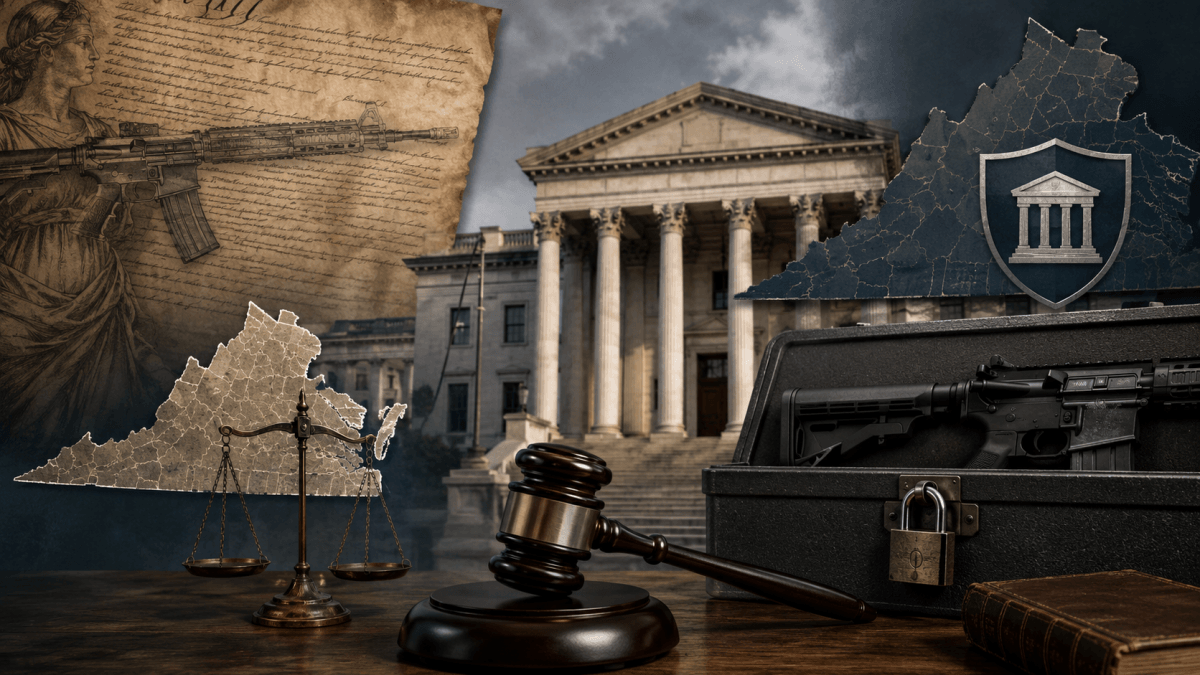
Spotsylvania County, Virginia – A newly enacted Virginia firearms law is facing internal resistance as a county prosecutor declared his refusal to enforce key provisions, citing constitutional grounds. Commonwealth’s Attorney Ryan Mehaffey informed local law enforcement in a formal letter that specific statutes, including an "assault weapons" ban and a public carry restriction, are unconstitutional under current Supreme Court precedent. His stance, announced this week, places his jurisdiction within the growing "Second Amendment sanctuary" movement and intensifies the ongoing legal and political debate over gun control in the state.
"The Assault Weapons Ban … and the Public Carry Ban … are undoubtedly inconsistent with the historical tradition … and are thus unconstitutional under Bruen." — Ryan Mehaffey, Spotsylvania County Commonwealth’s Attorney
The legislation, signed into law by Virginia Gov. Abigail Spanberger, a Democrat, is part of a broader package aimed at reducing gun violence. The measures restrict the sale and transfer of certain semiautomatic firearms, often referred to as "modern sporting rifles," limit magazine capacity, and impose new public carry provisions in designated areas. These measures are slated to take effect in July, creating a timeline for their implementation and potential enforcement challenges.
In his communication to Spotsylvania County Sheriff Roger L. Harris, Mehaffey argued that the new statutes directly conflict with established Second Amendment interpretations, particularly those articulated in landmark Supreme Court rulings such as *District of Columbia v. Heller* (2008) and *New York State Rifle & Pistol Association v. Bruen* (2022). He contended that the Virginia laws fail the constitutional test set by these decisions, which protect firearms "in common use" for lawful purposes. Specifically, Mehaffey wrote, "The Assault Weapons Ban … and the Public Carry Ban … are undoubtedly inconsistent with the historical tradition … and are thus unconstitutional under Bruen." He advised local law enforcement not to proceed with criminal charges based solely on these challenged provisions, emphasizing his office's commitment to upholding what he views as constitutional principles.
The prosecutor’s decision aligns Spotsylvania County with a national trend where numerous jurisdictions have adopted "Second Amendment sanctuary" resolutions. This movement involves local officials and governing bodies pledging limited or no enforcement of gun restrictions they believe infringe upon constitutional protections. Proponents of this approach argue it reflects a sworn obligation by local officials to uphold the U.S. Constitution over state law when perceived conflicts arise, a position supported by organizations like The Reload.
Mehaffey's announcement quickly garnered support from some local officials, including members of the Spotsylvania County Board of Supervisors, who lauded the decision and reiterated their opposition to enforcing the new restrictions. Andrew "Drew" Mullins, a local figure, posted on social media, stating, "My good friend and fellow Oath Keeper, Commonwealth Attorney Ryan Mehaffey is supporting our resolution declaring Spotsylvania County a 2A Sanctuary county. We will not comply with Governor Spanberger’s infringement on our unalienable Constitutional rights." This local-level defiance underscores the persistent political divide in Virginia, where more rural counties frequently challenge state-level legislation advanced by Democratic lawmakers in Richmond.
The new Virginia gun laws are already subject to legal challenges even before their effective date. Multiple gun-rights organizations have filed lawsuits seeking to block their enforcement, asserting that the statutes exceed constitutional limits established by recent Supreme Court precedent that has expanded Second Amendment protections. The Department of Justice has also indicated potential involvement in related litigation, according to The Daily Caller, which could further elevate the legal stakes and bring federal intervention into the state-level dispute.
Supporters of the new gun laws maintain that stricter regulations are essential for addressing gun violence and curbing access to high-capacity firearms. They argue that these measures are reasonable steps to enhance public safety and protect communities. Conversely, opponents, like Mehaffey, contend that the laws represent an unconstitutional overreach that will likely be overturned in court. They emphasize the importance of upholding constitutional rights as interpreted by the Supreme Court, particularly regarding the right to bear arms for self-defense.
The conflict places local prosecutors in a challenging position, balancing the enforcement of state law with their interpretations of constitutional principles. Mehaffey's clear stance signals a fractured enforcement landscape within Virginia as broader legal questions move through the courts. The state is now a focal point in the national debate over firearms policy, with implications potentially extending beyond its borders, as local, state, and possibly federal legal battles unfold. The outcome of these challenges will likely have significant implications for the scope of gun control legislation and the enforcement powers of local officials across the United States.

