

Breaking
Sponsor Advertisement
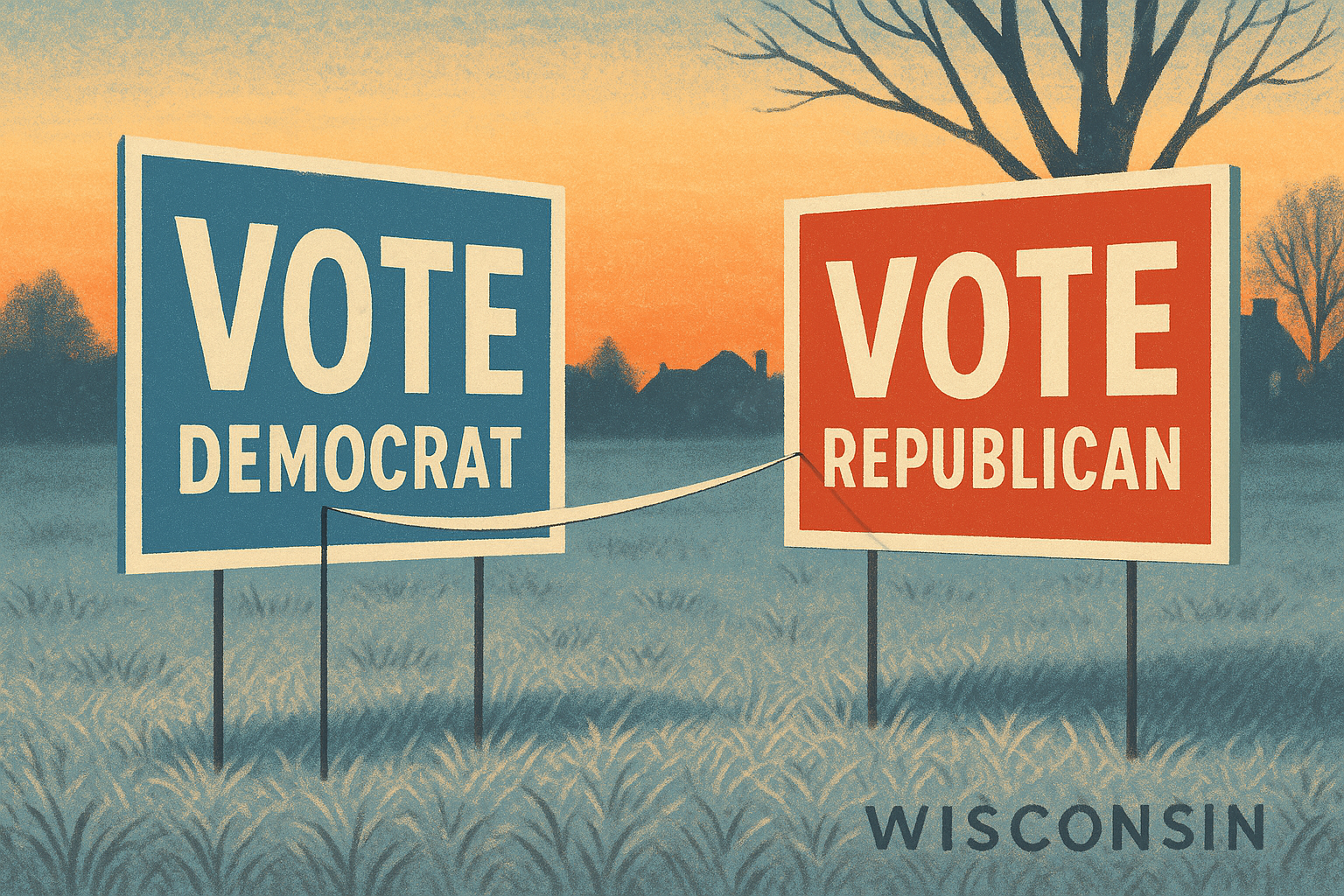
Wisconsin Primary Shocker: Crowley Edges Hong, Kornacki Stunned
Image for: Wisconsin Primary Shocker: Crowley Edges Hong, Kornacki Stunned

Wisconsin Primary Shocker: Crowley Edges Hong, Kornacki Stunned

Milwaukee County Executive David Crowley secured a narrow victory in Wisconsin's Democratic gubernatorial primary, overcoming a significant polling deficit against State Representative Francesca Hong.
Jump to The Flipside Perspectives

Milwaukee County Executive David Crowley has clinched a surprising victory in Wisconsin's Democratic gubernatorial primary, defeating State Representative Francesca Hong by a margin of just over 3,200 votes. The closely watched contest, which concluded early Wednesday morning, saw Crowley overcome a substantial polling deficit thanks to a late surge of establishment support, setting the stage for a challenging general election against Republican U.S. Representative Tom Tiffany, who has President Trump’s endorsement.

"Are you serious?! They have to… God… what were… OK…umm" — Steve Kornacki, NBC News Chief Data Analyst

The primary results revealed Crowley with 313,321 votes, accounting for 39.8 percent, while Hong trailed closely behind with 310,109 votes, or 39.4 percent. Other candidates, including State Senator Kelda Roys, former state administration secretary Joel Brennan, and Lieutenant Governor Sara Rodriguez, garnered smaller percentages. The Associated Press officially called the race for Crowley after Hong publicly conceded, ending speculation of a potential recount.

Crowley's path to victory was highly unconventional. He initially withdrew from the gubernatorial race in early July when his poll numbers lagged significantly behind Hong’s, at which point he endorsed Rodriguez. However, Rodriguez’s campaign subsequently faltered due to a campaign finance scandal, creating an unexpected opening for Crowley to re-enter the race. Outgoing Governor Tony Evers then stepped in, lending his political machine and fundraising network to Crowley's comeback effort in the crucial final weeks of the campaign. This late institutional backing proved instrumental, helping Crowley consolidate moderate Democratic support even as Hong maintained a commanding lead in public polling for months, sometimes by margins as large as 20 to 30 points.

Francesca Hong, who represents Madison in the state legislature, holds the distinction of being the first Asian American elected to Wisconsin’s Legislature. Her campaign was built on a progressive platform, advocating for workers' rights, affordable housing, and expanded government social programs, which resonated strongly with the party's left flank and fueled her early polling dominance. However, on Election Day, moderate Democratic voters appeared to prioritize general-election viability over strict ideological alignment, shifting their support to Crowley. Crowley’s campaign, in contrast, focused on issues such as affordability, job creation, and education funding, often referencing his personal experience with homelessness during his childhood. A victory in November would make him Wisconsin’s first Black governor.

The general election is now set, with Crowley facing Republican U.S. Rep. Tom Tiffany. Tiffany secured his party's nomination without significant opposition and has the strong backing of President Donald Trump. The November contest will determine who occupies the governor’s mansion, which is open for the first time since Governor Evers decided not to seek reelection.

Beyond the political drama of the primary outcome, the vote counting process itself became a spectacle for television audiences. NBC News chief data analyst Steve Kornacki was visibly affected by the slow and unpredictable returns as he attempted to track the incredibly close race through the overnight hours. At one point, with 93 percent of votes tallied and Crowley holding a narrow lead, Kornacki doubled over at his desk, appearing stunned. "Really? Really?" he questioned on air. "That’s um… so we’re back to square one on this?"

His frustration intensified further when Milwaukee County election officials disclosed that five separate flash drives containing voting data had become corrupted, leading to additional delays in the count. "Are you serious?! They have to… God… what were… OK…umm," Kornacki exclaimed, looking visibly distressed. He also told his audience that NBC News was awaiting state election officials to "get their act together," a remark that quickly circulated across social media platforms. Before concluding his broadcast, Kornacki issued an apology to viewers who had stayed up expecting a final result, stating, "I hate doin’ this to you, because I know you’re here for results." Hong did not concede until early Wednesday morning, well after Kornacki had signed off for the night. Following the conclusion of the race, Kornacki expressed gratitude on X to his audience for their patience during the extended live coverage, noting the significant number of viewers who remained with him through the delays.

Wisconsin voters will now turn their attention to the general election in November, where they will choose between Crowley and Tiffany for the state's highest office.

Advertisement

The Flipside: Different Perspectives

Progressive View

The outcome of Wisconsin's Democratic gubernatorial primary represents a significant setback for the progressive movement and raises critical questions about the power dynamics within the Democratic Party. State Representative Francesca Hong, a trailblazing Asian American legislator, built a campaign centered on crucial social justice issues like workers' rights, affordable housing, and expanded social programs, resonating deeply with a broad coalition of voters and consistently leading in polls. Her defeat, despite overwhelming grassroots support and strong polling, illustrates how the party establishment can mobilize its resources—including endorsements and fundraising networks—to influence primary outcomes, often at the expense of more ideologically aligned candidates.

This result suggests a missed opportunity for the Democratic Party to energize its base with a candidate who reflects the evolving priorities of many voters, particularly younger and more diverse demographics. While concerns about "electability" are often cited, sidelining progressive voices can lead to voter disillusionment and decreased turnout in the general election. The focus on a moderate candidate, even one with a compelling personal story like David Crowley, risks diluting the party's commitment to addressing systemic inequities and championing bold policy solutions. Progressives argue that true electability comes from inspiring voters with a clear vision for a more equitable society, rather than defaulting to cautious centrism that may fail to distinguish itself sufficiently from the opposition. This primary result highlights the ongoing struggle for the soul of the Democratic Party and the challenges faced by candidates advocating for transformative change.

Conservative View

The Wisconsin Democratic gubernatorial primary result underscores a recurring theme in American politics: the tension between grassroots enthusiasm for progressive candidates and the Democratic Party establishment's preference for more moderate, perceived general-election viable options. While State Representative Hong enjoyed significant polling leads and energetic support from the party's left wing, the late intervention by outgoing Governor Evers and the consolidation of establishment resources behind David Crowley proved decisive. This outcome suggests that a significant portion of Democratic voters, even in a primary, prioritize electability in the general election, especially when facing a Republican candidate like Tom Tiffany, who has the strong backing of President Trump.

From a conservative perspective, this reflects a pragmatic recognition that overly progressive platforms, while appealing to a dedicated base, may struggle to win over the broader electorate. Voters often seek candidates who focus on core issues like economic stability, job creation, and education funding, rather than expansive social programs that may raise concerns about government spending and personal responsibility. The Democratic establishment's move to support Crowley can be seen as an attempt to pivot towards a more centrist appeal, suggesting that even within the Democratic Party, there's an acknowledgment that extreme ideological positions can be a liability in statewide races. This strategic maneuvering by the party leadership, while frustrating to progressive activists, highlights the competitive nature of Wisconsin politics and the perceived need for a candidate who can appeal across a wider spectrum to challenge a President Trump-backed opponent.

Common Ground

Despite the ideological differences highlighted by Wisconsin's Democratic primary, several areas of common ground emerge that are crucial for a healthy democratic process and effective governance. First, the incredibly close margin of victory and the public's engagement, as evidenced by the late-night viewership for election results, underscore a shared value in democratic participation and the importance of every vote. Both sides can agree on the need for robust voter turnout in both primary and general elections to ensure legitimate representation.

Second, the issues that both candidates addressed—affordability, job creation, and education funding—are universally recognized as vital concerns for Wisconsin residents, regardless of political affiliation. While approaches to these issues may differ, the shared goal of improving economic well-being and educational opportunities for all citizens provides a basis for bipartisan discussion and policy development. Even the procedural challenges with the Milwaukee County flash drives highlight a common interest in transparent, efficient, and reliable election administration. Ensuring the integrity and smooth operation of election systems is a non-partisan goal that fosters public trust. Ultimately, fostering an environment where candidates can openly debate solutions to these shared challenges, and where the electoral process is seen as fair and dependable, benefits all citizens and strengthens the state's democratic foundation.

What's your view on this story? Share your thoughts and remember to consider multiple perspectives and being respectful when forming and voicing your opinion. "If you resort to personal attacks, you have already lost the debate..."

Advertisement

Contact Us About This Article

Have a question or comment about this article? We'd love to hear from you.

About Fair Side News

At Fair Side News, we believe in presenting news with perspectives from both sides of the political spectrum. Our goal is to help readers understand different viewpoints and find common ground on important issues.