
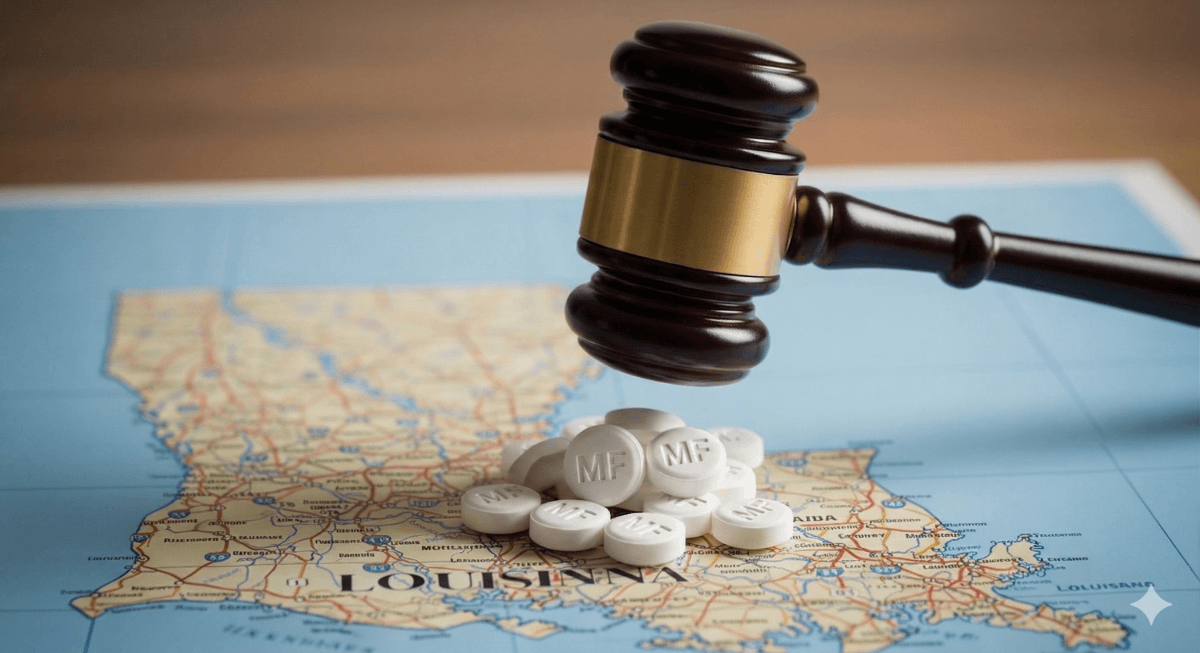
U.S. District Judge David Joseph, a President Trump appointee sitting in Lafayette, Louisiana, on Tuesday refused to immediately halt mail-order prescriptions for Mifepristone, a widely used abortion medication. However, the judge simultaneously granted the federal government's request for a pause in the case, setting a six-month deadline for the U.S. Food and Drug Administration (FDA) to report on its ongoing review of the drug, while signaling that Louisiana's challenge against the FDA's current regulations is "likely to succeed on the merits."
"Should the agency fail to complete its review and make any necessary revisions" to the rules "within a reasonable time frame, the Court’s analysis — and the weight accorded to these factors — will inevitably change." — U.S. District Judge David Joseph
The ruling represents a complex turn in the legal battle over Mifepristone's availability across state lines. Louisiana Attorney General Liz Murrill had sought swift action, petitioning the court to suspend FDA rules, which were implemented in 2023, while her broader challenge to them proceeded through the judicial system. While her request for an immediate injunction was denied, Murrill stated that the judge's opinion provided significant leverage for future legal arguments.
In his opinion, Judge Joseph directly addressed federal regulators, stating, "Should the agency fail to complete its review and make any necessary revisions" to the rules "within a reasonable time frame, the Court’s analysis — and the weight accorded to these factors — will inevitably change." This statement underscored the conditional nature of the pause and placed the onus on the FDA to demonstrate progress in its review. Murrill quickly seized on the judge's words, announcing plans to appeal the decision and framing the outcome as validation rather than a defeat. She highlighted the judge's finding that "Louisiana suffers irreparable harm every day" the current regulations allowing mail-order prescriptions remain in effect.
The core of Louisiana's legal argument asserts that allowing Mifepristone to be prescribed via telehealth and delivered through the mail directly undermines the state's authority to regulate and restrict abortion within its borders. This perspective has gained considerable traction within conservative legal circles, with Republican officials in several other states pursuing similar challenges in their respective federal districts. Murrill's efforts extend beyond the courtroom; she is also pursuing criminal cases against individual physicians in California and New York, accusing them of mailing abortion pills to patients in Louisiana. Both California and New York have declined to extradite these doctors to face charges in Louisiana.
A central theme of the plaintiffs' legal strategy revolves around the claim that the absence of mandatory in-person requirements for the abortion pill creates a hidden pipeline for forced abortions, particularly in coercive relationships. Among those supporting Murrill as a plaintiff is a Louisiana woman who alleges her boyfriend pressured her into taking Mifepristone obtained from a California physician. This narrative aims to highlight potential vulnerabilities in the current telehealth model. However, advocates who work with domestic abuse survivors have pushed back against this characterization, arguing that telehealth access can serve as a critical lifeline for women in dangerous and abusive situations, offering a confidential and accessible option for reproductive healthcare.
On the other side of the legal debate, abortion rights supporters expressed caution following the ruling. Alexis McGill Johnson, President and CEO of Planned Parenthood Federation of America, issued a statement emphasizing that "From the courts to the Trump administration to state legislatures across the country, mifepristone and abortion access are very much still under attack."
Mifepristone, typically used in conjunction with a second medication called misoprostol, has become a central focus in the post-Roe v. Wade abortion landscape since the Supreme Court's 2022 decision eliminated the constitutional right to abortion. Two years prior, the nation's highest court declined to block Mifepristone mail prescriptions in a separate lawsuit, though that ruling was based on a procedural finding that the anti-abortion doctors who filed the suit lacked legal standing.
The method of abortion access has significantly shifted since the Supreme Court's 2022 decision. Research indicates that by the end of 2024, one in four abortions in the United States was accessed through telehealth, marking a fivefold increase in just two years. A subsequent study projected that by 2025, women in abortion-restricted states would be more likely to obtain pills through the mail than to travel across state lines to a clinical facility. In response, eight states have enacted laws designed to protect telehealth providers who prescribe and ship abortion pills into territories with restrictive abortion laws.
Further complicating the regulatory environment, a federal judge in Hawaii ruled last year that the FDA itself violated the law by imposing certain restrictions on mifepristone, the same drug also utilized in miscarriage management. Additionally, the President Trump administration faced sharp criticism from anti-abortion groups after approving an additional generic version of the pill during its tenure.
Tuesday's ruling by Judge Joseph did not permanently resolve the contentious debate over Mifepristone access. Instead, it effectively set a timer, signaling that while current mail-order prescription rules remain in place for now, their long-term viability will depend heavily on the FDA's forthcoming review and the judge's ultimate determination of Louisiana's legal challenge. The decision underscores the ongoing legal and political volatility surrounding reproductive healthcare in the United States.