


Breaking
Sponsor Advertisement
Appeals Court Overturns Century-Old Home Distilling Ban
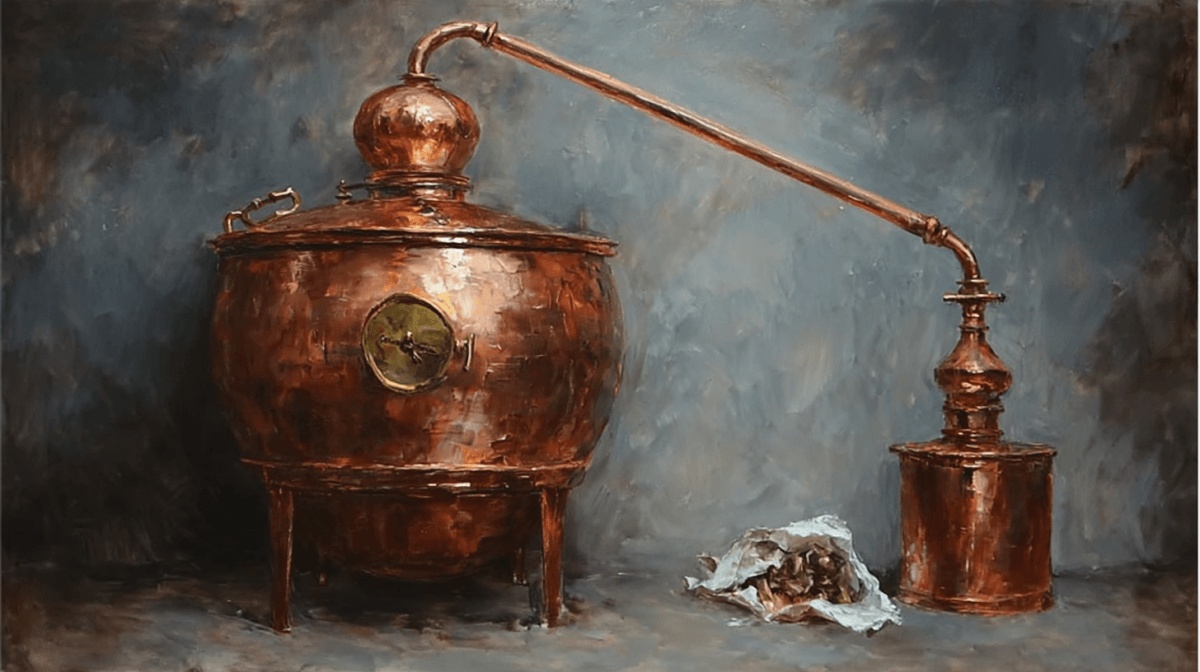
AI-generated image for: Appeals Court Overturns Century-Old Home Distilling Ban

Appeals Court Overturns Century-Old Home Distilling Ban

A federal appeals court has struck down a 19th-century law prohibiting home distilling, ruling it exceeded federal constitutional authority. This decision challenges the extent of government regulatory power over personal activities.
Jump to The Flipside Perspectives

A federal appeals court has delivered a significant blow to a nearly 160-year-old federal restriction, striking down a law that banned the home production of distilled spirits. On April 10, 2026, the 5th U.S. Circuit Court of Appeals concluded that the Reconstruction-era statute, which had long criminalized the non-commercial distillation of alcohol like whiskey or vodka in private homes without federal authorization, overstepped Congress’s constitutional authority. This landmark decision marks a notable shift in judicial interpretation regarding the limits of federal power over personal activities and reignites debate over the scope of government regulation.

"the Fifth Circuit has ruled that the law prohibiting home distilleries 'violates the Constitution’s Taxation and Necessary and Proper clauses." — 5th U.S. Circuit Court of Appeals Ruling

The statute, originally enacted in the 19th century, was designed primarily to prevent tax evasion in alcohol production. It carried severe penalties for violations, including fines of up to $10,000 and prison terms of up to five years. The legal challenge against this long-standing prohibition was initiated by the Hobby Distillers Association, alongside several individual members. They contended that the law was an outdated relic that no longer aligned with modern societal conditions, arguing it unjustly criminalized purely non-commercial hobby activity and personal experimentation, even in instances where no revenue loss or commercial intent was present.

In its ruling, the appellate court found that the federal government had stretched its constitutional authority too far in its defense of the prohibition. The court specifically stated that the statute could not be justified under Congress’s taxation power because it failed to effectively support revenue collection. Instead, the court determined, the law effectively prevented taxable goods from being produced in the first place, thereby undermining its stated purpose. Circuit Judge Edith Hollan Jones, writing for the panel, highlighted this inconsistency, noting that the law operated in a manner that blocked alcohol production altogether rather than regulating it for taxation purposes, making it incompatible with the government’s claimed authority under federal tax powers. The court ultimately concluded that such an approach exceeded constitutional limits.

Beyond the immediate scope of home distilling, the ruling also raised broader constitutional concerns regarding the permissible extent of federal authority into private life. The court issued a warning that accepting the government’s interpretation of its tax power could establish a dangerous precedent, potentially justifying the criminalization of a wide array of ordinary household activities if they were only loosely connected to potential revenue concerns. Judge Jones suggested that if this expansive logic were to be accepted, it could significantly blur the critical boundary between legitimate federal regulatory authority and fundamental personal liberty.

The plaintiffs in the case described their distilling activities as small-scale, non-commercial experimentation. One plaintiff, as reported by Fox 5 DC, cited personal projects involving flavored spirits and even fuel distillation, emphasizing that the law treated recreational activity as criminal conduct despite its complete lack of commercial impact.

The appellate court’s decision upheld an earlier 2024 ruling from a lower federal court, which had similarly found the law unconstitutional but had paused its enforcement pending the outcome of the appeal. With the appellate court’s ruling now finalized, that earlier injunction is expected to take effect, effectively ending the enforcement of the prohibition within the geographical jurisdiction of the 5th Circuit.

Legal advocates representing the plaintiffs hailed the outcome as a major affirmation of individual freedom and a significant narrowing of federal authority. They asserted that the decision reinforces a crucial distinction between legitimate tax enforcement and the unwarranted regulation of purely personal, non-commercial conduct. Federal agencies responsible for defending the law, including the Justice Department and various alcohol regulatory authorities, did not immediately issue public responses following the ruling. Their silence leaves open the possibility of further legal steps or clarifications, though the current decision represents a substantial setback for the government’s position.

This ruling contributes to a growing pattern of federal courts revisiting and re-evaluating long-standing statutes to determine their compatibility with modern constitutional interpretation. In this particular instance, the court’s decision places renewed attention on how Reconstruction-era regulations continue to influence contemporary debates over taxation authority, personal freedom, and the appropriate reach of federal enforcement power.


Advertisement

The Flipside: Different Perspectives

Progressive View

While individual liberty is a valued principle, the 5th Circuit's ruling on home distilling raises important questions about public safety, fair taxation, and the potential for unintended consequences. Historically, regulations on alcohol production, including taxation, have served vital public interests such as ensuring product safety, preventing illicit markets, and generating revenue for public services. Allowing unregulated home distilling, even for hobbyists, could create a precedent that undermines the state’s ability to protect consumers from potentially harmful products and could complicate efforts to ensure fair and equitable taxation across the alcohol industry.

From a progressive perspective, the focus on individual experimentation, while seemingly innocuous, must be balanced against the collective well-being. Unregulated production, even on a small scale, can pose health risks if proper standards are not met. Furthermore, the court's interpretation of the taxation clause as insufficient for outright prohibition could have broader implications for other regulatory frameworks designed to manage industries for public good and revenue generation. While the specific 19th-century law may have been outdated, a blanket rejection of federal authority in this domain without considering modern regulatory needs risks creating loopholes that could be exploited, ultimately impacting public health and the integrity of the tax system that funds essential services.

Conservative View

The 5th Circuit's decision to strike down the 19th-century ban on home distilling is a victory for individual liberty and a crucial check on federal overreach. Conservatives have long argued for limited government intervention in the private lives of citizens, emphasizing that the government's power should be narrowly construed, particularly when it infringes on personal activities that pose no commercial threat or public harm. This ruling correctly identifies that the federal government exceeded its constitutional authority by attempting to criminalize a non-commercial hobby under the guise of taxation, an authority intended for revenue generation, not outright prohibition of production.

The court's warning about the "slippery slope" of allowing the government to regulate ordinary household activities based on tenuous links to potential revenue concerns resonates deeply with conservative principles. Such an expansive interpretation of federal power could lead to an erosion of personal freedom and property rights, allowing the government to dictate even the most mundane aspects of private life. This decision reinforces the idea that citizens have a right to engage in personal, non-commercial activities without undue federal scrutiny or criminalization. It upholds the constitutional framework that limits federal power to enumerated responsibilities, preventing the bureaucratic state from expanding its reach into areas best left to individual discretion.

Common Ground

Despite differing perspectives on the scope of federal authority, there are areas of common ground regarding the regulation of home distilling and similar activities. Both conservatives and progressives can agree on the importance of clear, constitutionally sound legal frameworks that balance individual freedoms with legitimate public interests. There is shared support for modernizing outdated laws to ensure they remain relevant and effective without being unduly burdensome.

A bipartisan approach could focus on establishing sensible regulations that distinguish between large-scale commercial production and small-scale, non-commercial hobby activities. This could involve exploring licensing or registration systems for hobby distillers that are minimal, low-cost, and primarily educational, rather than punitive. Such a system could ensure basic safety standards are communicated without stifling personal innovation or criminalizing harmless activities. Both sides can also agree on the need for transparency in government action and a judicial system that consistently evaluates legislative power against constitutional limits, ensuring that laws serve their intended purpose without overstepping their bounds. The goal should be to foster responsible liberty while upholding public safety.

What's your view on this story? Share your thoughts and remember to consider multiple perspectives and being respectful when forming and voicing your opinion. "If you resort to personal attacks, you have already lost the debate..."

Advertisement

Contact Us About This Article

Have a question or comment about this article? We'd love to hear from you.

About Fair Side News

At Fair Side News, we believe in presenting news with perspectives from both sides of the political spectrum. Our goal is to help readers understand different viewpoints and find common ground on important issues.