


Breaking
Sponsor Advertisement
Melania Trump Advocates Foster Care Reform on Capitol Hill
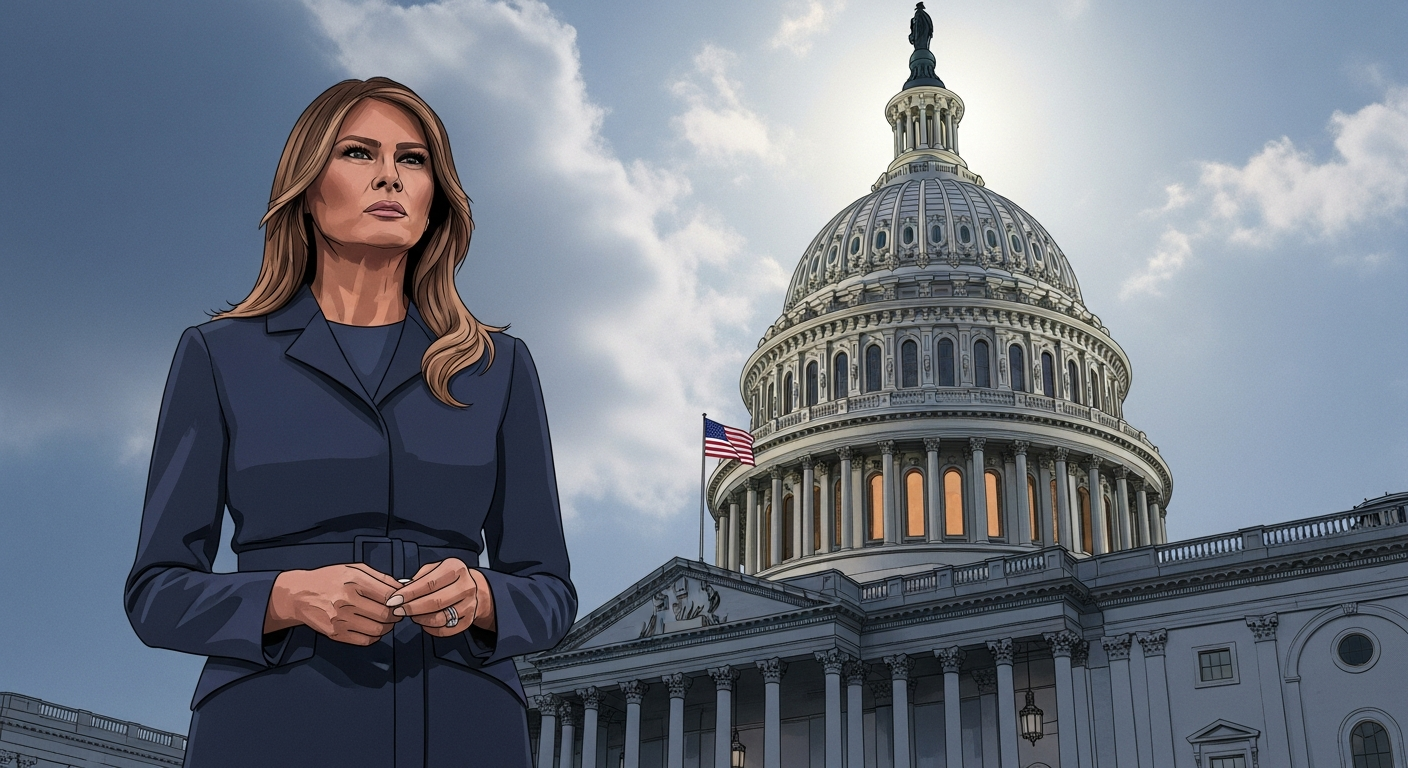
AI-generated image for: Melania Trump Advocates Foster Care Reform on Capitol Hill

Melania Trump Advocates Foster Care Reform on Capitol Hill

First Lady Melania Trump visited Capitol Hill to advocate for foster care legislation, emphasizing the need for action over awareness. This engagement follows her recent public statements regarding Jeffrey Epstein.
Jump to The Flipside Perspectives

First Lady Melania Trump made a notable public appearance on Capitol Hill this week, engaging with lawmakers to champion new legislation aimed at improving outcomes for children within the foster care system. The visit, which included a roundtable discussion with members of the House Ways and Means Committee, marked the First Lady's first major public outing since she addressed widespread speculation concerning her alleged connections to Jeffrey Epstein.

"New legislation for the foster care community is a moral imperative." — Melania Trump, First Lady

During her prior statement, which garnered significant public attention, First Lady Trump unequivocally denied any association with Epstein. "I am not a friend of Jeffrey Epstein. I was never a friend of Jeffrey Epstein," she stated, directly refuting claims of a personal relationship. She further clarified her position, adding, "I am not a victim of Jeffrey Epstein," in an effort to quell ongoing speculation. With those denials fresh in the public discourse, Mrs. Trump pivoted her focus to legislative advocacy, underscoring her commitment to policy initiatives.

On Capitol Hill, First Lady Trump framed the issue of foster care reform as a moral imperative, urging a bipartisan group of legislators to take concrete action. "We are gathered here today… because America’s children are our moral equals," she told the committee members. Her remarks highlighted the critical need for expanded support for foster youth, emphasizing that such efforts should be treated as a top priority for the nation. "New legislation for the foster care community is a moral imperative," she asserted, pushing for immediate legislative engagement.

The event brought together both Republican and Democratic lawmakers who are actively working on various proposals related to foster care reform, demonstrating a shared interest across the political spectrum. First Lady Trump articulated her belief that the foster care community requires tangible policy solutions, rather than mere symbolic gestures or increased public awareness alone. She elaborated on this philosophy, stating, "When I first developed Fostering the Future, one thing became very clear: the foster care community requires action over awareness."

"Fostering the Future," an initiative launched by First Lady Trump in 2021 under her broader "Be Best" platform, is dedicated to assisting foster youth in their transition to independent adulthood. The program encompasses a range of efforts designed to expand access to education, provide job training opportunities, and promote financial stability for young individuals as they age out of the foster care system. The First Lady highlighted the significant challenges confronting this vulnerable demographic, noting that only approximately three percent of individuals who have been in foster care earned a college degree in 2025. This statistic, she indicated, points to a substantial opportunity gap that needs to be addressed. "We can close this gap," she affirmed, expressing optimism about the potential for legislative intervention.

Her advocacy efforts include pushing for increased funding and specific legislative changes. First Lady Trump has previously voiced support for programs such as the Foster Youth to Independence program, which provides up to 36 months of housing assistance to young adults aging out of foster care, as reported by the Daily Mail. The administration, led by President Donald Trump, has also publicly backed proposals for increased funding for similar support initiatives, including a recommendation to allocate an additional $25 million in the fiscal year 2026 budget to bolster these vital services.

The First Lady's direct engagement on Capitol Hill reflects a more active and hands-on role in policy advocacy during this current phase of the administration. Observers and former aides from previous administrations noted that a First Lady directly lobbying lawmakers on legislation is a relatively uncommon practice. Michael LaRosa, who served as a spokesperson for Dr. Jill Biden, acknowledged the distinctive nature of First Lady Trump's involvement. "It’s refreshing to see the First Lady take such an active role," LaRosa commented, praising her initiative in this area. In addition to her legislative advocacy, First Lady Melania Trump and President Donald Trump have recently hosted foreign dignitaries at the White House, although public visibility surrounding those diplomatic engagements has been limited.


Advertisement

The Flipside: Different Perspectives

Progressive View

Progressives view foster care through the lens of social justice and collective well-being, emphasizing the systemic factors that lead to children entering the system, such as poverty, lack of access to mental health services, and inadequate social safety nets. They would advocate for robust governmental support and investment to ensure equitable opportunities and comprehensive services for vulnerable youth. From this perspective, "New legislation for the foster care community is a moral imperative" resonates deeply, highlighting a societal responsibility to protect and nurture children who have experienced trauma. Progressives would likely support increased federal funding for programs that provide stable housing, comprehensive healthcare, mental health support, and quality education, seeing these as essential rights. They would also focus on addressing the root causes of family instability and promoting preventative services to keep families together. The statistic about low college graduation rates for foster youth would be seen as evidence of systemic failure, requiring broad policy changes to dismantle barriers and create pathways to success.

Conservative View

Conservatives often emphasize that while the welfare of children is paramount, solutions for foster care should prioritize individual responsibility, family integrity, and limited government intervention. They would likely support initiatives that empower private organizations, faith-based charities, and local communities to provide support services, rather than relying solely on expanding federal programs. Fiscal prudence is a key concern, advocating for efficient use of taxpayer dollars and accountability for outcomes. From this perspective, programs that foster self-sufficiency, such as job training and financial literacy, align with the goal of preparing youth for independent living without creating long-term government dependency. Conservatives might also stress the importance of strengthening birth families to prevent children from entering the foster system in the first place, or encouraging adoption as a permanent solution, viewing these as more sustainable and less bureaucratic approaches than extensive state-run systems. They would likely commend First Lady Trump's focus on "action over awareness," interpreting it as a call for practical, results-oriented solutions rather than broad, unfunded mandates.

Common Ground

Despite differing approaches, there is significant common ground in the commitment to improving outcomes for children in the foster care system. Both conservatives and progressives can agree on the fundamental importance of ensuring the safety, well-being, and future success of foster youth. There is shared support for initiatives that help young people transition successfully into independent adulthood, including access to education, job training, and stable housing. Both sides can find common cause in supporting programs that provide practical skills and opportunities for self-sufficiency. Furthermore, the goal of preventing children from entering the foster system and, when necessary, facilitating reunification with safe families or adoption into permanent homes, are widely shared. Bipartisan efforts to secure adequate funding for effective programs, streamline administrative processes, and foster community involvement—whether through private charities or public-private partnerships—represent fertile ground for collaboration. All stakeholders generally agree that the foster care community requires "action over awareness" to achieve tangible, positive results for America's most vulnerable children.

What's your view on this story? Share your thoughts and remember to consider multiple perspectives and being respectful when forming and voicing your opinion. "If you resort to personal attacks, you have already lost the debate..."

Advertisement

Contact Us About This Article

Have a question or comment about this article? We'd love to hear from you.

About Fair Side News

At Fair Side News, we believe in presenting news with perspectives from both sides of the political spectrum. Our goal is to help readers understand different viewpoints and find common ground on important issues.