


Breaking
Sponsor Advertisement
Hunter Biden Questions Pardon System While Acknowledging Bias
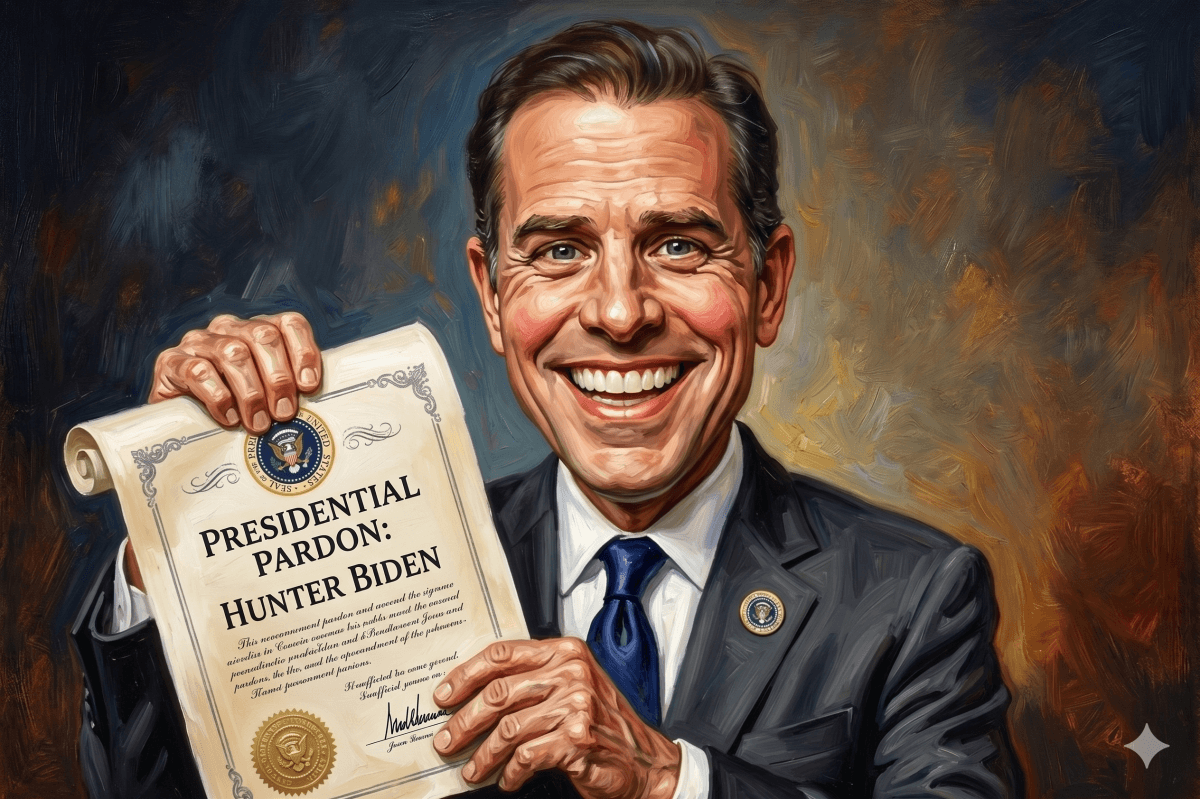
AI-generated image for: Hunter Biden Questions Pardon System While Acknowledging Bias

Hunter Biden Questions Pardon System While Acknowledging Bias

Hunter Biden, who received a broad pardon from his father, questioned President Donald Trump's use of presidential clemency. He acknowledged his own bias while criticizing the current administration's pardon record.
Jump to The Flipside Perspectives

Hunter Biden, son of former President Joe Biden, publicly questioned President Donald Trump’s use of the presidential pardon power during a recent interview, despite having received a comprehensive pardon from his own father. Speaking with MeidasTouch, the 55-year-old addressed the clemency system, admitting his personal connection to the issue.

"I’m completely biased as it relates to what my dad did for me," he said, adding "I don’t think that the founders ever imagined Donald Trump." — Hunter Biden, Son of former President Joe Biden

“I’m completely biased as it relates to what my dad did for me,” Hunter Biden stated, acknowledging the unique circumstances of his own pardon. He further elaborated, “I fully understand how uniquely situated I am in being privileged enough to have received a pardon from my father.” This admission came in response to a query about potential structural reforms to the presidential pardon system, a topic on which Biden did not offer specific policy proposals. Instead, his remarks pivoted to direct criticism of the current presidential family. “I don’t think that the founders ever imagined Donald Trump. I don’t think they ever imagined the Trump family,” he asserted.

The pardon granted to Hunter Biden by his father, the 46th president, was described as a "full and unconditional pardon." This extensive clemency covered any federal offenses Hunter Biden might have committed over an almost eleven-year period, specifically from January 1, 2014, through December 1, 2024. This timeframe is notable as it encompasses the years Hunter Biden served on the board of the Ukrainian energy company Burisma, as well as the period during which he committed the offenses that led to two separate federal convictions.

In June 2024, a jury found Hunter Biden guilty on charges related to illegally possessing a firearm while addicted to controlled substances. Just three months later, in September 2024, he entered a guilty plea on federal tax charges, admitting to withholding approximately $1.4 million from the United States government. The pardon effectively shielded him from the legal consequences of these and any other federal offenses within the specified window.

The decision by Joe Biden to pardon his son marked a significant reversal from earlier public statements. Throughout much of his presidency, Joe Biden had repeatedly assured the American public and White House reporters that a pardon for his son was not forthcoming. Senior administration officials had echoed these assurances on numerous occasions. When the pardon was ultimately issued, Joe Biden justified his decision by claiming that Hunter had been “selectively, and unfairly, prosecuted.”

This reversal was met with criticism, even from within Joe Biden's own party. Several prominent Democrats publicly voiced concerns that issuing the pardon could provide President Trump with a political argument to expand his own use of clemency once in office. These concerns appear to have been prescient, informing Hunter Biden's recent comments.

During the MeidasTouch interview, Hunter Biden drew a comparison between his father’s clemency record and that of President Trump. “I think my dad gave 80 or so pardons over a four-year period of time,” he remarked, contrasting this with President Trump’s record. “Donald Trump has given over 1,500 pardons in the first year alone. But I’m obviously — I’m not the one to be, I don’t think, fairly or unbiasedly talking about the presidential pardon power.”

The majority of President Trump’s clemency actions during his current term have stemmed from his decision to grant mass clemency to approximately 1,600 defendants connected to the January 6, 2021, breach of the United States Capitol. Beyond this large-scale action, President Trump has also issued 120 additional individual pardons and commutations.

Prior to his departure from the White House, Joe Biden, who is now 83, had established a clemency record unmatched by any predecessor in terms of commutations. His administration issued a total of 4,165 commutations and 80 pardons. Joe Biden celebrated this total as a step toward rectifying what he described as longstanding injustices within the federal justice system. The recent interview highlights a perceived contrast: a man shielded from federal prosecution by one of the broadest pardons ever recorded, now publicly scrutinizing how the same constitutional authority is being exercised by the current occupant of the Oval Office.


Advertisement

The Flipside: Different Perspectives

Progressive View

Progressives often approach the issue of presidential pardons through the lens of systemic justice and equitable application of the law. While acknowledging the optics of Hunter Biden's situation, a progressive perspective would likely shift focus to the broader need for comprehensive pardon reform to ensure fairness and prevent political abuse, regardless of the president in office. The concern is less about the individual actions of Hunter Biden and more about the inherent flaws in a system that allows for seemingly arbitrary or politically motivated clemency decisions. Progressives might argue that both Joe Biden's pardon of his son and President Trump's mass pardons, such as those related to January 6, underscore the need for greater transparency, clearer criteria, and independent review processes for presidential clemency. They would highlight the potential for powerful individuals to leverage their positions, which can exacerbate existing inequalities within the justice system. The debate, from this viewpoint, should center on how to create a pardon system that genuinely serves justice, corrects historical wrongs, and is not susceptible to being used as a tool for political patronage or familial protection.

Conservative View

The conservative viewpoint often emphasizes the principle of equal justice under the law and the dangers of perceived political favoritism within the legal system. From this perspective, Hunter Biden's questioning of President Trump's pardon power, while having received a sweeping pardon from his own father, highlights a profound hypocrisy. Conservatives argue that such actions undermine public trust in institutions and suggest a two-tiered justice system where political connections can grant immunity. The broad scope of Joe Biden's pardon for his son, covering an extensive period and multiple federal offenses, is viewed as an egregious abuse of executive power, particularly given Joe Biden's prior assurances that no pardon would be issued. This stance reinforces the belief that no one, especially those connected to powerful political figures, should be above the law. Granting clemency to family members, particularly for serious offenses, is seen as a direct affront to personal responsibility and accountability, principles central to conservative ideology. Furthermore, conservatives often view President Trump’s pardons, especially those related to January 6, as justified actions to address what they perceive as political persecution, drawing a distinction from what they characterize as a self-serving family pardon.

Common Ground

Despite differing political motivations and interpretations, there are areas of common ground regarding the presidential pardon power. Both conservatives and progressives can agree on the importance of transparency in the clemency process. The public's trust in the justice system is paramount, and opaque or seemingly self-serving pardons can erode this trust, regardless of who is issuing them. There is also potential for agreement on the need for a clear and consistent set of ethical guidelines or criteria for presidential pardons, particularly when it involves individuals closely connected to the President. While the specifics of reform might differ, both sides could support initiatives that aim to reduce the perception of impropriety and ensure that pardons are granted based on merit, rehabilitation, or genuine injustice, rather than political expediency or personal relationships. Upholding the integrity of the constitutional power of clemency is a shared goal, even if the definitions of integrity vary.

What's your view on this story? Share your thoughts and remember to consider multiple perspectives and being respectful when forming and voicing your opinion. "If you resort to personal attacks, you have already lost the debate..."

Advertisement

Contact Us About This Article

Have a question or comment about this article? We'd love to hear from you.

About Fair Side News

At Fair Side News, we believe in presenting news with perspectives from both sides of the political spectrum. Our goal is to help readers understand different viewpoints and find common ground on important issues.